
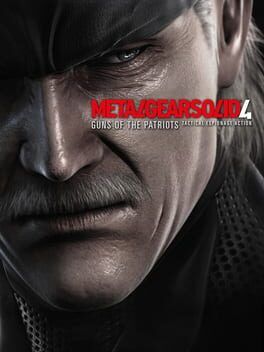

Konami’s long‑awaited Metal Gear Solid 4: Guns of the Patriots PS5 remaster keeps the Assassin’s Creed Altair crossover, cuts Metal Gear Online, and leans on Peace Walker to preserve PS3‑era multiplayer – here’s what’s actually different and what it means for Metal Gear history on modern hardware.
Metal Gear Solid 4: Guns of the Patriots finally breaking out of PS3 jail is one of the biggest preservation wins of this generation. But as Konami rolls the 2008 classic into Metal Gear Solid: Master Collection Vol. 2 on PS5, the port is not a one‑to‑one museum piece. Some of its strangest, most time‑locked ideas are being carefully carried over, while others are being left in the past.
The result is a version of MGS4 that preserves the story and most of its single player oddities, but quietly rewrites what the “full” PS3‑era Metal Gear experience looks like in 2026.
Altair lives: the Assassin’s Creed crossover survives on PS5
One of the big question marks hanging over MGS4’s remaster was licensing. The original PS3 release is full of mid‑2000s ephemera, but the most high‑profile crossover was Old Snake’s ability to cosplay as Altair from Assassin’s Creed.
Konami creative producer Yuji Korekado has now confirmed, via interviews cited by Push Square and Kotaku, that the Assassin’s Creed collaboration is intact in the PS5 version. Old Snake can still unlock and wear Altair’s white assassin robes in Metal Gear Solid 4: Master Collection Version.
Crucially, this is not a cheapened bonus. As in 2008, the outfit is tied to performance. Players need to earn the Assassin emblem at the end of a run, which demands heavy use of the knife and CQC with tight limits on raising alerts. That emblem‑driven unlock loop was one of the more playful ways MGS4 pushed you to master its stealth systems, and keeping it unchanged on PS5 matters for more than fanservice. It locks in a tiny but very real piece of cross‑publisher history, and it does so in a way that still respects how the original rewarded skill and experimentation.
It also quietly signals something about the licensing situation. Ubisoft and Konami clearly re‑upped their agreement, which lines up neatly with the broader crossover energy around the series, like Solid Snake turning up in Rainbow Six Siege. In preservation terms, that is significant. Licensed content is usually the first thing stripped from remasters; here, at least one of the strangest and most fragile pieces survives intact.
The cut that hurts: Metal Gear Online is gone
Where the PS5 remaster is much less generous is Metal Gear Online. The original PS3 disc for MGS4 shipped with the second version of Konami’s multiplayer spin‑off, a feature‑rich suite of stealth‑centric modes that sat right alongside Old Snake’s farewell tour.
Konami has now confirmed multiple times, and the official collection page backs it up, that Metal Gear Online will not be part of the Master Collection Vol. 2 release. The fine print is blunt: the Master Collection Version of Metal Gear Solid 4 does not include Metal Gear Online.
In practice, this does not change what happens when you put a PS3 copy of MGS4 in a console today. Konami shut down MGO’s servers over a decade ago, and revivals since then have only happened through fan projects on custom servers. Functionally, Metal Gear Online on PS3 is already a ghost.
The difference with the PS5 release is that the ghost is no longer even documented on the disc. On PS3, there is a record that this game once launched a whole parallel experience, with its own progression, economy, and balance patches. On PS5, MGS4 is presented as a purely single player product. There is no in‑menu reminder that it ever had an official online life.
From a modern business standpoint, Konami’s decision is easy to understand. Rebuilding a 2008 multiplayer backend for multiple platforms, re‑balancing maps and classes, committing to anti‑cheat and live service support for what would almost certainly be a niche population, all to service a tactical stealth shooter built for another era, would be a massive money sink. According to Kotaku’s reporting, even a limited revival would have required substantial work.
From a preservation standpoint, though, the loss bites. Metal Gear Online was not just a bolt‑on deathmatch mode. It experimented with stealth‑first, information‑heavy multiplayer in a way that still feels rare today, where entire rounds could be decided by one clever tranq shot or a well‑timed cardboard box feint. Tying that experience forever to a dead PS3 server stack means that no official modern platform is carrying that part of MGS4’s identity forward.
Peace Walker picks up the online slack
While MGS4’s multiplayer is officially gone, Konami is not abandoning PS3‑era Metal Gear online play entirely. The other headliner in Master Collection Vol. 2 is Metal Gear Solid: Peace Walker, and Konami has confirmed that Peace Walker’s online modes will be supported in the new release.
That is a very different decision from what is happening with Metal Gear Online. Peace Walker was built from the ground up around cooperative play and portable matchmaking. Four‑player co‑op against bosses, ad‑hoc style infiltration with friends, and competitive versus ops all sat at the heart of its design. Unlike MGO, these systems are baked into the main progression of the game itself.
Preserving Peace Walker’s online features on PS5 and other modern systems keeps a whole branch of the series’ co‑op DNA alive. It means that the particular rhythm of Peace Walker’s mission‑based structure, where players hop into bite‑sized sorties to farm parts, recruit soldiers, and chip away at towering AI weapons together, will still exist in its intended form, not as a strictly solo reinterpretation.
There is an interesting contrast here. Konami is signaling that when online features are integral to the spine of a game, they are worth the engineering and server investment to carry forward into a new generation. When they are bolted on as a parallel experience, like MGO was for MGS4, the bar is much higher.
Rewriting the PS3‑era Metal Gear story on modern hardware
If you step back from the individual decisions, a clear pattern emerges about how Konami is treating the PS3 period of Metal Gear on PS5.
On one hand, the company is surprisingly conservative about preserving single player content, even when that content is legally and technically awkward. Keeping the Assassin’s Creed crossover, leaving cutscene pacing untouched, and porting MGS4 at all despite its notoriously PS3‑specific tech stack all point toward a desire to present the narrative of Guns of the Patriots as authentically as possible.
On the other hand, the company is pragmatic about live components. The picture of the PS3 era that players will encounter through Master Collection Vol. 2 is sharpened around two pillars: the cinematic single player conclusion in MGS4 and the experimental co‑op and base‑building in Peace Walker. The messy, now‑unsupported experiment that was Metal Gear Online is being allowed to fade into fan‑run obscurity.
For preservation‑minded players, that creates a mixed legacy.
The good news is that, for the first time since 2008, the full story arc of Solid Snake’s final mission is accessible on a current platform without original hardware. The fact that Old Snake can still pull on Altair’s robes in 2026 is a small but symbolically powerful win. It proves that cross‑publisher quirks do not have to be sacrificed every time an older game gets a second chance.
The bad news is that the historical record of what MGS4 once contained is now split. Anyone who comes to the series through PS5 will experience Guns of the Patriots as a solely offline epic, paired with Peace Walker as the place where online Metal Gear lives. To fully understand what “Metal Gear in the PS3 era” actually meant in 2008, players will still need to look backward to fan archives, unofficial server projects, and surviving PS3 copies.
In other words, the PS5 remaster of MGS4 is both a huge leap forward for preservation and a reminder of its limits. Story, cutscenes, and even unlikely crossover cosmetics can be dragged into the future with the right deals and enough engineering brute force. Multiplayer ecosystems tied to dead infrastructure are a tougher ask.
For most players, the trade‑off will be acceptable. MGS4’s baroque single player campaign is the part everyone remembers, and it is finally on a console people actually own. For historians and fans of Metal Gear Online, the PS5 release draws a clearer line in the sand. The definitive way to play Guns of the Patriots is now on modern machines, but the definitive way to understand everything it once encompassed still requires a trip back to a powered‑on PS3.
In that gap between what survives and what is left behind lies the real story of how the PS3‑era Metal Gear experience is being rewritten for a new generation.