
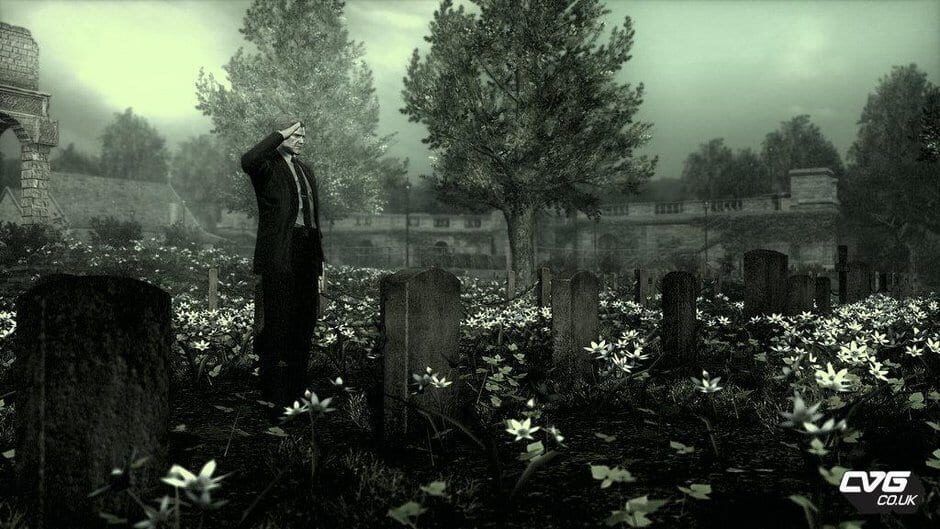

Konami’s new PS5 version of Metal Gear Solid 4: Guns of the Patriots is more than a simple port. Its escape from PS3 exclusivity could reshape how PlayStation handles legacy games, while early footage highlights where the classic still shines and where its age shows.
Metal Gear Solid 4: Guns of the Patriots has spent 18 years as the defining example of a "trapped" classic. For almost two decades, if you wanted to play Kojima’s sprawling finale to Solid Snake’s story legally, you needed a working PlayStation 3. No PS4 port. No PS5 patch. No streaming version through PS Plus. Just a disc and a notoriously failure-prone console.
That is finally changing. Konami’s Metal Gear Solid: Master Collection Vol. 2 brings MGS4 to PS5, Xbox Series consoles, Switch 2 and PC on August 27, 2026, and Push Square has already published an hour of gameplay captured from the PS5 build. It is not a remake, and it is not even a lavish remaster, but it might be one of the most important re-releases of the generation.
From "PS3 prison" to multi-platform reality
For years, MGS4 was treated as a case study in why PS3 exclusives might never escape Sony’s Cell architecture. The game famously pushed that hardware to its limits with dense cutscenes, streaming installs between chapters and tech designed around the console’s quirks. Even Digital Foundry’s experiments with RPCS3 emulation framed MGS4 as a benchmark for just how difficult high-end PS3 preservation can be.
Master Collection Vol. 2 blows up that narrative. Konami is shipping MGS4 on every current console and PC, decisively proving that the technical hurdles were never insurmountable so much as commercially inconvenient. That shift matters for more than Metal Gear. It raises the ceiling for expectations around other stranded PS3-era titles, from first party experiments to third party oddities that have never been reissued.
If publishers can deconstruct MGS4’s bespoke streaming, cutscene heavy design across modern architectures, the argument that certain PS3 games are "too hard" to preserve and re-release starts to look weak. MGS4 moving beyond PS3 exclusivity is both a symbolic and practical win for preservation advocates who have spent years pointing out that technical limitations are often used as cover for low prioritisation.
The preservation angle: why MGS4’s escape matters
The significance of this port goes beyond nostalgia. In preservation circles, MGS4 has been a lightning rod for three reasons.
First, it is a narrative capstone for one of gaming’s most influential series. Leaving the finale to a beloved saga locked behind aging hardware fractures the story for new players. With Vol. 2, the entire mainline Metal Gear arc will be playable on a single modern device, from the MSX originals up through MGS4, Ground Zeroes and The Phantom Pain. That level of narrative continuity is rare and sets a new bar for how platform holders and publishers should think about legacy franchises.
Second, MGS4’s original release conditions were hostile to long term access. The PS3 disc relied on massive installs, its performance fluctuated wildly between scenes and its online component, Metal Gear Online, has already been shuttered. Any attempt to preserve the game in a playable state needed more than simple emulation. Vol. 2 shows a commercial route forward where a classic can be stabilised and updated without full remake treatment.
Third, this move pressures Sony’s own backward compatibility strategy. Here is a game long thought inseparable from PS3’s design now running on PS5 without Sony’s platform level emulation solution. If Konami can do it, the question naturally follows: why is Sony still treating much of the PS3 library as a streaming only curiosity rather than a portfolio of titles worth proper ports and patches?
MGS4’s escape does not solve preservation on its own. Metal Gear Online remains absent, some timed promotional content is still missing and the new package is not exhaustive. But in terms of precedent, it reinforces the idea that PS3 exclusivity is a hurdle, not a wall.
What the PS5 footage actually shows
Push Square’s hour-long PS5 capture makes one thing immediately clear. This is MGS4 as you remember it, not as a modern remake might imagine it. The layout of Shadow Moses, the Old Snake model, the UI quirks and Kojima’s indulgent cinematography all survive intact. The updates are more structural and technical than cosmetic.
Resolution is the most obvious jump. The PS3 original often rendered at sub-720p with heavy blur and aggressive post-processing. On PS5, image clarity is vastly improved, approaching a clean full HD presentation in the footage shown, with sharp character edges and more legible environmental detail. There is no official word yet on 4K output, but even a locked 1080p presentation is a major leap over the soft, unstable image on Sony’s last last gen hardware.
Frame rate looks to target 60 frames per second. The PS3 version famously ran with an unlocked frame rate that swung between the low 20s in combat heavy spaces and 60 in tight corridors. In the new footage, camera pans, aiming and high action shootouts present as much smoother and more consistent. There are still occasional dips, but the experience reads closer to a modern action title than the stuttery original.
Konami has also reworked some peripheral systems. Menus and save screens have been brought in line with the Master Collection’s shared UI, making it easier to hop between games in the set. Installation transitions that once forced you to watch data copying between acts are effectively gone on PS5, replaced by fast loads that keep you in the action. Quality of life on modern SSD hardware alone does a lot of heavy lifting.
What has not meaningfully changed is the core asset suite. Textures, geometry and lighting largely look like 2008, now seen under a sharper, more flattering light. That eschews the heavy handed retexturing that sometimes undermines remasters, but it also means you will still notice muddy surfaces, flat normal maps and staging that was built for CRT and early HD displays. This is a preservation focused upgrade, not a visual reinterpretation.
How well does MGS4 hold up in 2026?
The good news from the PS5 footage is that MGS4’s best qualities survive the jump untouched. The mood swings between Middle Eastern urban warfare, South American jungles and a nostalgia drenched return to Shadow Moses still feel bold even compared to modern stealth action games. The OctoCamo system, which shifts Snake’s camouflage in real time as you crawl over different surfaces, remains smart and satisfying to play with.
Gunplay and stealth positioning benefit most from the cleaner image and steadier frame rate. First person aiming finally feels as responsive as your memory pretended it was in 2008, while sneaking through dense foliage or rubble strewn alleyways is easier when enemy silhouettes and sightlines are not buried in blur. What was once a game you tolerated technical compromises for now plays closer to the idealised version fans held in their heads.
Age shows in other places. The control layout is dense and often at odds with contemporary expectations. Context sensitive button combinations, old fashioned camera behaviour and the series’ particular take on aiming and stance management can feel clunky if you are arriving from modern third person shooters or the more streamlined Phantom Pain. The new hardware does not address that learning curve.
Cinematically, MGS4 is still one of the most self indulgent games ever released. Cutscenes stretch into the hour mark, exposition stacks on exposition and Kojima’s mix of slapstick humour, bleak war commentary and deep series lore arrives at a relentless pace. For some, that maximalism is the point and the PS5 version preserves it perfectly. For newcomers raised on snappier pacing, the commitment required may be a shock.
Visually, the boost in clarity highlights just how strong some of the original art direction was. Character faces, gear designs and the way environments mix hyper real military tech with surreal imagery still sell the world effectively. At the same time, the sharper presentation exposes low resolution assets and sparse background detail in a way that a softer image once disguised. The result is an experience that feels coherent but unmistakably last gen.
A blueprint for handling legacy PlayStation titles
Stepping back from the specifics, MGS4’s PS5 incarnation offers a useful template for how to treat other legacy PlayStation games that risk being lost.
First, it shows that stability and access matter more than chasing cutting edge tech. Locking in a solid frame rate, cleaning up resolution and trimming the friction of loading can transform a difficult to replay classic into something that feels approachable without rewriting history. Many PS3 titles, from Killzone 2 and Resistance 3 to smaller cult favourites, would benefit from this kind of respectful, relatively low impact treatment.
Second, it demonstrates the value of cohesive collections. Bundling MGS4 with Peace Walker and other entries not only makes commercial sense, it also contextualises the game’s dense story for new players. If Sony and other publishers want their back catalogues to live beyond nostalgia purchases, organising them into coherent, curated packages could be key.
Third, the release invites a more honest conversation about what "impossible to port" really means. The PS3 era absolutely presents technical challenges. But between fan driven emulation, platform holder backward compatibility work and now commercial projects like Master Collection Vol. 2, we have solid proof that many of those challenges are solvable with time, resources and will.
Where the collection still falls short
It is also worth acknowledging what this PS5 version does not do, because those gaps highlight unresolved preservation questions.
Metal Gear Online is still gone, and nothing in Vol. 2 attempts to restore or emulate that experience. For a game whose multiplayer had its own balance patches, map packs and community history, that is a substantial piece of context lost. It raises the familiar issue of how live service components of legacy games can be preserved when original infrastructure disappears.
Not all extras make the cut either. While the Push Square footage confirms fun details like the in-game iPod and certain crossover Easter eggs survive, other region specific or promotional tie-ins remain in legal limbo. For historians and purists, that makes this version of MGS4 more of an authoritative edition than a complete snapshot of the 2008 release.
Finally, the reliance on a proprietary collection, rather than a system level backward compatibility layer, ties access to Konami’s commercial decisions. This is good news for MGS4, but it does not automatically extend to other PS3 era titles whose rights are more fragmented. It is a high profile win that should be celebrated, but also a reminder that preservation still depends heavily on publisher goodwill.
The verdict from PS5 footage
Judging from what has been shown on PS5, Metal Gear Solid 4 holds up better than many expected. Stabilised performance and a sharper image let its ambitious mix of stealth, gunplay and experimental storytelling breathe in ways the PS3 could not always support. The game still feels eccentric, bloated and gloriously weird, but those qualities are part of its identity rather than flaws the new version tries to sand down.
As a preservation effort, this port is quietly monumental. It closes a long standing gap in the Metal Gear saga, challenges narratives about PS3 titles being unportable and sets a hopeful precedent for other stranded PlayStation games. If Konami follows through with technical polish up to launch, MGS4 on PS5 might become the definitive way to experience one of the most discussable games of its era, and a touchstone in future debates about how the industry treats its history.