

Meta VR Glasses are slated for spring 2027 with Quest game support, Xbox Cloud Gaming, hand-tracking titles, and a high price that changes the upgrade math for Quest players.
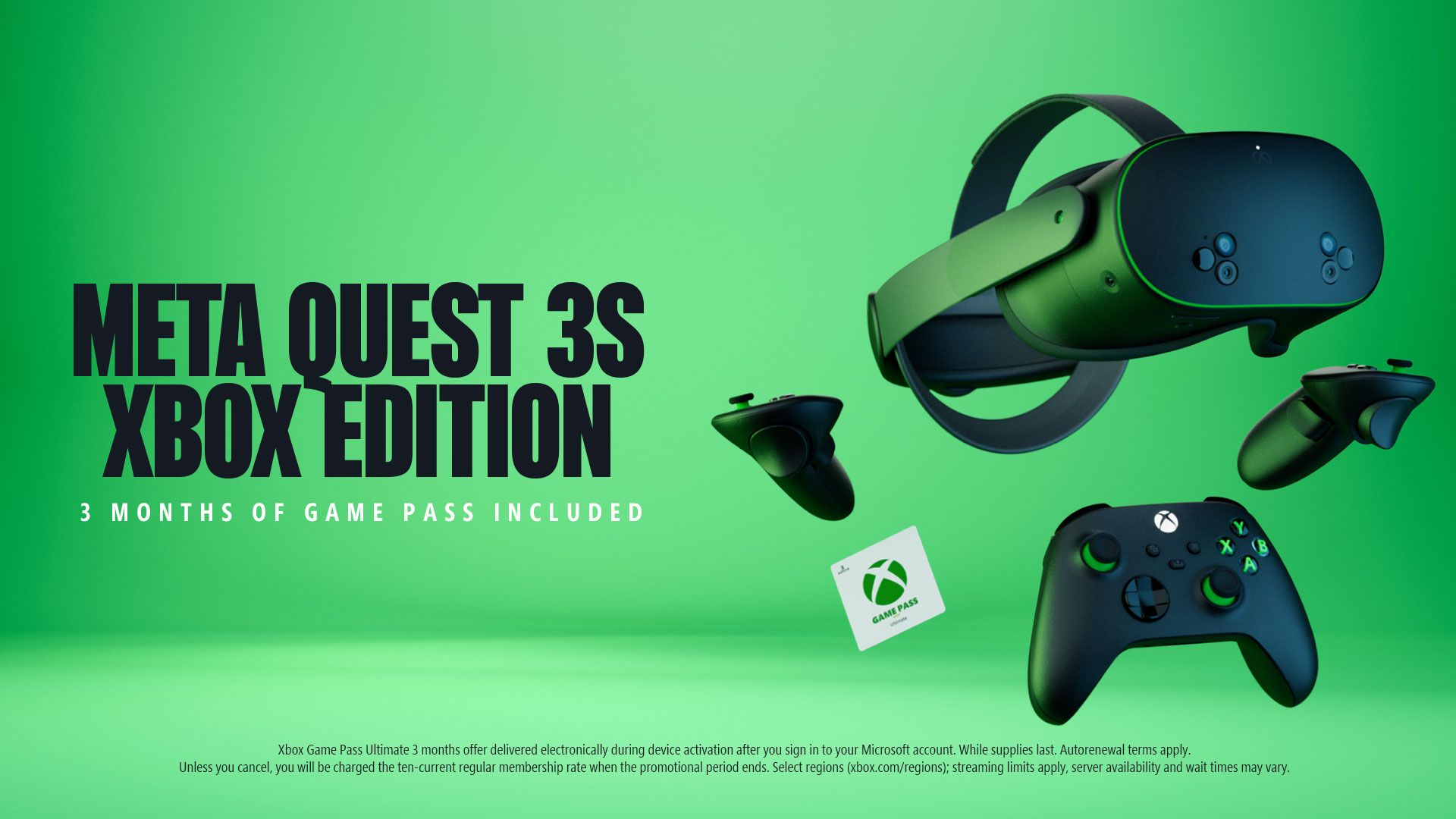
Image: news.xbox.com
Meta’s new VR bet starts with the Quest library, then asks for $1,299
Meta used Connect 2026 to put a date, price, and software strategy around its next VR device: Meta VR Glasses are planned for spring 2027 at a $1,299 MSRP, according to Meta’s own Connect gaming announcement and reporting from UploadVR, GameSpot, Gizmodo, PC Guide, and The Escapist. The immediate tension for players is clear. Meta is selling a lighter, glasses-style path into VR while leaning on the same Meta Quest games catalog that already exists on much cheaper standalone headsets.
Meta’s official blog says the device is its “most advanced VR device yet” and describes it as a “cinema, workspace, and console in one.” It also confirms the important compatibility detail for current players: every Quest game will be playable on Meta VR Glasses with Touch Plus controllers. That qualifier matters because the primary hardware pitch is controller-free use. Meta is also announcing new games and updates designed around hand tracking, including Quest 3S games and Quest 3 games that will share space with the glasses at launch or in the 2027 window.
The result is a platform move rather than a clean generational reset. Meta is not presenting these glasses as a separate software island. It is trying to convert the Quest catalog into a day-one value proposition for premium wearable hardware. For players, that makes the buying decision less about whether Meta VR Glasses will have games and more about whether the lighter form factor, display quality, Xbox Cloud Gaming support, and hand-tracking push justify a price several times above Meta’s cheaper Quest options.
Quest compatibility is the strongest launch weapon, but controllers remain the catch
The clearest confirmed advantage for Meta VR Glasses is library continuity. Meta says every Quest game will be playable on the new device with Touch Plus controllers, while UploadVR reports that the glasses run the same OS as Quest. The Escapist similarly reported that running the same operating system gives the device immediate access to existing Quest games at launch. That gives Meta an answer to the usual first-year hardware problem: players do not need to wait for a new library to form before the device has a large catalog.
There is a strategic tradeoff hiding inside that promise. UploadVR and GameSpot both report that the primary SKU does not include controllers. Meta’s blog says new titles and updates are being designed for hand tracking, but it also says the full Quest catalog requires Touch Plus controllers. GameSpot reports that users can buy Touch Plus controllers separately or pair an existing Quest 3 or Quest 3S set with the glasses. Gizmodo also reports that Quest controllers already owned by users can be used to play the entire Quest catalog.
That creates two different product realities. For a new buyer arriving fresh to Meta’s ecosystem, the $1,299 price may not represent the full cost of using older Meta Quest games if those games expect controllers. For an existing Quest 3 or Quest 3S owner, the upgrade path is cleaner because previously owned controllers may carry forward. Meta’s compatibility plan therefore favors current Quest players with existing accessories, while new customers may be steered toward either hand-tracking-first games or bundles through retail channels, which UploadVR says will exist in some cases.
The strongest signal is that Meta is treating hand tracking as the default design direction for premium hardware, while keeping controllers as the bridge for legacy support. That is a sensible ecosystem strategy, but it also means the phrase “every Quest game” should be read with the hardware requirement attached.
The new games show how Meta wants VR design to change
Meta’s own Connect post makes the software direction explicit: new VR titles and updates are being built around Meta VR Glasses’ hand-tracking technology, with no controllers required. The most prominent example is Beat Saber: Flux, which Meta says arrives in spring 2027 as the biggest update ever for Beat Saber. The update adds a hand-tracking mode that lets players slice notes with energy channeled between their palms, launches with 35 songs, and adds a revamped campaign plus a new progression and rewards system with earnable sabers, notes, and profile badges. Meta says Touch Plus controller support remains available.
That matters because Beat Saber has long been one of VR’s simplest arguments for motion controllers. If Meta can make one of its most recognizable VR games feel convincing without plastic controllers in hand, the rest of the lineup has a clearer target. UploadVR describes Beat Saber: Flux as making the entire game playable without controllers, which positions it as both a showcase and a compatibility test for the new form factor.
Other announced games point to a broader shift. Meta says Dragon Grove is designed from the ground up for Meta VR Glasses and will launch alongside the device in spring 2027, using hand tracking for 3D plant-matching puzzles and interactions with dragon companions. Meta also says Dragon Grove will be available on Meta Quest 3 and 3S without controllers. UploadVR and The Escapist report that Phoenix Wright Ace Attorney: Dual Destinies VR will use hand-tracking gestures for presenting evidence and pointing at witnesses, plus voice activation for shouted objections, and that it is coming to Meta VR Glasses and Meta Quest in 2027.
UploadVR and The Escapist also list Tetris Effect: Mixed Realities as a room-aware, controller-free version of Tetris Effect that uses passthrough, room geometry, lighting, and visual effects. The Escapist’s table says Two Point Hospital VR, Story of Seasons – Your Wonderful Life, Cardmada, and Dice Throne Digital are also planned for Meta VR Glasses, Quest 3, and Quest 3S, with Dice Throne Digital adding mobile and PC cross-play. Meta’s official post separately confirms PAYDAY: Aces High for Quest 3 and 3S, with an open playtest starting October 19, solo or up to four-player co-op, PCVR cross-play, and a full launch later this year.
For Quest 3S games in particular, the takeaway is that Meta is not abandoning its lower-cost headsets as it introduces premium glasses. Several announced projects either come to Quest 3S directly or are framed as Quest-compatible. The risk is that the most impressive versions of these ideas may be tuned around the newer glasses’ comfort and displays, but the confirmed platform list still gives Quest 3 and 3S owners a reason to watch the 2027 lineup without assuming they must replace their headset immediately.
Xbox Cloud Gaming turns the glasses into a premium screen, but not an Xbox replacement
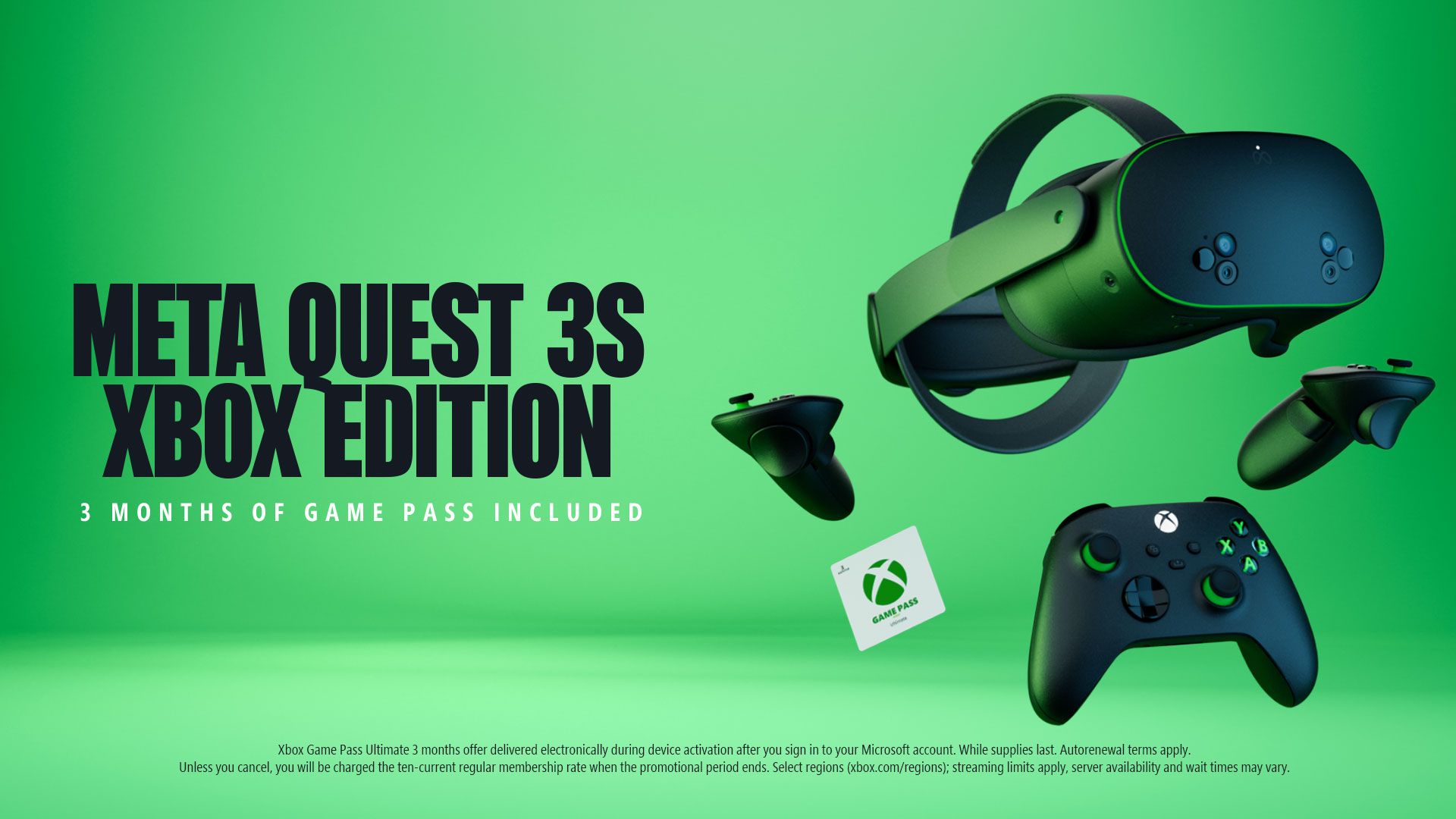
The Xbox angle is real, but it should be kept in its lane. GameSpot reports that Meta VR Glasses support Xbox Cloud Gaming, and PC Guide says support for Xbox Cloud Gaming streaming will be available. Gizmodo says it tried the feature by playing Forza for a bit and found the experience “pretty crisp.” The required image attached to this article comes from Xbox Wire and shows the Meta Quest 3S Xbox Edition, which is relevant context for Meta and Microsoft’s existing interest in Quest as an Xbox cloud screen.
That does not make Meta VR Glasses an Xbox console. The sources describe Xbox Cloud Gaming support and the ability to use the glasses as a large virtual display, not native Xbox hardware. GameSpot also reports that the device can connect to a gaming console or handheld as an alternate display option. PC Guide adds a useful technical detail: the puck supports USB-C DisplayPort video input, allowing external devices such as a laptop, phone, or gaming handheld to connect for display use.
This is where the strategy becomes layered. Meta VR Glasses can run Quest games, play hand-tracked VR experiences, stream Xbox games through the cloud, and act as a display for external devices. Those are different use cases with different dependencies. Quest games rely on Meta’s hardware and software ecosystem. Xbox Cloud Gaming relies on Microsoft’s cloud service and a network connection. External display use depends on device compatibility and cabling through the puck. Players searching for Meta VR glasses Xbox support should read the feature as a high-end virtual-screen option, not a replacement for an Xbox Series console or a Game Pass machine by itself.
Still, it is a clever bridge. Xbox cloud support gives the glasses a familiar non-VR gaming use case for buyers who might not live inside VR every night. For Meta, that helps soften the adoption curve. For Xbox, it places cloud games on another premium screen without requiring Microsoft to ship new dedicated hardware.
The hardware pitch is comfort, display quality, and a puck in your pocket
The form factor is the reason Meta can make this pitch at all. Multiple sources report that the glasses weigh 100 grams, with compute moved into a tethered pocket-sized puck. GameLoop’s provided source summary also states that Meta VR Glasses offload computing into a pocket-sized puck. PC Guide adds that buyers should account for an approximately 300-gram puck, because the glasses themselves have no processing power or battery inside and must remain plugged into it by cable.
On display specifications, the sources describe a premium micro-OLED setup. GameSpot reports 5K Micro OLED lenses with 2412 x 2288 pixels per eye at a 120Hz refresh rate. Gizmodo reports that Meta describes the display as 5K with 37 pixels per degree and says, based on hands-on time, that it looked very crisp. The Escapist describes 2.4K micro-OLED displays, which appears to align with the per-eye resolution figure reported by GameSpot rather than a separate overall display claim. The safest reading from the available material is that Meta is marketing the display in 5K-class terms while the per-eye resolution sits around 2.4K.
The puck also defines the compromises. GameSpot reports that it contains a Qualcomm Snapdragon Reality Elite chipset, 128GB of storage, 12GB of RAM, and a battery. PC Guide says the puck is about phone-sized and supports DisplayPort input. That split design attacks one of VR’s oldest friction points, headset weight, while adding a cable and a second object to manage. For seated media, Xbox cloud play, productivity, and some hand-tracked games, that may be a reasonable exchange. For active room-scale VR, players will need to wait for hands-on testing across longer sessions before knowing how the cable and puck affect comfort.
The comparison to Quest also cuts both ways. PC Guide cites Meta’s claim that the glasses are five times lighter than Meta Quest 3, but the puck changes the total carry equation. GameSpot frames the device as essentially a Quest 3 concept made easier to carry, with stronger screens and a much higher price. Gizmodo says the device shrinks Quest-like abilities into a glasses form factor, but also compares the display quality and eye-and-pinch navigation to Apple Vision Pro-style interactions. The design goal is clear: reduce the social and physical awkwardness of VR headsets without starting over on software.
The price gap changes the upgrade math for Quest players
At $1,299, Meta VR Glasses sit in a very different economic tier from the Quest headsets that made Meta’s VR platform accessible. GameSpot states that the price is more than double the cost of a 512GB Quest 3 and several times more expensive than a Quest 3S. PC Guide similarly notes that the glasses are much more expensive than Meta Quest 3 and Quest 3S, while still $200 cheaper than the productivity-focused Meta Quest Pro at its 2022 launch price.
That creates a clean segmentation. Quest 3S remains the practical entry point for players who want Meta Quest games at the lowest cost. Quest 3 remains the stronger mainstream standalone option for those who want better hardware without jumping into luxury pricing. Meta VR Glasses appear aimed at players who value lightness, display quality, hand tracking, media features, cloud gaming, and external display use enough to accept a steep premium.
The missing piece is total cost. Since the primary SKU does not include controllers, according to UploadVR and GameSpot, players who do not already own compatible Touch Plus controllers may need to pay extra to access the full Quest catalog as Meta describes it. Controller bundles may reduce that friction through select retailers, but no bundle prices are provided in the source material. Storage is another practical unknown. GameSpot reports 128GB of storage in the puck, but the sources do not provide details about additional storage configurations.
For current Quest owners, the most rational strategy is patience unless comfort is the main barrier keeping the headset unused. The confirmed spring 2027 launch leaves time for Meta to clarify bundles, accessory pricing, regional availability, and how older Quest games behave on the glasses. For prospective buyers deciding today, the case for Quest 3S or Quest 3 remains strong if the goal is simply playing Meta Quest games. The case for waiting on Meta VR Glasses depends on whether the wearable format solves a personal problem that a conventional headset never could.
The unanswered questions are about execution, not catalog size
Meta has answered the largest software question by tying Meta VR Glasses to the Quest catalog. It has also shown a credible first wave of hand-tracking-forward titles and updates, with Beat Saber: Flux, Dragon Grove, Phoenix Wright Ace Attorney: Dual Destinies VR, and Tetris Effect: Mixed Realities acting as early proof points. Xbox Cloud Gaming support expands the pitch beyond native VR, while DisplayPort input gives the hardware another role as a private screen for external devices.
The remaining questions are operational. How much will controller bundles cost? How comfortable is the puck-and-cable setup during long sessions or active games? How many older Meta Quest games feel natural on a glasses device even when technically playable? Will hand-tracking titles have the precision and feedback players expect from rhythm games, shooters, sims, and tabletop adaptations? The provided sources do not answer those questions yet.
The platform strategy, however, is visible. Meta is trying to keep Quest’s software base intact while moving the high end toward wearable VR glasses. That reduces the risk of a fragmented library and gives developers a clear incentive to support Quest 3, Quest 3S, and Meta VR Glasses together where possible. It also lets Meta sell two ideas at once: affordable standalone VR for the mass market and expensive, lighter hardware for players who want the next form factor early.
For now, the advice is straightforward. If you want the cheapest route into Meta Quest games, watch Quest 3S. If you already own Quest 3 or 3S and compatible controllers, Meta VR Glasses may become a premium upgrade rather than a replacement library. If your main interest is Meta VR glasses Xbox play, wait for real-world cloud performance testing and remember that the feature is streaming and display-focused. Meta has a strong opening position for spring 2027, but the $1,299 question is whether comfort and versatility can outweigh the price gap.