

Meta is closing Twisted Pixel, Armature, and Sanzaru just after Deadpool VR, Resident Evil 4 VR, and Asgard’s Wrath 2 defined its high-end Quest strategy. Here is what that AI pivot signals for the future of premium VR games on Meta’s platform.
Meta’s decision to shutter three of its key first‑party VR studios signals a sharp turn for the Quest ecosystem at the exact moment premium content finally looked like it had momentum.
Armature Studio, Sanzaru Games, and Twisted Pixel collectively delivered Resident Evil 4 VR, Asgard’s Wrath and Asgard’s Wrath 2, and most recently Marvel’s Deadpool VR. These were the projects Meta held up as proof that Quest headsets were more than fitness gadgets and social toys. They were the showcase titles that justified hardware upgrades, drove engagement, and helped Meta argue that standalone VR could compete with console‑class experiences.
Now those same studios are gone as part of a roughly 10 percent headcount reduction inside Reality Labs and a broader strategy shift away from metaverse‑style VR content toward AI and wearables. For the VR industry, this is more than a corporate reshuffle. It is a reset of expectations around what types of games will thrive on Quest in the coming years.
From prestige VR to profit discipline
Meta’s Reality Labs division has burned staggering amounts of money building both hardware and software. The company could justify that spend when “metaverse” was the buzzword of the decade. With investor patience thinning and AI now the growth story Wall Street wants to hear, the internal calculus has changed.
Closing three acquired studios at once gets Meta out of the business of funding multi‑year, high‑risk AAA‑style VR bets. In official messaging, the company frames the move as redirecting investment from metaverse content toward AI‑powered wearables and smart glasses. In practice, it also strips Meta of much of its internal capability to build the kind of ambitious single player adventures that used to define its publishing slate.
Resident Evil 4 VR, Asgard’s Wrath 2, and Deadpool VR were all symptoms of an earlier strategy. Meta wanted system‑seller games that made Quest a destination platform, even when those titles had limited short‑term monetization. The new strategy favors products that tie directly into AI, daily utility, and recurring revenue.
The message to investors is simple: fewer expensive narrative epics, more scalable platforms and services.
Armature and Resident Evil 4 VR: making a flat classic feel native to Quest
Armature Studio’s VR adaptation of Resident Evil 4 became the template for how to bring a beloved flat‑screen game into standalone VR without feeling like a compromise. The studio reworked controls around motion input, split out weapon interactions into physical gestures, and adjusted level design and comfort settings for room‑scale play.
Crucially, Resident Evil 4 VR gave Meta something it badly needed in the Quest 2 era: a recognizable, prestige IP that made traditional console players pay attention. It showed that with the right team and budget, Quest hardware could punch above the “indie tech demo” stereotype.
Shutting down Armature does not retroactively erase the game, but it does remove a proven partner for similar adaptations. If Meta continues to pursue big IP ports, it will likely rely more heavily on external deals rather than internal teams tuned specifically to Quest hardware quirks. That introduces more risk to schedule, quality, and platform differentiation.
Sanzaru and Asgard’s Wrath 2: the flagship that arrived too late
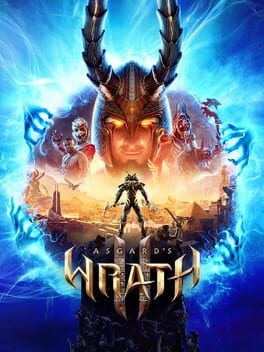
If any single project represented Meta’s AAA VR ambitions, it was Sanzaru’s Asgard’s Wrath series. The original Asgard’s Wrath set a bar for scope and production value on PC VR. Asgard’s Wrath 2 took that ambition to Quest 2 and Quest 3, launching as a flagship pack‑in for the Quest 3 hardware.
Asgard’s Wrath 2 answered a persistent criticism of VR libraries: that experiences were either short, replay‑driven sandbox tools or lightweight arcade titles. Sanzaru delivered a sprawling action RPG with progression systems, physics‑driven combat, and exploration that looked more like a traditional console epic than a novelty app.
For Meta, the game was supposed to signal that Quest 3 was a serious platform for “real games,” not just fitness apps and social hangouts. It was also a demonstration of what internal collaboration across hardware and software could deliver when studios had direct access to platform roadmaps.
The closure of Sanzaru, fresh off shipping one of the highest‑rated Quest exclusives, sends a very different signal. If a flagship launch title tied directly to new hardware is not enough to secure a team’s future, it is hard for other VR developers to view premium Quest projects as a stable, long‑term bet.
Twisted Pixel and Deadpool VR: chasing character‑driven spectacle
Twisted Pixel’s Marvel’s Deadpool VR sat on the other end of Meta’s premium spectrum. Where Asgard’s Wrath 2 leaned into depth and scale, Deadpool VR focused on fast‑paced, character‑driven spectacle.
Designed around the Quest 3’s improved horsepower, it embraced exaggerated melee and ranged combat, wild traversal, and fourth‑wall‑breaking scenarios that made full use of VR’s physicality. Meta pitched it as a headline exclusive, the kind of game players could point to when asked what made Quest 3 different from a previous generation headset.
Taken together, Deadpool VR, Asgard’s Wrath 2, and Resident Evil 4 VR were three pillars of a coherent first‑party strategy. Big IP partnerships showed off familiar brands. Longform adventures showcased depth. High‑energy action games advertised the hardware’s technical leap. Shuttering the studios behind them breaks that triangle at the source.
What an AI pivot means in practice for Quest
Publicly, Meta frames its pivot as moving away from metaverse and gaming‑centric spending toward AI and wearables. In concrete terms for Quest, that likely translates into several trends.
First, fewer in‑house bets on cinematic, single player epics. Reality Labs will still need games to support hardware, but the projects that survive internally will tend to be tightly integrated with social platforms, productivity tools, or AI‑driven features. Expect more experimentation around mixed reality utilities, AI‑assisted creation tools, and cross‑device experiences that connect headsets, phones, and smart glasses.
Second, a heavier reliance on third‑party studios and external licenses for traditional games. Meta can still cut deals for exclusives or timed content without carrying the full cost of maintaining large, permanent internal teams. That may lead to a Quest catalog rich in recognizable IP, but built on shorter contracts and more transactional relationships.
Third, a stronger emphasis on repeatable experiences over one‑and‑done campaigns. Fitness, social VR, user‑generated content, and live‑service frameworks all map more clearly onto Meta’s engagement and monetization goals than expensive single player storylines that many users complete once.
Finally, it aligns Quest’s roadmap with Meta’s larger narrative about AI‑driven devices. Headsets and smart glasses can be positioned as companions to Meta’s AI services rather than as gaming consoles that happen to include some AI features.
The risk for premium VR on Quest
For the VR industry, the immediate concern is that Meta’s pullback from first‑party AAA content leaves a gap few others are positioned to fill. Quest owns a dominant share of the standalone VR market. When Meta de‑prioritizes premium games, it affects the entire addressable audience for those projects.
Without Meta underwriting long, high‑budget campaigns, external publishers may think twice about greenlighting similar efforts. The economics of standalone VR are already tight compared to console and PC. Losing a platform‑holder willing to absorb some of that risk could push more studios toward smaller scope or cross‑platform, lowest‑common‑denominator designs.
There is also an ecosystem perception problem. Asgard’s Wrath 2 and Resident Evil 4 VR helped convince enthusiasts that Quest could be a “main platform” instead of a secondary device. If the release cadence of games at that scale slows dramatically, players who care most about high‑end experiences may drift back toward PC VR or competing ecosystems, or may treat Quest hardware as an accessory for fitness and casual play.
Possible paths forward for Quest gaming
The shutdowns do not automatically spell the end of great games on Quest. They do, however, change who is likely to build them and why.
Independent and mid‑sized studios may see opportunity in the vacuum left by Meta’s internal teams, especially if Meta sweetens publishing deals or storefront terms to keep high‑quality games flowing. A focused external developer can still turn a profit on a premium Quest release if budgets and expectations are aligned with the current install base.
Cross‑platform engines and better tooling make it easier to target Quest alongside PC and console, which could encourage more “VR first, multi‑platform later” projects that amortize risk across ecosystems. Meta’s own need for content will not vanish, and the company still has powerful levers it can pull around featuring, funding, and marketing.
The open question is whether Meta will use those levers with the same intensity now that its internal priorities are shifting to AI and wearables. If Quest is no longer the spear tip of Meta’s future vision, its software slate is more likely to be shaped by pragmatic, quarter‑to‑quarter ROI calculations than by headline‑grabbing passion projects like Asgard’s Wrath 2.
What this signals to the rest of the VR industry
Platform‑holder behavior sets tone for entire ecosystems. Meta’s move will be read by other companies as confirmation that premium VR, as a business, still has not fully proven itself. Sony’s investment in high‑end PS VR2 titles, Valve’s slow but steady support for PC VR, and Apple’s approach to spatial computing will all be weighed against the reality that the largest standalone headset maker is retrenching.
For developers, the lesson is to treat VR less like a destination and more like a component in a broader strategy that includes flat‑screen releases, service revenues, and AI‑adjacent tools. The era when a single platform holder was willing to bankroll huge, bespoke VR adventures as a loss leader may be ending.
Resident Evil 4 VR, Asgard’s Wrath 2, and Deadpool VR will stand as artifacts of a time when Meta tried to will a premium VR market into existence by brute force funding. The shutdown of Armature, Sanzaru, and Twisted Pixel suggests that the next phase of Quest’s life will be defined less by marquee first‑party epics and more by how well Meta can graft AI‑centric, everyday utility onto a platform that was once sold first and foremost as a gaming device.