

Satsuki Yumizuka is playable in Melty Blood: Twi-Lumina, but the bigger competitive news is series-first cross-play and how it could reshape matchmaking across platforms.
Image: IGDB
Store links: Melty Blood: Type Lumina - Melty Blood Archives on Steam, Melty Blood: Type Lumina on Steam
Satsuki is the headline, but cross-play is the matchmaker change
Aniplex and French-Bread have revealed Satsuki Yumizuka as a playable character in Melty Blood: Twi-Lumina, while also confirming that the next entry will support cross-platform versus play. The news came through the main trailer and latest information shown during a TYPE-MOON Times special broadcast, according to Gematsu, which reported that the presentation also covered the key visual, Grand Scenario Mode, two control schemes, and early purchase bonuses.
For players searching around Melty Blood Type Lumina Satsuki Yumizuka or Satsuki Yumizuka DLC, the important clarification is that the sourced announcements concern Melty Blood: Twi-Lumina, not a confirmed character add-on for the currently released Melty Blood: Type Lumina. Inven Global describes Twi-Lumina as a renewed version of the 2D fighting game Melty Blood: Type Lumina, developed by French-Bread and published by Aniplex. TheKONNetwork reports that Len, White Len, and Satsuki join the returning roster from Type Lumina. None of the provided source material identifies Satsuki as DLC for the existing Type Lumina release.
That distinction matters competitively. A new playable character can shift a bracket once players lab routes, matchup checks, and defensive answers. Cross-play changes something broader: who is available to fight at all. Melty Blood has always lived and died on community density, especially outside launch windows. A series-first Melty Blood cross-play implementation means the quality of the online scene may depend less on which box a local scene adopted and more on how cleanly French-Bread and Aniplex connect those ecosystems.
What is confirmed about Satsuki Yumizuka
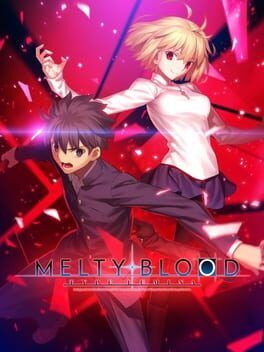
The confirmed character news is straightforward. Gematsu reports that the main trailer introduces Satsuki Yumizuka as a new playable character. The new key visual, newly drawn by Takashi Takeuchi, features Shiki Tohno and Arcueid alongside Ren, White Ren, and Satsuki Yumizuka, all of whom are identified in Aniplex’s shared information as making their debut as playable characters in the upcoming game. GamersHeroes also attributes the visual to character designer Takashi Takeuchi and says it features Shiki, Arcueid, Len, White Len, and Satsuki.
The sources do not provide Satsuki’s command list, archetype, frame data, meter routing, or matchup role. That leaves the most important competitive questions unanswered: whether she is built around pressure, mobility, setplay, strike-throw structure, or some other win condition; how much of her offense is tied to universal systems; and whether her defensive options require traditional command execution or interact differently with the new simplified controls.
For now, the practical takeaway is restraint. Satsuki’s confirmation is roster news, not balance information. Players who want to prepare can watch the trailer for visible movement, range, and system interactions, but the source material does not support claims about tier placement, difficulty, or whether she will inherit a particular legacy gameplan.
Cross-platform versus is the real community test
Gematsu states that Melty Blood: Twi-Lumina is slated to be the first title in the series to support cross-platform play, allowing players to battle more opponents across different platforms. Inven Global similarly reports that the game introduces cross-platform play to the series for the first time, letting players on different platforms compete against each other. TheKONNetwork also frames cross-play as a first for the series.
For an active fighting game community, that is the largest quality-of-life announcement in this batch. Matchmaking strength is a numbers problem before it becomes a skill problem. If the PlayStation, Xbox, Switch, and Steam populations are separated, each queue has to sustain its own ranked ladder, room matches, casual lobbies, and regional activity spikes. If cross-play works broadly, the game has a better chance of keeping beginner queues alive after launch week and giving strong players faster access to stable opponents without forcing everyone onto a single platform.
There are still unannounced details that serious players should wait on. The source material confirms cross-platform play, but it does not specify the full platform matrix, whether players can opt out by platform, how friends and private rooms work across ecosystems, whether ranked matchmaking pools are unified, or how connection quality is filtered. The sources also do not discuss netcode implementation, Wi-Fi indicators, input delay, replay sharing, or tournament lobby tools. Cross-play improves the size of the player pool only if the game gives players enough control to avoid bad connections and enough visibility to judge them before accepting a set.
Platforms are broad, but the exact rollout needs careful reading
The announced platform picture is broad, though the sources present it with different levels of specificity. TheKONNetwork reports an April 22, 2027 launch for PlayStation 5, PlayStation 4, Switch 2, Switch, Xbox One, and PC via Steam. Inven Global lists the same supported platforms and adds that online play supports one to two players, with text language support in Korean, Japanese, English, Traditional Chinese, Simplified Chinese, Spanish, French, and Portuguese, and Japanese voice audio only. GamersHeroes gives the release date as April 22, 2027 and links to PlayStation, Xbox, and Steam store pages, but does not spell out every console version in the quoted text.
Gematsu’s preorder reporting is narrower because it focuses on Japan’s physical retail plans. It says physical standard and limited edition preorders for PlayStation 5 and Switch begin in Japan on November 26. That should not be read as proof that only those platforms exist. It is a specific retail preorder note, separate from the wider platform lists reported by Inven Global and TheKONNetwork.
For platform choice, the unresolved competitive issue is not only whether your hardware is supported. It is where the strongest combination of player base, input consistency, display setup, and tournament adoption lands. Cross-play can reduce the penalty for buying on a smaller platform, but it does not automatically make every version equivalent for offline practice, controller support, or event standardization. The sources do not provide performance targets for Switch, Switch 2, PlayStation, Xbox, or PC, so anyone planning to compete should hold off on platform assumptions until Aniplex or French-Bread publishes technical details or playable builds are tested.
Act and Duel controls widen the door without replacing execution
The new control split is another competitive pressure point. Gematsu reports two control modes: Act and Duel. Act allows players to move characters with simplified controls and activate special moves with a single button, and is recommended for players new to fighting games or the Melty Blood series. Duel uses traditional command inputs for more precise control. Inven Global reports the same distinction, describing Act as simplified and Duel as traditional command input.
That structure is familiar to modern fighting game players: lower the barrier for specials, preserve a traditional lane for players who want full manual control. The unanswered question is whether Act has limitations, different damage scaling, restricted routes, or mechanical tradeoffs. The source material does not say. Without that, it would be premature to argue that Act will be tournament-dominant, beginner-only, or irrelevant at high level.
TheKONNetwork adds that combat changes include a revised Rapid Beat combo system and a new mechanic called Gauntlet. Those terms are important for Melty players because universal combo systems define how easy it is to convert stray hits into knockdown, corner carry, or pressure resets. But the provided sources do not include enough mechanical detail to evaluate how revised Rapid Beat or Gauntlet changes advantage states. For now, the smart prep is fundamentals: clean movement, anti-air discipline, throw defense, and learning how the new system rules affect pressure once official breakdowns or demos arrive.
The key visual and story mode show Aniplex is selling a full relaunch beat
The new key visual is doing more than decorating the announcement cycle. Gematsu says Aniplex unveiled a newly drawn illustration by Takashi Takeuchi, who is handling character designs for the title. GamersHeroes also reports that FRENCH-BREAD and Aniplex of America released the key visual, and Inven Global notes that Shimaudon and Hirokazu Koyama handled coloring. The composition places Shiki Tohno and Arcueid with Len, White Len, and Satsuki, making the newly playable additions central to Twi-Lumina’s identity.
The same announcement push includes Grand Scenario Mode. Gematsu reports that the trailer introduces Grand Scenario Mode created by Kinoko Nasu, and TheKONNetwork says it features an original story written by Nasu following Shiki Tohno through Souya City. Inven Global describes it as a large-scale scenario mode focused on Shiki Tohno that blends story with dynamic cinematic presentation.
That matters for the health of the competitive scene indirectly. Fighting games retain players through good matches, but they attract first-time buyers through character attachment, presentation, and solo content. A stronger on-ramp gives new players a reason to learn movement and inputs before they get thrown into player matches. Combined with Act controls and cross-play, Twi-Lumina’s pitch appears aimed at both the lab crowd and the Tsukihime audience that may not already be grinding sets.
Editions, bonuses, and the sensible wait for competitors
Gematsu reports that a Digital Deluxe Edition is planned with the base game and a digital art book. TheKONNetwork gives more detail, saying the digital art book is 90 pages and includes character designs, illustrations, and an original manga. For Japan, Gematsu reports that physical standard and limited editions for PlayStation 5 and Switch open for preorder on November 26. The limited edition includes the game, a decorated box with Takashi Takeuchi artwork, an art book, the original soundtrack, an arcade controller button-style tin case with Takeuchi artwork, and three 30-millimeter arcade-controller-style buttons featuring Len, White Len, and Satsuki Yumizuka, also with Takeuchi artwork, plus a strap. TheKONNetwork describes the soundtrack as three discs and says early purchases include additional round call voices for Len, White Len, and Satsuki.
Those bonuses are collectible-facing, not competitive necessities based on the available reporting. No source here confirms pricing, upgrade paths from Type Lumina, save or content carryover, beta timing, demo access, or whether any preorder bonus affects gameplay. Players whose main concern is ranked, locals, or netplay should wait for details on cross-play rules, netcode, platform performance, and input behavior before locking in a version.
The current Melty Blood Type Lumina update story is therefore two-layered. The character reveal gives the community a new matchup to anticipate, and Satsuki’s arrival will dominate early lab conversation once real move data appears. The cross-play announcement is the structural piece. If Aniplex and French-Bread deliver a robust unified player pool across the reported platforms, Twi-Lumina could avoid one of the genre’s most common post-launch problems: good game, scattered queues.