
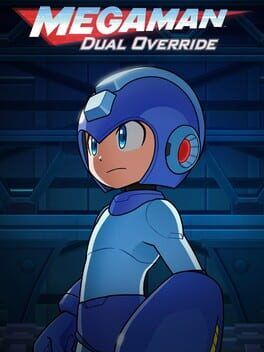

Capcom’s first public demo for Mega Man: Dual Override is set for Gamescom 2026. Here’s what will likely be in the booth build, what we know so far from trailers and previews, and why this is a pivotal moment for the Mega Man franchise.
Mega Man: Dual Override is finally stepping out of teaser trailers and controlled hands-off presentations and into the wild. At Gamescom 2026 in Cologne, Capcom is bringing the first public, playable demo of the new Blue Bomber adventure, giving fans their best chance yet to see whether this really is the triumphant return that has been building since its surprise reveal at The Game Awards 2025.
Gamescom is more than just another trade show for Dual Override. For a series that has lived on collections, ports, and crossover cameos since Mega Man 11 in 2018, letting regular attendees queue up and actually play marks a turning point. It is the moment Capcom has to prove that the classic series can still hang in a modern action landscape.
What Capcom Is Bringing To Gamescom
Capcom’s Gamescom 2026 lineup features four games, but Mega Man: Dual Override is clearly the new kid with the most to prove. The publisher is also showing Onimusha: Way of the Sword, more Street Fighter 6 content, and Dragon’s Dogma 2: Dark Arisen. By slotting Mega Man alongside three active and successful franchises, Capcom is signaling that this is not a side experiment or a low budget nostalgia project. Dual Override is being positioned as a pillar release.
The demo at Gamescom will be the first time the public gets their hands on the game. Until now, footage has been carefully curated in trailers and select press previews. At the show, attendees will be able to feel how the jump arcs, slide timing, and buster shots actually behave on a controller. That alone will be a big deal for fans who have spent nearly a decade replaying legacy titles and hoping Capcom still understands the very specific kind of platforming that makes Mega Man feel right.
There is no full stage list for the show build yet, but the marketing so far suggests at least one early game level and a boss encounter, likely framed around the new dual systems that define this entry. Expect a compact vertical slice tuned for a 15 to 20 minute queue line slot, with a clear route to a Robot Master style showdown to sell the weapon stealing loop.
What We Know About Mega Man: Dual Override So Far
Capcom revealed Mega Man: Dual Override in December 2025 with a trailer that walked players down a corridor of monitors, each displaying the release year of the earlier numbered games. It ended on 2018, the year of Mega Man 11, before flipping to the new title and launching into a rapid montage of 2.5D action. The message was plain: this is the direct continuation of the classic series.
Dual Override is built as the twelfth mainline Mega Man, continuing the side scrolling, stage based structure that has defined the Blue Bomber from the NES days. Rather than rebooting visually, it builds on Mega Man 11’s cleaner, slightly toy like 3D models on a 2D plane, but with a richer color palette and more intricate backgrounds. Levels showcase futuristic cityscapes with layered parallax, industrial complexes threaded with moving machinery, and more organic zones where technology has bled into overgrown nature.
The big mechanical hook is in the title. Dual Override introduces paired systems that twist the familiar Mega Man loop in new ways. Mega Man can equip a secondary module that lets him temporarily override his standard functions. In trailers this shows up as a split gauge near the life bar and a glowing field that switches him between two modes on the fly. One mode emphasizes raw firepower through enhanced Mega Buster shots and wider special weapon effects. The other leans into mobility, adding extra air options, wall related tech, and brief invulnerability windows that resemble refined uses of Mega Man 11’s Speed Gear.
The game seems designed around weaving these modes into traditional stage design. Platforming sections layer hazards that encourage mobility focused overrides, then feed into combat setups that reward swapping back to offense. Early previews have highlighted sections where players chain slides into boosted jumps over pits while toggling to damage focused mode before landing to shred enemy waves. Done right, this should add a rhythmic, almost fighting game like flow to the familiar run and gun formula.
Robot Masters and their stages are still kept deliberately vague, but the marketing cycle has already teased several themed foes. Quick cuts show a rail grinding segment over a neon drenched city that clearly belongs to a speed obsessed boss, and a segment in a crystalline data vault filled with teleporters and laser grids that screams puzzle technology specialist. Capcom is holding back full introductions, likely saving formal reveals for the lead up to launch once the Gamescom demo starts circulating impressions.
What To Expect From The Gamescom Demo
A first public demo has a very specific job. It has to reassure veterans that the core feel is intact while introducing enough new ideas to justify the long wait. For Dual Override, that begins with the basics. Jump height, acceleration, and slide responsiveness define whether it feels like Mega Man in the first seconds of play. Back in 2018, Mega Man 11 largely nailed those fundamentals. Dual Override looks like a refinement rather than a reinvention.
Attendees should expect a traditional side scrolling stage composed of three main beats. The opening room functions as a safe space to let players test jump arcs, charge shots, and the new dual toggle without punishment. The mid section ramps up hazard density and enemy placement, pushing players to switch modes to survive. The tail end funnels them toward a boss gate, likely with a short pre fight set piece that showcases the stage’s core gimmick one final time.
The boss encounter will be crucial because it is where the dual systems can either sing or fall flat. Classic robot master fights thrive on readable patterns and clear punish windows. Dual Override’s override mechanic gives players more tools and that means the designers must tune boss behavior to avoid both trivialization and frustration. Previews mention that bosses react to which mode Mega Man is in, changing attack sequences or exposing different weak points. If the Gamescom demo includes that dynamic behavior and it feels intuitive rather than gimmicky, word of mouth will quickly turn positive.
The demo will also be an important technical test. Dual Override is targeting a wide platform spread, from current consoles and PC to Nintendo’s hardware. A show floor build is rarely final, but it will offer hints about performance targets. Smooth 60 frames per second action with clean input response was a selling point for Mega Man 11, and fans will be watching for the same commitment here, especially in the midst of particle heavy override effects.
A Pivotal Return For The Mega Man Franchise
Mega Man: Dual Override is not arriving in a vacuum. Since Mega Man 11, the brand has been most visible through collections of older titles, like the Battle Network and Legacy collections, and through cameos in crossover fighters and collaborations. Those releases have done a good job of keeping the character present, but they are backward looking by nature. Dual Override is the first real attempt in nearly a decade to push the classic Mega Man timeline forward.
That extended gap matters. Many of the players lining up for the Gamescom demo will have grown up on Mega Man games that were already retro when they discovered them through compilations or streams. Dual Override needs to speak to them without alienating players who still measure every new entry against Mega Man 2 or X. By naming this game instead of simply calling it Mega Man 12, Capcom is signaling a desire to evolve while still staying inside the classic branch of the family tree.
There is also a wider context inside Capcom’s own catalog. The publisher has managed to revitalize Resident Evil with remakes that respect the originals while modernizing structure and systems. Monster Hunter rose from cult favorite to mainstream phenomenon by iterating carefully on long established combat rhythms. Street Fighter 6 found success by making technical fighting more approachable while preserving depth. A successful Dual Override would show that the same philosophy can bring Mega Man back as an active, living series rather than just a museum piece.
Mechanical design plays directly into that goal. The dual override systems appear aimed at adding expressive play without discarding the predictable stage and boss format. In the best case scenario, leaderboards, challenge modes, and speedrun support will give high level players room to explore style heavy routes, while newcomers benefit from the extra mobility and power options as a subtle assist system. Gamescom impressions will be the first indicator of whether that balance is working.
Finally, the fact that Dual Override is sharing the Gamescom floor with fresh Onimusha, ongoing Street Fighter 6 support, and a major Dragon’s Dogma 2 expansion sends a message about Capcom’s confidence in its legacy brands. Mega Man is not being quietly pushed to a side booth. It is part of a coordinated push that treats the Blue Bomber as one of the company’s headline characters again.
Mega Man fans have had plenty of time to imagine what a twelfth classic entry should look like. Gamescom 2026 is where those expectations collide with reality in the form of a playable demo. If Dual Override can nail the feel of a perfect jump, a satisfying charged shot, and a boss fight that leaves players eager to queue up again, this Gamescom showing could mark the start of a genuine new era for the Blue Bomber.