
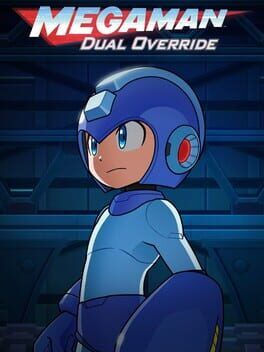

Capcom’s next Mega Man action platformer is leaning on two distinct heroes, 50-plus Custom Chips, and three-part stages. Here is how those confirmed systems change expectations.
Image: IGDB
Store links: Mega Man: Dual Override on Steam
Capcom’s new Mega Man pitch is built around difference, not symmetry
Capcom’s latest Mega Man: Dual Override showcase has made the game’s central design bet much clearer: Proto Man is not being treated as a cosmetic swap for Mega Man. According to Capcom’s official site, Dual Override lets players choose between Mega Man and Proto Man, with each hero built around a unique fighting style and different strategies. The Spotlight presentation covered by GamingBolt and Siliconera adds the sharper mechanical detail: Mega Man remains the more balanced, range-focused hero, while Proto Man is a close-range fighter whose shield defines his kit.
That immediately changes expectations for this new Mega Man game. Classic Mega Man design is usually about reading enemy placement, platform rhythm, and boss vulnerabilities through a precise ranged toolset. Dual Override is still an action platformer, and Capcom’s official page still describes Mega Man as using the Mega Buster and Special Weapons. But Proto Man pushes the same stages toward contact-range decisions, shield timing, and technical execution. For a series where small differences in jump arc, shot timing, and weapon economy can transform difficulty, that is a meaningful shift.
The tension is obvious in a good way. Capcom has to build one campaign that serves two very different verbs: Mega Man controlling space from a distance and Proto Man committing up close. If the stages are tuned only for safe buster play, Proto Man risks feeling like a challenge modifier. If they are too crowded around shield offense, Mega Man’s classic cadence could get squeezed. The new information suggests Capcom knows the two-hero premise needs more than a character select screen to hold together.
Proto Man’s shield turns him into the technical route through the game
Capcom’s official Dual Override page says Proto Man uses his shield to perform a variety of attacks and “requires a more technical approach.” The same page explains that Proto Man can analyze combat data from defeated Robot Masters to add special effects to the Proto Shield, using special actions through button combinations. It also gives those Shield Actions a constraint: Proto Man overheats if he keeps using them, so players have to be cautious.
GamingBolt’s report from the Capcom Spotlight presentation describes Proto Man as a close-quarters character who can raise a shield to block damage, then charge it to unleash a powerful melee attack capable of defeating multiple threats at once. Siliconera similarly reports that Proto Man is considered stronger in melee than Mega Man and will receive shield-based actions and abilities rather than Mega Man’s new weapons.
The important distinction is progression. Mega Man’s reward loop is the familiar one confirmed by Capcom’s site: Special Weapons are developed by analyzing Robot Master powers, each with its own characteristics and weapon energy cost. Proto Man’s equivalent reward is not a parallel buster arsenal. It is a shield system with added effects, button-combo actions, and an overheat pressure point. That makes Proto Man sound less like “Mega Man with a guard” and more like a second interpretation of the same boss data.
For platformer players, that could be the real difficulty lever. A shield can make mistakes survivable, but only if the encounter gives you time and space to use it. A charged melee option can erase nearby threats, but it asks you to stand where Mega Man traditionally avoids standing. The overheat detail also matters because it discourages mashing through danger. Proto Man’s kit, as described by Capcom, seems aimed at players who want a more deliberate, risk-managed route through familiar Mega Man hazards.
The 50-plus Custom Chips point to builds, not one fixed tool path
The other big system is the Custom Chip setup. Capcom’s official site describes it as a new system fitted to both Mega Man and Proto Man, providing upgrades by equipping chips that improve various functions. GamingBolt reports that there are over 50 Custom Chips in total, with active and passive abilities, and gives two examples for Mega Man: Rapid Buster for faster firing and Barrier to nullify damage. Siliconera also reports that both playable characters can equip Custom Chips to adjust how they play and what they can do.
That matters because Mega Man games traditionally get a lot of their texture from fixed tools earned in a loose order. You learn a stage, claim a boss weapon, then test it against other stages and bosses. Dual Override still has Robot Master-derived rewards, according to Capcom’s site, but Custom Chips add a second layer that is selected before or between action challenges rather than only earned as a boss trophy.
The unanswered questions are practical ones. Capcom has not detailed how chips are earned, whether every chip can be used by both heroes, how many can be equipped at once, or whether chip loadouts can be changed mid-stage. Those details will determine whether Mega Man Dual Override custom chips feel like a light assist system, a replayability engine, or a major balance pillar.
Even with those caveats, the confirmed examples say a lot about intent. Rapid Buster changes tempo. Barrier changes forgiveness. Active and passive effects mean chips can affect both moment-to-moment execution and background survivability. For players who bounce off Mega Man’s exacting difficulty, chips could offer a softer entry point without forcing Capcom to flatten stage design. For veterans, the same system could become a route-planning playground, assuming stronger chips come with meaningful tradeoffs or limited slots.
Three areas per stage could stretch the classic stage rhythm
Capcom’s Spotlight presentation also clarified the Mega Man Dual Override stage structure. GamingBolt reports that each stage is split into three areas, expanding on the usual Mega Man format of discrete stages leading to Robot Master fights. Siliconera reports the same three-part setup and notes that Twinkle Girl’s stage was used as an example during the presentation. Capcom’s official site identifies Twinkle Girl as an apprentice entertainer robot whose desire to perform has gone out of control, sending her on a fireworks rampage.
That three-area structure is one of the most quietly consequential details so far. A classic Mega Man stage is compact by design: it introduces a theme, escalates a few enemy and platforming ideas, then cashes out with a boss. Three areas per stage could allow Capcom to separate those beats more cleanly, with one section teaching a gimmick, another complicating it, and a final stretch testing the player’s build and character choice before the Robot Master.
It also raises pacing questions Capcom has not answered. The sources confirm three areas per stage, but they do not confirm the total number of stages, total Robot Masters, average stage length, checkpoint rules, or whether areas can be revisited individually. If the game keeps the traditional sense of selectable Robot Master stages while making each stage longer, the pressure on checkpoints and chip rewards becomes higher. If the areas are short and snappy, the structure could simply make stages feel more varied without bloating them.
For a game with two heroes, the three-area setup could help solve the balance problem. A longer stage can give Mega Man room to use range, then ask Proto Man to exploit shield openings elsewhere. It can also give Custom Chips time to matter beyond a single corridor. The craft challenge is keeping that extra structure from dulling the fast, readable rhythm that makes Mega Man platforming sing.
Override adds burst power with a built-in penalty
The title system, Override, is another confirmed layer that cuts across both heroes. Capcom describes Override as a system that lets robots release their limiter and gain strength beyond normal capabilities for a short time. The drawback is specific: after Override mode ends, the robot is left vulnerable for a while, with various functions reduced. Capcom’s page says timing is important.
That penalty is the part to watch. Temporary power modes can easily become panic buttons, especially in action games with demanding bosses. Capcom’s description frames Override as a commitment instead. Use it well, and it may open a dangerous room or damage window. Use it badly, and the weakened recovery state could turn the next jump, projectile pattern, or shield exchange into the real punishment.
Siliconera reports that Proto Man can use the powered-up Override form and receives a new appearance with it, like Mega Man. The available source material does not say whether Override changes each character’s move list, how quickly it charges, or whether Custom Chips can modify it. Those are important unknowns because the system sits right at the intersection of style and survival.
In mechanical terms, Override could be the glue between old and new Mega Man. The Robot Master loop gives long-term rewards, Custom Chips shape loadouts, and Override adds a short-term timing gamble. If Capcom keeps the recovery penalty meaningful, it may become a skill expression tool rather than a simple damage buff.
Release window, platforms, and what is still unannounced
Capcom’s official Mega Man: Dual Override site lists a Spring 2027 release and says the game is coming in 2027 to celebrate the series’ 40th anniversary. GamingBolt reports a Spring 2027 launch for Xbox Series X/S, Xbox One, PlayStation 4, PlayStation 5, PC, Nintendo Switch, and Nintendo Switch 2. GameHaunt reports the same broad platform lineup. Siliconera’s TGS report lists Switch, Switch 2, PS5, Xbox Series X, and PC, so current public reporting is not perfectly uniform in how it presents last-generation platforms. The broader list is attributed to GamingBolt and GameHaunt rather than Capcom’s supplied page text here.
Capcom’s official page also says Mega Man and Proto Man amiibo are coming soon for use in Mega Man Dual Override on Nintendo Switch 2 and Nintendo Switch, with product images and contents subject to change. TechTimes separately reported that the amiibo figures were confirmed alongside the Spring 2027 window. None of the provided source material confirms price, editions, physical release details, upgrade paths, PC requirements, frame rate targets, or platform-specific features.
For readers deciding whether to follow closely now or wait, the safe guidance is simple: the core systems are real enough to judge the game’s direction, but not enough to judge value. Proto Man’s shield actions, overheat risk, the 50-plus Custom Chips, three areas per stage, and Override’s post-use vulnerability are confirmed or reported from Capcom’s showcase and official materials. The parts that determine purchase decisions, including price, performance, content length, and how the Switch and Switch 2 versions differ, remain unannounced in the provided sources.
What is clear is that Capcom is positioning Dual Override as a more flexible action platformer than a straight nostalgia exercise. Mega Man still has the buster-and-weapons identity. Proto Man gets a shield-driven, closer-range language. Custom Chips offer build shaping across both heroes. Three-part stages give those systems more room to breathe. The promise is strong, but the real test will be whether all that added structure preserves the clean snap of Mega Man’s best stage design.