
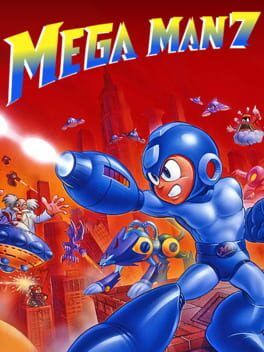

Capcom’s Mega Monday stream is putting Mega Man 7 back in front of players, making now a useful time to revisit why the SNES entry still splits classic platformer fans and how newcomers can try it today.
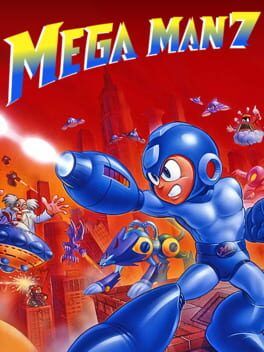
Image: IGDB
Capcom is putting Mega Man 7 back on the live stage
Capcom’s next Mega Monday stream is scheduled for August 31 at 12 PM PT on Twitch.tv/CapcomUSA, and the lineup includes live Mega Man 7 gameplay, a music conversation with chipsncellos, and a developer walkthrough of the Mega Man: Dual Override trailer shown at Gamescom. HappyGamer reported the schedule from a Capcom USA Bluesky post, which specifically says the stream will close out August by playing Mega Man 7 while also discussing Dual Override.
That is a surprisingly neat pairing. Mega Man 7 is the 1995 Super Nintendo entry that moved the original Mega Man series onto 16-bit hardware after six mainline NES games. Dual Override, meanwhile, is the newly promoted future of the classic-style branch, with Nintendo Life reporting that it is currently scheduled for 2027 on Switch and Switch 2. Putting the older game beside the upcoming one invites the exact comparison that has followed Mega Man for decades: how much should the series modernize, and how much of its appeal depends on strict, sometimes stubborn, platforming discipline?
For readers searching for Mega Man 7 gameplay now, the stream is the cleanest official hook in the provided material. It also lands at a moment when the SNES game’s reputation remains unsettled. HappyGamer’s preview calls its stage design “genuinely solid” and says the bosses are fair, while a ResetEra discussion frames it as one of the more divisive classic Mega Man titles, with one player recalling that it felt slower and more cramped after the Mega Man X trilogy. Both reactions can be true, and that tension is what makes Mega Man 7 worth revisiting instead of filing away as a middle-child sequel.
The SNES upgrade made Mega Man bigger, but not necessarily smoother
The confirmed basics are straightforward. Arcade Spot’s listing describes Mega Man 7, also known as Rockman 7: Showdown of Destiny, as an action-platformer developed by Capcom for the Super Nintendo Entertainment System and released in 1995. HappyGamer identifies it as the first mainline Mega Man game built for 16-bit hardware, with bigger sprites and more visual flair than the NES entries. Arcade Spot also notes that it follows directly after Mega Man 6 and sends players through eight new robots while pursuing Dr. Wily.
The design loop remains classic Mega Man. HappyGamer summarizes it cleanly: learn the Robot Master stage, survive it, take the boss weapon, then move on. Mega Man 7 keeps that structure, but the SNES presentation changes the feel. Larger character art makes Mega Man and enemies more expressive, and HappyGamer points to the extra visual flair as a defining part of the move to 16-bit. The tradeoff, as seen in the ResetEra player response included in the source material, is that bigger sprites can make the screen feel tighter and the action less airy than the NES games or Mega Man X.
That is the heart of the Mega Man 7 SNES debate. On paper, the game is the series getting richer art, new faces, and a stronger sense of story momentum. HappyGamer notes that Bass and Treble make their first appearance here, giving the entry more narrative push than many older installments. In the hands, though, that same bigger, flashier Mega Man can feel less immediate to players trained by either the lean NES games or the faster X series. It is still a Mega Man classic platformer, but the proportions changed.
Why Mega Man 7 still divides classic platformer fans
The divide around Mega Man 7 is less about whether it follows the formula and more about what players expect that formula to feel like. A ResetEra user quoted in the provided source said that playing it in the 1990s after the Mega Man X games made the classic series feel “off,” citing harder play, slower movement, more limited mobility, and bigger sprites that made the action feel cramped. That same player also said they had a good time after adjusting to the game’s particular rhythm.
That last part matters. Mega Man 7 is often judged against two different standards at once. Compared with Mega Man X, it lacks the speed and expanded movement options that helped define Capcom’s SNES-era spin on the blue bomber. Compared with the NES classic series, it has a heavier 16-bit look and different screen feel. Players expecting either the razor-thin NES silhouette or the dash-driven X tempo may need to recalibrate before the level design clicks.
The positive case is also present in the source material. HappyGamer argues that Mega Man 7 is “slept on” beside Mega Man 2 and Mega Man 3, while praising the stage layouts and boss fairness. LEEMAN-X’s YouTube Shorts description, tied to a full playthrough and retrospective, calls it a Super Nintendo classic with strong graphics, a memorable soundtrack, hidden upgrades, Robot Master battles, and one of the tougher reputations in the classic series. That is creator commentary rather than a definitive critical consensus, but it shows how the game continues to attract players who missed it, bounced off it, or never finished it the first time.
In practical terms, Mega Man 7 asks newcomers to stop treating it like a missing Mega Man X episode. It is a measured pattern-reading game built around stage memorization, enemy placement, weapon rewards, and boss problem-solving. If that sounds rigid, the game may feel old-fashioned. If that sounds precise, its best stages still have plenty to teach.
A useful first approach for newcomers
Anyone coming in because of the new Mega Man 7 gameplay spotlight should expect a game that rewards patience over improvisation. The safest mental model is the one HappyGamer lays out: each Robot Master stage is a lesson, and the boss weapon is both a trophy and a tool for the next leg of the route. Arcade Spot’s listing names Burst Man, Cloud Man, Junk Man, and Freeze Man among the robots players will fight, while also noting that the full pursuit involves eight new robots.
The sources also point to a few expectations worth setting before you press start. This is the only mainline Mega Man entry on SNES, according to Arcade Spot, so it occupies an odd space between eras. It has the charm and readability of classic Capcom platforming, but it does not move like a modern action-platformer. It also should not be approached as frictionless nostalgia. LEEMAN-X’s description frames the game as tough enough that finally beating it after years was a milestone, and the ResetEra comment similarly describes it as harder and slower than expected after Mega Man X.
For a newcomer wondering how to play Mega Man 7 without turning the first hour into a wall, the best advice supported by the available material is to use the game’s structure rather than fight it. Watch enemy patterns before rushing. Treat damage as information. Accept that the first visit to a stage is often reconnaissance. The Video Games 101 YouTube result in the source material is labeled as a “100% Guide w/Boss Order,” which signals that boss order guidance and completion routing are readily available for players who want help, although the extracted YouTube page text does not provide the route itself.
That kind of assistance can be the difference between bouncing off Mega Man 7 and appreciating it. The game’s reputation for division does not mean it is inaccessible. It means the first adjustment is psychological: you are learning a 1995 SNES classic on its own terms.
How to play Mega Man 7 today, based on the available listings
The clearest current access point in the provided source material is Arcade Spot’s browser listing. Arcade Spot says Mega Man 7 can be played online in a modern web browser free of charge, identifies it as an SNES game, and lists keyboard controls along with save and load icons in its emulator interface. The page says the game works in major modern web browsers and categorizes it under Adventure, Arcade, Emulator, and SNES.
There are two important caveats. First, Arcade Spot is a third-party browser-emulation listing, not a Capcom storefront page in the provided material. The listing is useful for availability, controls, and quick access, but the sources here do not establish its licensing status. Second, the provided sources do not include a current official purchase page, price, subscription availability, or modern collection listing for Mega Man 7. If your priority is an official route, the only confirmed Capcom-hosted item in the source packet is the August 31 Mega Monday stream, which will show the game rather than sell it.
For players who want guidance before or during a run, the YouTube sources point to a healthy retro-video ecosystem around the game. The Video Games 101 page is titled as a 100% guide with boss order, while LEEMAN-X’s description promotes a full playthrough and retrospective covering Robot Master battles, hidden upgrades, collectibles, and Dr. Wily guides. Those are creator resources rather than official documentation, but they answer a practical need: Mega Man 7 is easier to enjoy when you know where to look for routing help.
So the current answer to “how to play Mega Man 7” is narrower than many readers may expect. Based only on the supplied material, you can watch Capcom play it during Mega Monday, use third-party browser access as listed by Arcade Spot, or follow along with community walkthroughs. Anything beyond that, including pricing or official modern platform access, is not confirmed by the sources provided for this assignment.
Dual Override makes Mega Man 7 feel newly relevant
Mega Man 7 would be worth revisiting as a standalone SNES artifact, but Capcom’s Dual Override push gives the old argument fresh context. Nintendo Life, citing VGC’s Gamescom demo coverage, reported that Mega Man: Dual Override was shown running on Switch 2 and that the demo included three stages. The same report says players can choose different power-ups to make the game easier or harder, suggesting Capcom is building flexibility into the new entry while still trying to reach longtime fans of the original NES-style games.
That approach throws Mega Man 7 into sharper relief. The 1995 game came from a time when approachability usually had to live inside level design, item placement, boss order, and practice, not formal difficulty assists or customizable power-up systems. Its divisive feel comes partly from that older contract with the player. If you wanted to improve, you learned the stage, learned the weapon economy, and learned the boss. Dual Override, at least as Nintendo Life describes the Gamescom demo, appears to be negotiating with a broader audience from the start.
There are still limits to what is confirmed. Nintendo Life reports that Dual Override is scheduled for 2027 on Switch and Switch 2, mentions a boss encounter with Twinkle Girl, and says the trailer briefly shows Proto Man. HappyGamer reports that Capcom will have developers walk through the Gamescom trailer during Mega Monday. Mechanics, full platform details beyond the Nintendo Life report, pricing, and final release timing remain outside the supplied material.
That uncertainty is another reason the Mega Man 7 gameplay segment is useful. It gives new and returning players a concrete classic entry to examine while the next game is still forming in public. Mega Man 7 shows the series at a strange hinge point: visually upgraded, mechanically conservative, admired by some, resisted by others. If Dual Override is trying to court both first-timers and the old guard, Mega Man 7 is a reminder that the balance has always been fragile.
The better retro read is to embrace the friction
Mega Man 7 has never had the cleanest elevator pitch among classic Mega Man entries. It is not the NES breakthrough, not the X-series reinvention, and not the newest game in the room. Its renewed visibility through Capcom’s Mega Monday stream works because the game sits in the awkward middle, where craft and expectation collide.
For longtime fans, the upcoming stream is a chance to re-check old assumptions against actual Mega Man 7 gameplay. For newcomers, it is a manageable way to see whether the slower, larger SNES take on the formula appeals before diving into a guide or browser listing. For Dual Override watchers, it is a reminder that every new Mega Man has to answer an old question: how much difficulty, stiffness, generosity, and spectacle can the series hold before it stops feeling like itself?
The fairest recommendation is simple. If you enjoy classic platformers that ask you to learn rather than coast, Mega Man 7 still deserves a look. If you are coming from Mega Man X or modern action games, give yourself time to adjust before judging its pace. And if you only want an official taste for now, Capcom’s August 31 Mega Monday stream is the confirmed date to watch.