

The indie hide-and-seek hit Meccha Chameleon surged past two million copies sold on the strength of its paint‑based disguise system and streamer‑friendly chaos. Here is how it went viral, why players are obsessed with hiding in plain sight, and whether the game can last beyond the meme.
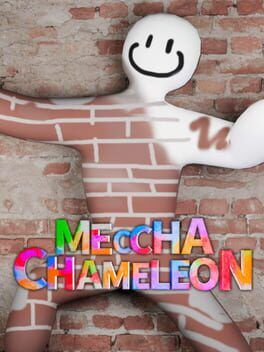
Meccha Chameleon did not look like a future multimillion‑seller at first glance. It is a small Japanese indie project built around a simple idea: what if hide‑and‑seek let you literally paint yourself into the scenery? No licensed characters, no huge marketing push, just a white mannequin body, a bucket of paint, and a lobby full of players who really want to disappear.
Yet within a short window after launch, the game crossed two million copies sold, according to the developer and reporting from outlets like IGN and Rock Paper Shotgun. That is a staggering number for a niche stealth party game on PC, and the pace of that growth says a lot about how the modern multiplayer landscape works when a concept hits the right social, visual, and creative notes.
How painting yourself into the map became the hook
Meccha Chameleon sits in the same broad family as prop hunt modes and social deduction hits, where some players hide and others hunt. The twist lies in how you become the hiding spot. Instead of transforming into a chair or a plant, you enter each round as a blank white figure that you manually paint and pose. Every environment is a puzzle, a collage of posters, statues, laundry lines, tiled walls, vending machines, and decorations. Your goal is to turn your own body into part of that collage.
The painting tools are surprisingly flexible for a party game. You can quickly lay down bold blocks of color to match walls or props, then refine with smaller strokes and details to mimic shadows or patterns. The system does not demand fine art skill, but it does reward effort, and that balance has been crucial. Players can throw together passable disguises in seconds, or spend half the prep phase nudging a pose and color gradient into place to become the perfect fake pool toy, laundry sheet, or penguin belly.
Once the round starts, this transforms a simple shooter‑versus‑sneaker setup into a strange kind of environmental puzzle. Hunters have shotguns and a time limit, but what they really need is pattern recognition. They scan rooms for tiny inconsistencies. That shadow looks wrong. That statue is tilted. That poster has one extra limb. The guns are almost secondary, just the punchline when the illusion finally breaks.
Because your own body is always the canvas, every match generates new visual gags. The map is the stage, your character is the prop, and the paint tool is the script that players rewrite endlessly. That is the core difference from traditional prop hunts, and it is a huge part of why Meccha Chameleon reads so well on a screenshot or a short clip.
Viral success through inherently shareable disguises
Look at how media coverage and social posts talk about Meccha Chameleon and a pattern emerges. Articles do not just explain the rules, they embed gallery after gallery of player creations: someone flattened themselves into a tourist poster, another player slotted their painted torso into the back half of a horse statue in a very cheeky way, someone else fused with a giant penguin statue so cleanly it resembled an AI glitch in the scene, and another match had a player hanging among lines of underwear like it was the most natural thing in the world.
These images function as marketing, tutorial, and punchline at once. If you scroll past a clip where a hunter casually walks by a pool, doubles back, suddenly realizes that one inflatable toy has legs, and then the screen explodes into laughter and gunfire, you do not need a trailer narrator to understand what Meccha Chameleon is. The core joke is readable in seconds, and the payoff always looks like a moment worth clipping.
This is where the two million sales figure starts to make sense. The game is an ideal citizen of the modern algorithmic feed. Rounds are short, outcomes are visual, the best moments are self contained, and success produces screenshots that beg to be shared. Even people who never plan to buy the game can participate by trying to find the hidden players in images passed around on Reddit or Twitter, turning the game’s disguises into a sort of communal Where’s Wally.
When the process of browsing community screenshots feels like its own mini game, you have essentially created an endless loop of free promotion. Each astonishing hideaway inspires more players to join lobbies and try to one‑up what they have seen, feeding back into the stream of content that enticed them in the first place.
Streamer appeal and the party‑game meta
Meccha Chameleon is tuned with broadcast culture in mind, whether intentionally or not. Its structure echoes the success patterns of hits like Among Us and Goose Goose Duck in a few key ways, but trades deduction for visual trickery.
First, it thrives on group dynamics. Watching a streamer queue solo can still be entertaining as they learn maps and gradually improve at diagnosing fake posters, but the game really shines in organized lobbies filled with friends or other creators. The moments that land hardest on stream are the near misses and panic reveals, when a hunter is roasting chat for backseating while standing inches from an elaborately painted statue, or when a hiding player cannot help but giggle and gives away their position.
Second, the design bakes in a constant, light humiliation loop that streams love. Getting found is quick, loud, and very funny. You can spend a whole prep phase crafting a masterpiece of camouflage only to be instantly blasted because you forgot to paint your feet, or because your pose clips awkwardly through a railing. Failure is never cruel, just delightfully silly, which keeps the mood up for long sessions.
Third, the technical demands are modest and the visuals are crisp yet simple. That combination makes the game easy to stream on midrange hardware and legible even when compressed through livestream bitrates. Clean blocks of color read well at a glance, which helps viewers follow what is happening and spot potential hides alongside the streamer.
All of these factors add up to the same outcome. Once a critical mass of mid tier creators starts rotating Meccha Chameleon into their party game schedules, each broadcast reinforces the game’s image as a staple hangout title. Viewers see it repeatedly, internalize its rules, and start associating it with fun, low friction social chaos in the same mental bucket as Jackbox packs or Gartic Phone.
Community creativity as the real content pipeline
Underneath the novelty of painting your avatar, Meccha Chameleon’s real strength is that the players are effectively the level designers. The static maps are just palettes. The game’s lifespan hinges on how long people feel inspired to generate new illusions with the tools it provides.
So far, that engine of creativity is running hot. The community has treated each map as a challenge board. One day the meta revolves around blending into posters and murals. Another day, players are swapping screenshots of how seamlessly they can join a row of statues. Some experiment with painterly abstraction, leaning into surreal compositions that force hunters to question what parts of the world are even supposed to exist. Others push toward slapstick, like disguising themselves as laundry flapping in a stiff breeze next to a pair of very human ankles.
This constant informal competition is crucial. People want to be the one whose clip appears in an article or a compilation. That desire pushes them to explore new corners of the painting system, to discover obscure props that make perfect perches, and to share techniques with each other. It mirrors the way map makers fuel content for competitive shooters, but here the tools are approachable enough that anyone can join in.
There is also a social status element. The best hiders gain recognition in community spaces where players trade tips and share loadouts of color schemes and poses. The game becomes not just about winning rounds, but about being known as the person who found that one ludicrous hiding spot beneath the penguin statue that stumped an entire lobby.
As long as this culture of playful one‑upmanship stays healthy, Meccha Chameleon effectively outsources most of its content needs to its own players.
Does Meccha Chameleon have staying power beyond the viral wave?
Viral success is one thing. Maintaining a steady, engaged player base is another. The path forward for Meccha Chameleon will likely depend on how it handles several familiar challenges that have tested other breakout multiplayer hits.
The first is map and mode variety. A hide and seek game lives or dies on how often a veteran player can feel surprised by a space they thought they understood. Even without adding complex new mechanics, a drip feed of fresh environments, seasonal reskins, and experimental playlists could keep the hiding meta evolving. Small changes like reworked lighting or prop placement can have outsized impact, because they force players to rethink their camouflage approaches.
The second is keeping the painting toolkit rich without overwhelming newcomers. There is a risk that the gap between casual and dedicated hiders grows too wide if experts are expected to exploit every tiny nuance of the editor. One solution is to fold clever presets or community recommended patterns into the default options, so new players can participate in the visual creativity without mastering a full suite of tools from day one.
The third is social infrastructure. Strong custom lobby support, good voice and text options, and an easy way to group up with friends will matter more over time than any early marketing push. If the game feels like a natural choice for a weekend Discord hangout, it can retain a reliable core of players even after the initial hype cools down.
There are also typical threats. Viewer fatigue can set in if streams start to feel repetitive, so the developer may eventually need to introduce new twists, perhaps asymmetrical challenges, rotating modifiers, or limited time rule sets that spotlight strange uses of the paint mechanics. Monetization decisions will be scrutinized as well. The community is currently invested in the purity of the player created disguises, so aggressive cosmetic upselling that interferes with that creativity could backfire.
Still, the fundamentals are promising. Meccha Chameleon is not riding only on a meme. The core act of studying an environment, designing a disguise, then testing it against human perception taps into a deep, enduring kind of fun. It feels close to other evergreen genres like hide and seek in real life or social bluffing, which tend to resurface in different digital forms again and again.
What Meccha Chameleon tells us about modern multiplayer hits
When a small stealth party game can rocket to two million sales, it highlights how much the landscape has shifted. High production values and massive maps are no longer prerequisites for huge success. What matters more is a sharp, legible premise that can be communicated in a single frame, combined with tools that let players remix that premise into endlessly new scenarios.
Meccha Chameleon checks those boxes. Its disguise mechanics are both the rules and the content factory. Its streamer appeal flows naturally from the way it turns every successful hide into a crowd guessing game. Its community is already treating camouflage as an art form, which extends its life span beyond ordinary matchmaking grinds.
The next few months will determine whether it settles into a sustainable niche or becomes a brief yet memorable flash in the pan. But whichever way the curve bends from here, Meccha Chameleon has already demonstrated that there is plenty of room for small, focused experiments in the crowded multiplayer market, especially when they play to the strengths of streaming culture and player creativity as well as this strange, charming game about turning yourself into a poster does.