
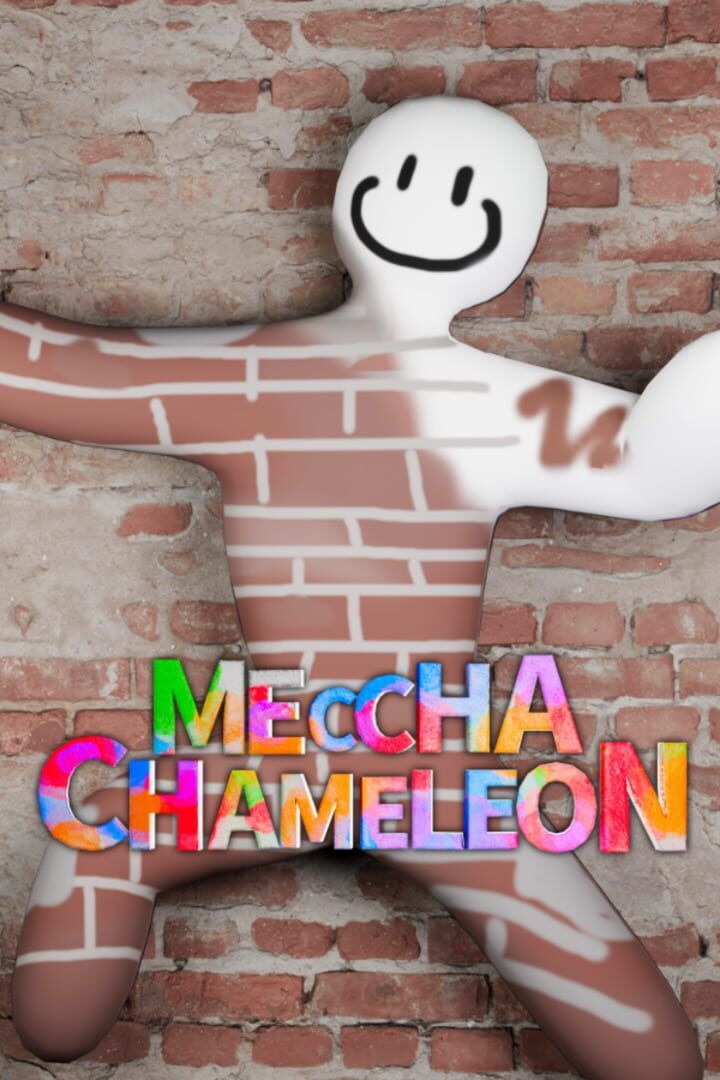
Meccha Chameleon sold one million copies in four days, rode to the top of Steam’s charts, and turned a tiny solo project into 2026’s latest multiplayer phenomenon. Here’s how its paint-and-hide twist on Prop Hunt broke out, what the numbers look like, and what it reveals about the current multiplayer indie market.
Meccha Chameleon did not look like the kind of game that would muscle past big-budget live service staples on Steam. A $5 hide-and-seek indie from a solo developer, built around MS Paint-style body coloring, sounds more like a niche Discord curiosity than a global chart threat.
Four days after launch, it had sold one million copies and climbed to number 2 on Steam’s global top sellers list, behind only Counter-Strike 2. That jump, backed by tens of thousands of concurrent players and six-figure Twitch viewership, plants Meccha Chameleon as the latest proof that multiplayer indies are thriving by leaning into simple concepts that are instantly watchable.
From solo experiment to seven-figure seller in four days
Developer Lemorion 1224 released Meccha Chameleon on Steam on June 10, 2026, with very little of the pre-launch marketing muscle you typically see for a top charting game. The pitch is brutally straightforward: “paint your body to blend in and don’t get caught.” There is no big lore hook, no complex progression, and no sprawling feature list.
Yet by June 14, the game had cleared one million copies sold, confirmed in a Steam news post and echoed in coverage from PC Gamer and PCGamesN. Just days earlier, it had already sailed past 500,000 sales in under 48 hours. Its rise tracked closely with a visible spike on Steam’s charts, where it hit the number 2 global top seller position, outpacing heavyweights like Destiny 2 and Forza Horizon 6.
The raw player metrics back up the sales story. According to reporting and aggregator sites, Meccha Chameleon quickly cracked over 60,000 concurrent players on Steam and kept climbing as word of mouth spread. On Twitch, launch day saw more than 127,000 peak concurrent viewers, powered by a wave of streamers showcasing the chaos of painted blobs pretending to be furniture, walls, and random bits of scenery.
At a glance, that trajectory looks like overnight magic. In practice, it is the product of a deliberately low-friction design and a price point that invites experimentation.
The paint-and-hide twist that makes Prop Hunt feel new again
In broad strokes, Meccha Chameleon sits in the same lineage as Garry’s Mod Prop Hunt and modern social deception hits. Players split into hiders and seekers. The hiders try to blend in, the seekers try to sniff out the fakes.
The difference is how you hide. Instead of turning into props, hiders begin as blank white, blobby bipeds. Before and during rounds, they spin a color wheel and paint themselves in real time, dragging color across their bodies to mimic the shapes, patterns, and palettes in the environment. A player might dab on the bright orange and gray of a nearby traffic cone, then lock into a matching pose between two real cones, hoping the seeker’s eye slides past.
It turns a familiar mode into something more expressive. Success is not just about map knowledge and object placement, but how convincingly you can recreate messy human-painted camouflage under pressure. The art style and painting tools invite mistakes. Imperfect color matching becomes comedy fuel as much as a tactical concern, which makes the game both fun to play and inherently entertaining to watch.
Seekers, meanwhile, rely on instinct and pattern recognition. Because players are not rigid props, they can adopt awkward angles or half-believable silhouettes that force seekers to second-guess themselves. The result is a rhythm of tension and sudden slapstick as a slightly off-color “barrel” twitches, bolts, and races away under a barrage of shots.
Crucially, the level of mechanical complexity is low enough that anyone can grasp it in seconds. That clarity is a boon for viral multiplayer games. Viewers understand the stakes instantly, which makes the spectacle of near-misses, botched disguises, and panic sprints highly shareable.
Steam chart supremacy on a shoestring
Meccha Chameleon’s Steam performance is striking not just because of the raw sales number, but because of where it achieved that volume on the storefront.
For a window in mid June, Valve’s charts showed the game sitting in the number 2 spot on global top sellers. It was bracketed by mainstay Counter-Strike 2 at the top and ahead of marquee franchises built on years of marketing and content budgets. For a solo-developed party game with no real name recognition, that is an extraordinary outcome.
Price was a major factor. The standard cost is $5.99, with a 20 percent launch discount dropping it to around $4.79 at release. That places it well under the psychological ten-dollar barrier, exactly where “try it with friends tonight” multiplayer indies thrive. One person in a group can gift a handful of copies without thinking too hard, and entire Discord servers can make it their flavor of the week for less than the cost of a single big studio cosmetic bundle.
The game’s low system requirements and lightweight download compound that accessibility. There is little technical friction to getting a lobby going. None of that matters on its own, but paired with a concept that explains itself in a single sentence, it is easy to see why Meccha Chameleon converted storefront curiosity into rapid sales.
The developer’s responsiveness also helped keep momentum up. Within days of launch, updates added quality of life features like direct friend invitations, smoothing out the path from “saw it on Twitch” to “playing it with the same streamer or friend group.” With social games, these small touches can matter more than large content drops in the short term.
Why this hit now: the state of multiplayer indies
Meccha Chameleon’s rise is not happening in a vacuum. It slots neatly into a broader pattern that has defined the past several years of PC multiplayer trends.
Players are increasingly willing to park themselves in a handful of long-running live service games, but they are also hungry for low-commitment social experiences that feel fresh, weird, or immediately funny. Between those poles, games like Among Us, PlateUp, Lethal Company, Content Warning, and now Meccha Chameleon have carved out a profitable middle ground.
In that space, several traits keep repeating. The rules are simple enough for non-gamers to understand. Rounds are short and inherently social. The game is visually legible on a stream at a glance. The price is low enough that “everyone just grab it” becomes the default.
Meccha Chameleon checks all of those boxes, but its specific trick is how it externalizes skill in a way that plays well on camera. You do not need to know recoil patterns or tight platforming to contribute. You just need a decent eye for color and a willingness to improvise. It makes failure funny and success visible, both catnip for clip culture.
For the indie market, this success story underlines how unpredictable hits can feel, but also how consistent the underlying audience desires have become. Steam is noisy, but players are still actively hunting for games that create good voice chat stories in a short timeframe. The discoverability problem is real, yet when a game nails that niche and becomes streamer friendly, the climb to the front page can still happen very quickly.
What Meccha Chameleon’s success means going forward
The long-term challenge for Meccha Chameleon will be turning viral heat into a stable community. At launch, the core loop is clean but comparatively narrow. That creates an opportunity and a risk. On one hand, the design is lean enough that new maps, modes, and tools could meaningfully extend its lifespan without bloating it. On the other, the current player base was built on novelty and social buzz, which can cool as quickly as it formed.
Still, crossing one million units at launch week scale on a small budget changes the conversation around what a successful multiplayer indie can look like. For solo or tiny teams, Meccha Chameleon is another data point suggesting that you do not need deep progression systems, cosmetic economies, or aggressive monetization to cut through on Steam. A sharp hook, a modest price, and social media visibility can be enough.
For players, it is a reminder that some of the most exciting multiplayer experiences are coming from outside the traditional competitive pipeline. Instead of chasing esports viability or battle pass retention, Meccha Chameleon leans into something far more immediate: the joy of barely getting away with a terrible disguise while your friends howl in voice chat.
If anything, that may be the clearest lesson its first million sales can offer. The current multiplayer indie market is healthiest where it is strangest, and Meccha Chameleon is thriving precisely because it paints outside the lines.