

The camouflage party hit has rocketed past 7 million copies by turning hide-and-seek into an expressive painting game, then handing the brush to its community.
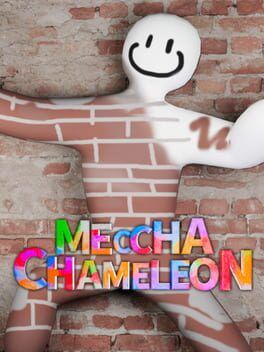
Meccha Chameleon did not look like the next Steam phenomenon on paper. It launched as a cheap, slightly awkward looking multiplayer hide-and-seek game where everyone starts as a white mannequin, then smears paint over themselves to blend into the scenery. Yet in under two weeks, the game has blown past 7 million sales, pushed peak concurrents into the hundreds of thousands, and taken over Twitch with clip‑friendly chaos.
Its rise follows a now familiar arc for viral multiplayer indies, but the specific way Meccha Chameleon mixes painting, stealth and player creativity gives it a different kind of staying power. It is not just a social deduction game or a prop hunt variant. It is a camouflage sandbox where the level itself becomes a canvas, and the community keeps redrawing the lines.
A simple premise that sells itself
At its core, Meccha Chameleon is built on a single readable hook: paint yourself to disappear. Hiders spawn into each map as white figures carrying a paint tool. With a small palette, an eyedropper and a brush, they sample colors from nearby walls, props and floors, then hand‑paint their bodies to match.
There is nothing subtle about it. Your avatar becomes a walking patchwork of color blocks and rough gradients. You line your limbs up with stripes in the wallpaper, crouch in front of vending machines, or freeze mid‑pose in a crowd of painted NPCs. When it works, you vanish. When it does not, you get caught in the most embarrassing way possible: frozen in a ridiculous stance, half the wrong shade of blue.
For Seekers, the job is to spot what feels “off.” A shadow that is a little too bright, a mannequin whose brush strokes do not quite match the tiled floor, a player trying to hold a yoga pose on a bookshelf. Seekers do not need complex abilities. The core tension comes from scanning an environment where every player is trying to mimic the same space as closely as possible.
This makes Meccha Chameleon absurdly easy to understand in a single screenshot or 10‑second clip. You see a player painting themselves into a poster or blending into the ceiling lights, and you immediately get the joke. The rules barely need explaining, which is exactly what you want for a game that relies on streamers, TikTok and word‑of‑mouth.
Why the camouflage gameplay feels different
Plenty of games have chased the “just one more round” energy of Among Us and prop hunt modes, but Meccha Chameleon leans into painting and physical comedy instead of deduction or gunplay.
The first big difference is that camouflage is manual and imprecise. Your success comes from your eye for color, your brush control and your ability to improvise with limited tools under time pressure. Trying to match a complex mural or a noisy carpet pattern in under a minute is a mini‑puzzle in itself.
Because your character is always visible to you, there is a surreal moment every round where you think “There is no way this will fool anyone” and then you survive the entire timer because the Seeker never looks twice at your sloppy stripes. The gap between how obvious you feel and how invisible you actually are produces a constant stream of funny near‑misses and highlight clips.
The second difference is how much animation and posing matter. Meccha Chameleon gives hiders playful emotes and idle poses, so you can commit to the bit. Standing rigid against a painted column, slouching like a badly modeled statue or pretending to be a vending machine all rely on your physical performance as much as your paint job. This mix of visual art and improv comedy gives the game a party‑game vibe that sits closer to Garry’s Mod sandbox chaos than a traditional competitive shooter.
Finally, rounds are fast. Matches cycle through quickly, letting new players experiment without long downtime. That short loop makes it feel low stakes and bingeable, perfect for big groups and random Steam joins.
How a tiny stealth comedy game hit 7 million
Hitting 7 million sales in under two weeks places Meccha Chameleon in rare company among indie multiplayer releases. Several factors lined up at once.
The low price point and small download size made it easy to impulse buy and convince friends to join. That reduces friction at the exact moment when Steam’s recommendation systems and “Most Played” charts start to kick in. A game that costs only a few dollars and loads fast is the ideal “we need something dumb to play tonight” pick.
Streaming appeal did the rest. Meccha Chameleon is tailor made for reaction thumbnails and short‑form videos. Viewers get instant payoff from a montage of dramatic reveals and failed disguises. Streamers can play with chat by taking skin suggestions, recreating famous paintings or running “find the streamer” custom lobbies.
On Steam itself, positive word of mouth settled quickly. Early reviews highlight the same selling points: easy to pick up, surprisingly deep hiding options, and endless goofy moments with friends. That consistency likely helped the game hold a Very Positive rating as it surged up the charts, which is crucial for undecided buyers skimming the store page.
There is also a timing angle. Meccha Chameleon arrived in a stretch with relatively few big multiplayer launches and neatly slotted into the gap between heavier competitive titles. For players burned out on battle passes and ranked ladders, a four‑dollar color‑smearing party game was an easy palette cleanser.
Community maps turn every match into a new canvas
If the hook gets players in the door, the map ecosystem is what keeps them coming back. Meccha Chameleon launched with a small but tight set of official stages, each built around a clear visual identity and painting challenge. You learn the color language of each environment, from harsh neon signs to muted office grays.
Very quickly though, attention shifted to Steam Workshop. Lemorion shipped the game with full map support and lightweight creator tools, and the community has taken that invitation seriously. The Workshop is already full of tightly designed arenas, experimental oddities and high‑concept art galleries.
One of the breakout examples to circulate in news coverage is an Art Gallery map where players arrange themselves as living brush strokes, recreating the Mona Lisa and other famous paintings. Hiders literally become part of the exhibit, posing in formation while Seekers try to figure out which strokes are human. It showcases how the core mechanics naturally invite collaborative performance and visual jokes.
Other popular custom maps lean into pop culture riffs, cramped horror spaces or architectural showpieces that push the painting system to its limits. A slick Japanese streetscape, teased as an official map, layers lantern glow, signage and alleyway clutter to create an environment where there is never a “perfect” camouflage and improvisation becomes the whole point.
These maps do more than add variety. They subtly change how you think about the game. You stop seeing it as a static set of hiding spots and start treating it like a toolbox for collaborative stagecraft. Creators experiment with sightlines, color gradients and prop placement to encourage new styles of hiding, from minimalist monochrome rooms to kaleidoscopic markets.
Because custom maps publish through Steam Workshop, there is a feedback loop in place. Good designs float to the top through ratings and subscriber counts. Streamers pick up the most interesting stages, which brings more players to those creators’ work and encourages others to build maps that are both fun to play and fun to watch. In practice, that turns map making into another form of performance art within the Meccha Chameleon ecosystem.
Why the momentum might last
Viral multiplayer hits often burn out once the initial joke wears thin, but Meccha Chameleon is positioning itself for a longer tail.
At a mechanical level, the act of painting and hiding has a lot of unexplored depth. You can experiment with advanced camouflage tricks such as disrupting your silhouette with high contrast limbs, using shadows as part of your pattern or deliberately misaligning stripes to exploit how Seekers scan. As new maps arrive with stranger color schemes and lighting setups, players keep discovering fresh ways to disappear in plain sight.
On the content side, regular updates and new official maps give the community a rhythm to rally around. Even small additions such as new poses, brush textures or environmental props can dramatically reshape the metagame, because they expand the vocabulary of visual tricks available to hiders.
Most importantly, the map tools and Workshop integration lower the barrier for community creativity. As long as people are tinkering with small arenas, art spaces and themed joke maps, there will be new hiding puzzles waiting on the browser page. That constant churn of fresh spaces turns Meccha Chameleon into something closer to a platform for creative hide‑and‑seek than a single static game.
If Lemorion can maintain stability, keep moderation tools in step with its growing audience and continue to surface standout community maps, there is a clear path for Meccha Chameleon to evolve the way other evergreen party titles have. The formula is simple but surprisingly elastic: new spaces, new colors, new ways to humiliate your friends.
In an era dominated by sprawling live‑service games, Meccha Chameleon’s sudden ascent shows there is still room for a tiny, eccentric idea executed with clarity. Give players a brush, a wall and a timer, then let them hide. The community will take care of the rest.