
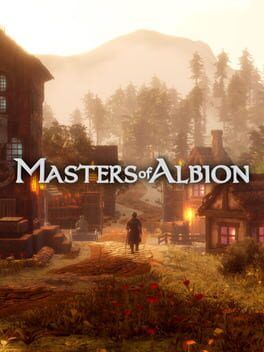
Breaking down the new Masters of Albion trailer, its build-by-day, fight-by-night systems, and how Peter Molyneux is folding Populous, Black & White, and Fable into one final god game ahead of its April PC launch.
Peter Molyneux has been calling Masters of Albion “the culmination of my life’s work,” and for once that doesn’t feel like empty hyperbole. With an April 22 PC launch locked in and a new release date trailer out, his apparent final game is openly built as a grand remix of Populous, Black & White, Dungeon Keeper, and Fable, wrapped in a modern city‑builder and survival framework.
Masters of Albion is a god game about rhythm and responsibility. By day, you sculpt a settlement, micromanage its culture, and literally design what your people eat, wear, and wield. By night, the world turns hostile, pushing your bespoke toybox into a desperate tower‑defense‑meets‑action brawl. It is part chill village sim, part moral experiment, part war story.
The new trailer: cosy daylight, brutal midnight
The latest trailer leans hard into that contrast. It opens with the signature “god hand” drifting over a bright, storybook countryside. With a grab and a pinch, the player plops down houses, nudges trees aside, and drops in work buildings that immediately send tiny villagers scrambling. There is no menu‑driven abstraction here: the hand is the UI.
We quickly see one of Masters of Albion’s signatures: authored yet flexible customization. The hand picks up raw resources and runs them through a crafting chain, ultimately producing gear that is clearly player‑designed. A villager gets handed a comically oversized sword apparently forged from a loaf of bread, and another sports armor that looks more like festival costume than military kit. Molyneux narrates that you can design everything from food and clothing to weapons and houses.
Halfway through, the tone shifts. The ambient music darkens, the sky bleeds purple, and Albion’s hills crawl with twisted, magic‑warped beasts. The camera zooms into your town walls as waves of creatures hammer at gates and torch outlying buildings. Defensive towers you placed in the serene daylight now sputter arrows and magic blasts. The same citizens you dressed and housed are suddenly on the ramparts, fighting for their lives with whatever you built for them.
The trailer’s final beat underlines consequence. Survivors gather around ruined streets at sunrise, visibly fewer than before, while Molyneux talks about power and responsibility. The message is clear: whatever you design in the day will be stress‑tested that night, and the losses will linger.
Core loop: build by day, fight by night
Underneath the marketing line is a straightforward, tightly linked loop.
Daytime is about construction, planning, and expression. You sculpt the town with the god hand, placing structures, shaping roads, and assigning work. Villagers can be nudged into professions with a literal push, or you can transform them more dramatically by possessing them and living a day in their shoes.
Nighttime flips the same space into a survival arena. The enemies come in waves, drawn by the magic that is returning to Albion and destabilizing its society. Combat appears to play out in two layers: top‑down command as a god, directing defenses and repositioning units, and direct control if you leap into a particular hero or champion.
The most important design choice is that there is no clean reset at dawn. Casualties, damage, and resource expenditure roll forward. If you splurge on extravagant armor sets at the expense of walls and watchtowers, the next night will test that imbalance. Masters of Albion is not just about surviving one wave, but about nurturing a culture resilient enough to survive many.
The god hand: Black & White’s legacy refined
The literal hand of god is the most obvious throwback to Black & White, but Masters of Albion uses it in a more systemic, less stunt‑driven way.
You use the hand to pick up and place buildings, but also to grab villagers, drag resources across the map, and physically sculpt the flow of your town. In Black & White the hand was often a novelty for throwing rocks or slapping your creature. In Masters of Albion it is a full controller for every discipline: city‑builder, RTS, and RPG.
The possession mechanic is where the hand really evolves. At any time you can reach down, pluck a citizen, and then “drop” yourself into their perspective. The camera snaps into third‑person behind a single character, turning a god game into a Fable‑like action adventure for as long as you stay there.
In practice that looks like a multi‑genre hinge. You design armor at god scale, then inhabit a champion and feel how weighty or ridiculous it is in moment‑to‑moment combat. You send a small party on a quest beyond the town walls, not as an abstract mission timer but as a group you personally escort. When you leave their body, the hand zooms back out and they resume their AI‑driven routines, altered by the experience.
Designing everything: Populous scale, Fable personality
Where Populous was about manipulating land and indirect influence, Masters of Albion is about curating a total culture. The team talks about letting you design almost every surface your villagers touch.
Food is not just a resource number. You can decide what kind of dishes define your settlement, which in turn influences villager happiness, productivity, and perhaps even combat readiness. A town subsisting on cheap gruel will have very different morale from a place famous for hearty stews or elaborate feasts.
Clothing and armor affect not just stats but identity. In the trailer we see villagers in wildly varied outfits, from humble tunics to ostentatious plate. Think of it as Fable’s paper‑doll dress‑up applied to an entire population. Their appearance reflects your priorities: utilitarian, militaristic, decadent, or whimsical.
Weapons are almost a toybox. Molyneux delights in showing joke items like bread swords, but the implication is a deeper crafting system where material, shape, and ornament have tangible effects. The humour recalls Fable, but what you craft here feeds into the town’s survival calculus every night.
Even housing is customizable. Rather than slotting in generic “house tier 1/2/3” units, Masters of Albion allows you to tune style and layout, so entire districts can take on a coherent character. That carries Dungeon Keeper’s pride in base aesthetics into a more optimistic, open‑air context.
Strategy, sim, and defense: Dungeon Keeper in the daylight
The strategic layer pulls directly from Dungeon Keeper’s love of planning for an inevitable assault. Instead of underground lairs and hellish traps, you are dealing in palisades, choke points, and overlapping fields of fire.
You choose where to place barracks, watchtowers, and resource hubs and how to route roads so villagers can scramble to their stations quickly when night falls. The satisfaction comes from seeing your daytime layout turn into a functional battle machine.
Unlike classic tower defense games, your defenders are persistent citizens with faces and histories. A farmer you guided through a possession‑driven quest might now be a frontline captain. Losing them is not just a numbers hit but a narrative one. That emotional sting is very much in line with Molyneux’s older experiments with attachment and consequence.
Morality and consequence: Fable’s shadow over Albion
The Fable DNA shows up in how Masters of Albion treats your power. You can be an inspiring, generous god, investing heavily in your people’s comfort and safety. Or you can be a tyrant whose monuments tower over starving followers.
In interviews Molyneux has hinted at a nuanced morality system tied less to bright halos and devil horns and more to how your town feels and behaves. A cared‑for populace might be braver at night and more creative by day. An oppressed one might be brutally efficient, but prone to unrest or desertion.
Because you can possess individuals, those ethical choices land on both macro and micro scales. You might rally a scared militia with a heroic speech as a possessed leader, then zoom out and re‑zone an entire district to make way for more defenses. The two perspectives keep moral decisions uncomfortably close.
A veteran dream team, not just a nostalgia act
Masters of Albion is not just a Molyneux solo project buried in his own back catalog. 22cans has quietly assembled a small all‑star team of people who helped shape his earlier games and the wider creative‑sandbox scene.
Media Molecule co‑founder Mark Healey is serving as art director. Before LittleBigPlanet and Dreams, he worked on Black & White, Fable, and Theme Park. That lineage shows in Masters of Albion’s aesthetic, which walks a tightrope between playful and ominous.
Composer Russell Shaw returns from the Bullfrog and Lionhead days to score Albion’s cycles of calm and crisis. His work on games like Black & White and Fable helped sell their emotional swings, and the new trailer’s music suggests a similar approach here, with cozy daytime motifs twisting into something more threatening at night.
Black & White 2 designer Iain Wright and former LittleBigPlanet art director Kareem Ettouney round out the list of veterans. Their presence matters because Masters of Albion is trying to bridge old‑school systemic depth with modern expectation of polish and readability.
Evolving the old ideas instead of repeating them
What makes Masters of Albion interesting is not just that it borrows from Populous, Black & White, and Fable, but how it tries to solve problems those games left on the table.
Populous made you feel powerful but distant. Albion keeps the world small and dense enough that you recognize individual villagers, and lets you temporarily walk among them. That answers the old genre criticism that god games are emotionally cold.
Black & White gave you a striking god hand and morality, but much of its mechanical depth sat in fiddly gesture casting and micromanaging a single creature. Masters of Albion uses the hand as a broad, clean control metaphor for everything, while the creature role is essentially offloaded to your entire town, whose fate reflects your behaviour.
Fable chased consequence, but often only for a single hero whose choices did not dramatically reshape NPC lives outside scripted beats. Here, consequence arrives in hard economic and survival terms. If you spend extravagantly on your own champion’s gear while your walls crumble, the next night’s casualties will reflect that indulgence.
Dungeon Keeper reveled in being the villain, but there was little pushback against purely exploitative play beyond some balance constraints. Albion looks set to explore the long‑term fragility of a fear‑ruled town, where short‑term efficiency can poison long‑term resilience.
A modern god game facing modern expectations
Masters of Albion is also framed as a redemption story for Molyneux himself. After years of justified criticism for overpromising and underdelivering, he has been careful in recent interviews to talk more about concrete systems than wild hypotheticals.
The pitch is still very ambitious: a god game that smoothly shifts into third‑person action, a deeply customizable town where every cosmetic choice carries meaning, and a narrative about the return of magic that supposedly adapts to your leadership style. But there is also a visible effort to ground those ideas in clear, repeatable loops like build by day and fight by night.
The decision to launch exclusively on PC via Steam, with a tight focus on single‑player and a dedicated Early Access‑style roadmap, suggests 22cans wants to grow complexity in view of the community rather than hide behind mysterious cubes or vague promises.
Why this feels like a true “culmination”
Across the trailer and interviews, you can trace nearly every major obsession of Molyneux’s career.
From Populous comes the thrill of reshaping terrain and guiding a people indirectly. From Black & White, the physicality of the god hand and the tension between benevolence and cruelty. From Dungeon Keeper, the joy of constructing a base that sings under pressure. From Fable, the desire to walk the world as a specific person, with playful British fantasy and moral consequence woven through.
The difference is that Masters of Albion stacks them instead of choosing one at a time. It asks you to be architect, strategist, storyteller, and sometimes front‑line hero in the same persistent space, with one set of citizens bearing the weight of your decisions.
Whether it will live up to that promise is an open question that only April’s launch can answer. But taken on its own terms, the new trailer and feature breakdown make a convincing case for why Molyneux calls Masters of Albion his culmination. It is not just a greatest‑hits package for long‑time fans; it is an attempt to drag the god game into 2026 with all the messy interlocking systems that modern players expect.
If it holds together, Albion might finally give the genre a new cornerstone instead of another relic to look back on.