
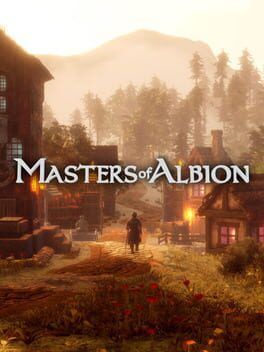
With Masters of Albion launching in April, Peter Molyneux and 22cans are returning to the god game roots of Populous and Black & White while folding in Fable‑style morality and storytelling. Here is how its build‑by‑day, fight‑by‑night loop works, and why the retirement of parody account Peter Molydeux feels like a cultural curtain call on Molyneux’s legacy.
Masters of Albion is being framed as two endings at once. It is Peter Molyneux’s last game, due April 22 on PC and Mac, and it is also the moment the long‑running parody account Peter Molydeux finally calls it a day. One is a literal swan song for a designer, the other a cultural sign‑off for an era when his wild promises helped define how we talked about ambitious game design.
In that context, Masters of Albion is not just another strategy sim. It is being pitched as a deliberate summation of Populous, Black & White and Fable, with a day‑night loop that tries to condense three decades of Molyneux’s obsessions into one tight god game.
The god‑game loop: build by day, fight by night
At the heart of Masters of Albion is a strict rhythm. Days are for building up your pocket kingdom, nights are for throwing that kingdom into the fire and seeing what survives.
During the day, you hover over Albion as an unseen power. This is the clearest return to Populous and Black & White. You shape settlements, lay out roads, tweak farms and workshops, and define the economic backbone that will determine whether your people thrive or collapse. Every system spirals outward from that god’s‑eye view of cause and effect, from the food they eat to the clothes they wear and the weapons they take into battle.
Unlike the more abstract worlds of Populous, Masters of Albion drills down into the texture of village life. Buildings are not just static output boxes. What you choose to construct decides who prospers, who starves, who gets to live in relative comfort and who is pushed to the margins. The game wants you to feel like you are authoring a living diorama rather than just optimizing a resource chart.
When night falls, the camera tilts away from god mode toward ground level. Conflict arrives, and Masters of Albion switches gears into a more direct, possession‑driven control scheme. You can inhabit individual characters at will, jumping between them to swing a sword, unleash abilities and try to salvage the plans you laid during the day.
This day‑night seesaw is the central promise. You are never just a detached city planner or just an action hero. You are both, oscillating between omniscient architect and on‑the‑ground problem solver, with each phase feeding into the next. A short‑sighted decision made under the calm blue sky of daytime might spiral into a desperate nighttime scramble as your under‑equipped militia buckles under pressure.
Crucially, the loop is framed as a story of power and consequence. You are not only defending what you have built. You are constantly discovering what your choices meant once steel meets steel.
Possession as the bridge between god and human
The possession mechanic is the clearest nod to Black & White’s fascination with presence and agency. There, the focus was on training a single creature that mirrored your behavior. Here, the focus shifts to the entire population.
At any point you can drop into a villager, a soldier or another key figure in your settlement. When you do, the interface reshapes itself around that character’s immediate priorities. Possession is the hinge that lets the game swing between high‑level simulation and close‑quarters action without feeling like separate modes bolted together.
This dual perspective is where Masters of Albion can potentially move beyond nostalgia. Looking down, you see a network of systems: supply lines, housing, morale. Looking out from a possessed character’s eyes, you feel the practical stakes of those systems. The armor you underfunded during the day is the armor you are wearing when the enemy crashes through the gates.
In theory, this answers a long‑standing tension in god games. The genre often struggles to make you care about individual lives when you spend most of your time looking at tiles. By letting you inhabit those lives, Masters of Albion aims to reconnect the macro and the micro, the spreadsheet and the story.
The spiritual culmination of Populous, Black & White and Fable
Masters of Albion wears its lineage openly. Populous gave Molyneux the template for abstract, omnipotent play. Black & White charged that template with morality and spectacle, turning a god game into a kind of personality test, with miracles, worship and a responsive creature. Fable took his interest in consequence and folded it into narrative, choice and character‑driven progression.
Here, those threads knot together.
From Populous, you get the satisfaction of nudging entire settlements into existence. Your focus is on terrain, layout and the flow of people rather than detailed character builds. The thrill is seeing cause and effect ripple outward from a few key decisions.
From Black & White, you get the fascination with how belief and behavior reshape a world. While Masters of Albion is not simply repeating that game’s overt morality meter, its talk of power and consequence and its god‑game framing signal a return to that question of what kind of entity you choose to be when the people below can feel the results.
From Fable, you get an emphasis on personality and story. The possession system brings you down to the level where individual relationships, battles and tiny emergent dramas can play out. The narrative framing of Albion as a place with history and texture tips the experience toward fantasy adventure rather than pure simulation.
Taken together, it feels like Molyneux and 22cans are trying to design a playable career retrospective. Every day‑night cycle is a small echo of his whole body of work: big ideas pitched from a distance, then the messy, human consequences on the ground.
A final shot at redemption
There is a reason this project is being talked about in such dramatic terms. After Godus and the broader backlash to overpromised features earlier in the 2010s, Molyneux largely stepped away from the spotlight. Masters of Albion is described as his last game, which immediately invites the idea of a final verdict.
Calling it a redemption title puts a lot of pressure on what is still a relatively modest‑sized strategy and simulation game. Yet the day‑night loop and possession systems hint at a return to what made his best work resonate. They are contained, graspable ideas that nevertheless leave room for wild emergent outcomes.
Success here will not be judged on how many outlandish promises it makes, but on whether the interplay between god game management and nighttime combat produces the unpredictable stories his earlier games were famous for. If you can feel that through line from your first thatched hut to the last stand on the ramparts, the design will have done its job.
Peter Molydeux retires, and an era closes
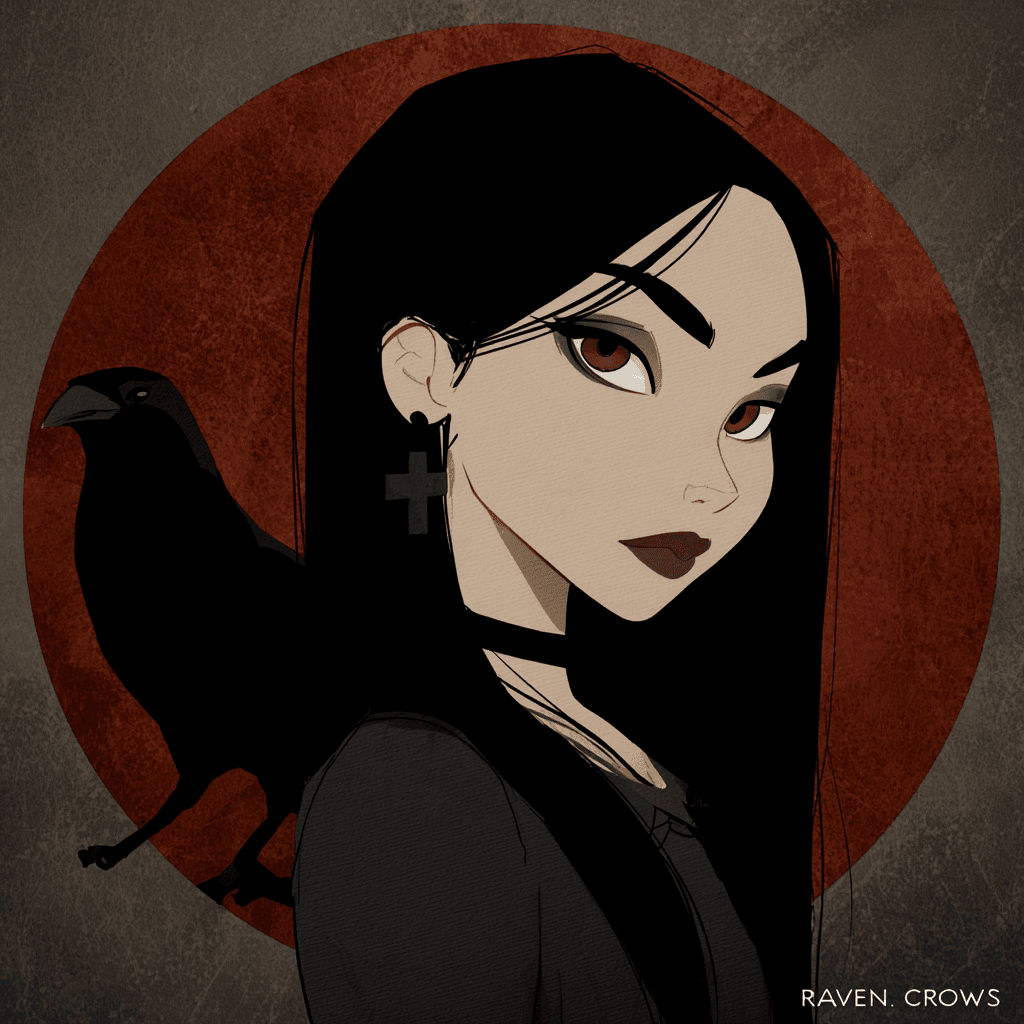
The other half of this story lives outside the game itself. The parody account Peter Molydeux, created in 2009 by artist Adam Capone, is also retiring, specifically to coincide with Masters of Albion and Molyneux’s own departure from development.
For 17 years Molydeux exaggerated Molyneux’s public persona into surreal design pitches. Imagine a game where you can date your weapons. Imagine a game where you can do anything, but only once. The joke worked because it was affectionate. It gently mocked the breathless promises without dismissing the underlying belief that games could be stranger, more personal and more ambitious.
Molydeux did more than farm likes. It sparked real experiments. MolyJam in 2012 challenged developers to build games based on the tweets, resulting in hundreds of prototypes. A follow‑up jam in 2013 used actual Molyneux quotes instead. Molyneux himself turned up, giving talks that argued for creativity over safe, recycled formulas at a time when the industry was doubling down on sequels and tech showpieces.
In his farewell, Capone points out that what once read as absurd is now normal. Indie hits and experimental projects have embraced ideas that could have been straight out of a Molydeux feed. Being a hole that swallows a town, progressing through photography, playing as a cat, foregrounding accessibility and flexible difficulty, putting more women and diverse casts on the box: these are no longer hypothetical provocations, but parts of the mainstream.
The account’s retirement alongside Masters of Albion feels like a cultural bookend. For years, the parody was a mirror held up to a specific kind of designer, one who talked in breathless what‑ifs and treated every feature as a revolution. As that figure recedes from the industry and the experiments he inspired become scattered across thousands of smaller studios, the need for that mirror fades too.
Looking ahead to Albion
What does that leave Masters of Albion as it approaches launch in April? On one level, it is another strategy and simulation title in a crowded PC market, promising a compelling loop of daytime planning and nighttime survival. On another, it is a rare moment of self‑reflection from a designer whose work has loomed large over how we think about god games, morality systems and player choice.
If the game can make its build‑by‑day, fight‑by‑night structure sing, it may end up as more than nostalgia. It could be a practical demonstration of what Molyneux and his parody alter ego were both pushing toward in different ways: games where systems, stories and wild ideas intersect in ways that feel personal and surprising.
With Peter Molydeux gone and Molyneux himself bowing out, Masters of Albion has a chance to close the loop. Not by promising the impossible, but by delivering a sharp, focused god game that carries the DNA of Populous, Black & White and Fable into something that feels like a final, honest statement.