
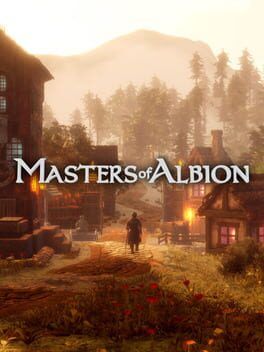

A skeptical-but-hopeful look at Masters of Albion, breaking down its god-hand city building, day/night split, and Fable‑style possession to see whether there’s more here than nostalgia for Bullfrog and Lionhead classics.
Masters of Albion arrives with a pitch that sounds almost suspiciously perfect if you grew up on Bullfrog and Lionhead games. It is a god game with a giant divine hand, a city builder about modular workshops and production chains, a light economic sim about crafting pies and swords, and a third-person action RPG where you possess heroes and fight off nightly invasions. It is also the latest project from Peter Molyneux, whose career is defined as much by overpromised features as by genuinely brilliant ideas.
The interesting question is not whether Masters of Albion can trigger nostalgia. It clearly does. The question is whether the specific systems that previews have seen suggest a game that can stand beside Black & White, Dungeon Keeper, and Fable rather than just evoke them.
A “greatest hits” structure: god-hand by day, hero at night
The most concrete structural idea is its day/night loop. By day, you hover above the landscape as a god, manipulating the world with a big floating hand. You pluck trees from the ground, reshape plots, drop buildings into place, and slap down roads. Settlements are not pre-fab grids but clusters of blocky, modular structures you assemble part by part, from foundations to chimneys.
This is where the game leans hardest into the Bullfrog fantasy of being both city planner and mischievous deity. Early hands-on reports describe a generous, tactile camera that lets you swoop from high-level overview down to street level, flicking villagers around and repositioning pieces until things feel just right. It is not as free-form as sculpting terrain in Black & White, but the intent is similar: express power directly with your cursor, instead of living entirely in abstract menus.
When night falls, control shifts. The tone flips from breezy management to defense and direct action as monsters pour out of the wilderness. You can still act as a god, but the focus moves to possessing individual characters and playing them in third person, with camera pulled over the shoulder in a way that deliberately recalls Fable.
On paper it solves a classic god-game problem. Pure sandboxes often struggle to generate tension once you have a stable economy. The day/night split gives Masters of Albion an automatic pulse: every serene building phase carries the shadow of an incoming wave, and every chaotic defense feeds back into a calmer rebuilding and expansion period.
The risk is that this becomes two shallow games instead of one deep one. The previews that have seen a full in-game day describe a loop that looks coherent and entertaining, but also note that combat in particular will need nuance if it is going to be more than a novelty between building sessions.
Systems-first city building: blocks, beacons, and production lines
Mechanically, the daytime half is the most detailed thing we have seen so far, and it is where Masters of Albion looks closest to delivering on its pitch.
Settlements are composed from modular building pieces rather than fixed blueprints. You assemble a bakery or a blacksmith by slotting together functional modules. A taller chimney, extra ovens, or additional workbenches all physically change the structure and, in theory, its output and efficiency. This block-based approach echoes the toy-box creativity of things like The Movies and even LittleBigPlanet, but applied to economic infrastructure instead of films or levels.
Underneath that is a simple but legible production-chain model. Farms generate raw materials. Those go to workshops, which process them into finished goods. The game tracks throughput in a visibly gamified way, with conveyors, stacks of resources and clear visual feedback showing bottlenecks or underused capacity. Previews from Eurogamer and PC Gamer both emphasize how readable this is, with a lot of information conveyed through animation rather than number-heavy UI.
Expansion works through a network of beacons scattered around the map. You extend your influence by sending out heroes, cleansing corruption and lighting these towers, which then unlock more terrain for your hand to manipulate. It is an elegant solution to a common pacing problem in city builders, gating new resources and build space behind light exploration rather than traditional tech trees.
On the credibility front, these are not airy promises, they are systems that have already been shown in extended demos. You can see the god hand placing modular pieces, watch production chains start and stop, and track influence radiating out from newly lit beacons. Whether they will sustain long-term interest is an open question, but they exist in functioning form.
Crafting as economic play, not busywork
Another promising element is how Masters of Albion treats crafting and commerce. Instead of treating recipes as fixed, the game lets you tune individual products. A pie is not just a generic “food” item but a design made from a set of ingredients and attributes. The same goes for weapons, armor and other goods.
Once a product is defined, it enters the game’s simplified market simulation. Villagers have needs and preferences, caravans come and go, and prices respond to what you are flooding the world with. The fantasy is that you are not just feeding a town but effectively designing its culture and economy. You decide whether your settlement becomes known for cheap mass-produced tat or high-end goods that take longer to make but sell dearly.
Hands-on coverage suggests this system is still early, but crucially, it has clear levers. You can adjust the complexity and quality of a design, link that to a physical production line, and then see numbers shift in response. It is less ambitious than some of Molyneux’s historic economic pitches, and that is probably a good thing. Grounded, legible simulations are more believable than sweeping promises of fully emergent societies.
Possession and the Fable problem
The most nostalgic hook here is possession. At any time you can dive out of your godly perspective into the body of a villager or hero, controlling them directly. Walk the streets you laid out earlier, talk to NPCs, swing a sword and fire off abilities. In concept this is the missing link between god games and action RPGs, the connective tissue Molyneux has gestured at since Black & White but never fully realized.
Previews say that at this stage the hero mode is functional but basic. You can fight, trigger abilities and explore, but movement and combat feel workmanlike rather than revolutionary. That may be perfectly fine. As long as the third-person layer gives you a meaningful way to influence the world, and a different vantage point from which to appreciate your decisions, it does not need to compete with dedicated action games.
The danger is that marketing focuses hard on the Fable comparison and invites expectations the systems cannot meet. Several writers explicitly call Masters of Albion a “greatest hits” compilation of Molyneux’s past games. That is a flattering description, but also a sobering one. A reminder that these are references to some of the most beloved sim and action games of their eras, not soft targets.
So far, the concrete mechanics look more modest than that tagline implies. Possession is a clever camera trick and control swap layered over a god sim, not a full second game hiding inside the first. That might actually be the more credible route, as long as expectations are set accordingly.
Scope versus execution
If there is a shared note across Eurogamer, PC Gamer and IGN’s coverage, it is that Masters of Albion is big but not impossibly so. Its main systems are discrete and understandable. God-hand building, modular construction, production lines, possession, nightly raids. None of these are individually unprecedented. The ambition lies in how neatly they interlock rather than in raw feature count.
Night brings tower-defense flavor. You position ballistas, turrets and other defenses during the day, then rely on them alongside your possessed hero when the undead arrive. This lets the game test whether your layout and resourcing decisions actually matter. A poorly planned village will fold; a carefully layered one will survive and grow.
The world structure sounds similarly pragmatic. Instead of a pure sandbox, you have an open regioned map with quests, story beats and moral choices threading through it. That gives 22Cans room to direct players toward specific mechanics, introduce new systems at controlled points, and avoid the shapelessness that can sink even clever simulations.
Of course, this is being built as an Early Access project. That choice both reassures and complicates trust. On the one hand, it means the studio is leaving room for iteration and does not need to ship every hypothetical feature on day one. On the other, it recalls 22Cans’ uneven track record with evolving live projects. If Masters of Albion leans on Early Access to fill in important gaps like combat depth or late-game variety, players will rightly want a clear roadmap and evidence of follow-through.
Nostalgia as both asset and trap
There is no getting away from how directly this game plays to fans of Bullfrog and Lionhead. The disembodied hand, the slightly cheeky British fantasy tone, the mixture of systems-driven simulation and scripted questing, even the presence of long-time collaborators like composer Russel Shaw all signal a deliberate return to an earlier design ethos.
That is not inherently a problem. In an industry that often chases live-service metrics and aggressive monetization, a single-player sim that cares about tactile interaction and playful cause-and-effect is genuinely refreshing. If Masters of Albion simply delivers a good modern god game that borrows some old tricks, that might be enough.
The risk is that nostalgia fills in the blanks where systems are still fuzzy. When a preview mentions a morality system, fans mentally overlay the richness of Fable’s choices. When someone talks about dynamic villagers reacting to your divine whims, it is easy to picture the emergent chaos of Dungeon Keeper’s dungeons or the creature antics of Black & White. The concrete mechanics shown so far support a flavorful, systemic sandbox, but they do not yet justify assuming that same depth of simulation or narrative consequence.
A skeptical reading is that Masters of Albion is a carefully scoped, enjoyable hybrid wrapped in marketing language that implies more sweeping change than it can feasibly deliver. An optimistic reading is that this restraint is exactly what Molyneux’s ideas have needed for years, and that Early Access will provide space to deepen the systems that are already working.
Where the credibility actually lies
Strip away the legacy and there are a few anchors that make Masters of Albion feel more credible than some of its spiritual predecessors.
What has been shown is heavily systems-forward. You can see the god hand busily arranging modular pieces rather than listening to a promise about someday rearranging the landscape. You can watch supply chains jam when a farm is too far from a workshop. You can follow a hero lighting a beacon and watch your godly radius expand. You can observe day rolling into night and monsters spawning in clear, rule-based patterns.
These are small things, but they matter because they are real. They give critics and players something to interrogate beyond concept art and grand statements. When previews raise concerns, they are not abstract. They are about whether combat will have enough depth, whether the economic layer will produce interesting decisions rather than solved optimizations, whether modular building will stay intuitive as complexity rises.
That kind of skepticism is healthy, and it is entirely compatible with curiosity. Right now, Masters of Albion looks like a smart attempt to reconcile the mischievous, tactile charm of old god games with the expectations of a modern hybrid sim. It borrows freely from Molyneux’s back catalogue, but the pitch is less about invention than about integration.
Whether that is enough to make it more than a nostalgia piece will only be clear once players have their own hands, godly or otherwise, on it. For now, at least, the foundations are visible, the systems are tangible, and the promises are just grounded enough to take seriously without taking on faith.