
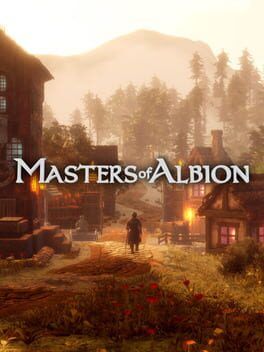
Peter Molyneux’s Masters of Albion hits Early Access on April 22 with a day‑night loop of town building and creature defense. We break down the actual systems behind the nostalgia pitch and what success would look like in its first public build.
Masters of Albion is walking into Early Access on April 22 carrying a lot of history. It is billed as a return to the classic god game formula, but the more important question is whether there is a clear, modern strategy design underneath the nostalgia. Early Access will not be won on memories of Black & White alone. It will be decided by how strong the day and night loop feels, how satisfying town management becomes, and whether defending your people is more than busywork between building sessions.
A God Game Built Around a 24-Hour Loop
Masters of Albion is structured around a distinct day and night rhythm. Daytime belongs to planning, building, and nudging your settlement forward. Night belongs to reaction and defense as creatures push back against your growth. The success of this structure will hinge on how tightly those halves speak to each other.
If day is mostly about watching timers tick down and placing new buildings on a grid, the god game fantasy will feel thin. The appeal here is the idea that every decision you make in the warm light of day has teeth once darkness falls. If you invest in walls over farms, you might hold the next attack but see hunger spike. If you pour resources into industry and population, you risk exposing a soft underbelly to predators. A good day‑night loop turns every small town management choice into an implicit combat preparation.
The Early Access build needs to prove that days are not a pause before the real action, and nights are not just a punishment for experimenting. When those two phases are tuned well, players naturally start thinking in 24-hour strategies instead of isolated tasks. That is where a modern god game lives.
The Town Management Loop Needs Depth, Not Just Charm
22cans describes Masters of Albion as a game where you influence everything from food and clothing to weapons and homes. That suggests a broad management layer rather than a thin cosmetic one. In practice, the town loop will be judged on three main questions: how meaningful its decisions feel, how readable its systems are, and whether it can sustain long-term campaigns.
Meaningful decisions start with constrained resources. If you can easily afford everything, the role of a god collapses into simple decoration. Early Access should make it clear that you must specialize, improvise, and accept tradeoffs. Committing to a martial society, a prosperous trade hub, or a comfortable agrarian town should echo through production chains, population expectations, and even the types of threats that emerge.
Readability is just as critical. A modern strategy game cannot rely on opaque mood bars and hidden formulas. If the people of Albion are unhappy, players need specific, actionable feedback: food shortages, poorly defended homes, religious dissatisfaction, or mismanaged labor. When a creature attack wipes out a district, the game needs to help you understand how your previous day’s choices contributed to that collapse.
Longevity will come from how dynamic the town feels over many cycles. Systems like evolving citizen needs, shifting resource nodes, or escalating environmental pressures can keep a settlement from stagnating. If the first Early Access version can demonstrate even a basic arc – from struggling village to cohesive town with emerging identity – it will send the message that bigger systemic ambitions are on the way.
Creatures as Pressure, Not Just Enemies
Creature assaults at night are the main source of friction pushing back on your divine ambitions. They cannot just be health bars to whittle down. The promise of a spiritual successor to games like Dungeon Keeper is that the opposition feels like a living force, not simply a wave number.
In Early Access, the core test will be whether creatures meaningfully react to how you build. If you overextend, they should find the weak flank. If you concentrate defenses, they might start probing elsewhere or changing behavior. Even small touches like enemies targeting specific buildings or reacting differently to various terrains can make nightly defense feel like part of a broader strategic conversation.
Combat also needs to respect the god game fantasy. Direct control can easily overshadow the higher-level role that defines the genre. The ideal balance will let you intervene at key moments, perhaps by empowering units or manipulating the battlefield, while still rewarding careful planning during the day. If defending your town feels more like an RTS skirmish than a test of your godlike foresight, the identity of Masters of Albion could blur.
Player Expectations in 2026 for a God Game
Players coming into Masters of Albion will arrive with two overlapping but distinct sets of expectations. One group wants a modern, systems-driven strategy game that happens to be about divine influence. The other wants to recapture the feeling of nurturing followers from on high and watching simulations spin out in surprising directions.
To satisfy both, Early Access needs clarity. The opening hours should communicate what kind of god you are allowed to be. Are you primarily a city planner, a spiritual shepherd, or a battlefield force? How much freedom do you have to experiment with cruel or benevolent playstyles, and how does the simulation actually respond?
Modern expectations also mean strong quality-of-life features. Responsive controls, legible UI, and good pacing are not luxuries. If reading the status of your town or your people is a chore, the fantasy of all-seeing oversight collapses. Players will forgive missing content in Early Access, but they are far less forgiving of friction that obscures the systems they came to explore.
Crucially, communication about scope has to be precise. Success here will not come from hand-waving at grand possibilities. It will come from showing a clear roadmap that anchors features to the existing systems and explains how each update will deepen the loop of day, night, town, and defense.
What Success in Early Access Actually Looks Like
For Masters of Albion, success in the Early Access window is not about recreating a moment from the early 2000s. It is about proving that the fundamentals work today.
On a design level, that means a few key outcomes. First, players should emerge from the first several in-game days and nights with stories that directly tie their town layout, economic choices, and moral leanings to the attacks they faced. Second, the management layer should already show hints of complexity that encourage multiple playthroughs, whether through different build paths or varied difficulty curves. Third, the nightly tension should enhance, not interrupt, the pleasure of growing a settlement.
On a community level, success will look like constructive feedback focused on balance, depth, and clarity rather than confusion about what the game is trying to be. If Early Access impressions are full of players proposing tweaks to resource flows, creature behavior, and citizen AI, that is a sign the core loop has grabbed them. If the conversation skews toward speculation about missing features, technical instability, or unclear goals, that will be a warning sign.
Masters of Albion does not need to be definitive on day one. What it needs is a solid, replayable prototype of a god game that understands 2026 strategy tastes: clear systems, expressive playstyles, and enough unpredictability to make each new settlement feel like a fresh test of your divine instincts. If the April 22 build can deliver that foundation, nostalgia will be a bonus instead of a crutch.