
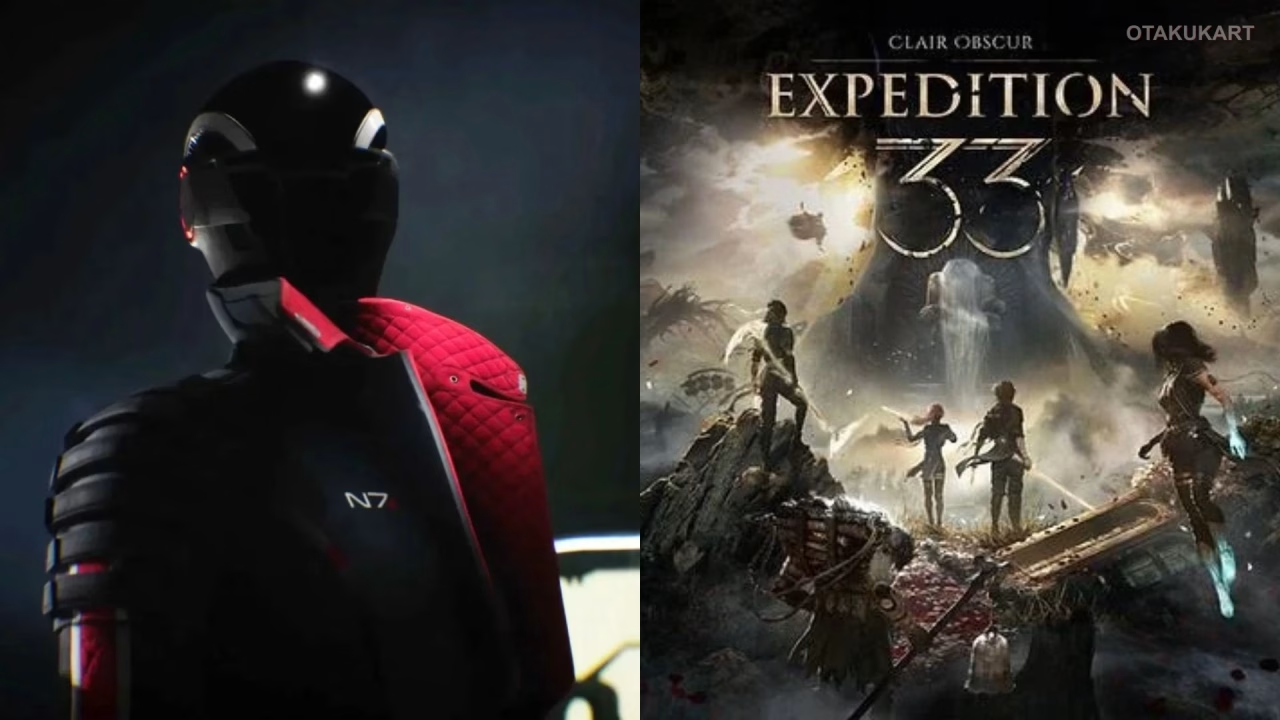

Former BioWare lead Christina Norman says a new Mass Effect could be made for well under $200 million, using Clair Obscur: Expedition 33 as the comparison point. The claim exposes a larger fight over scope, expectations, rights, and whether the next Mass Effect can exist without
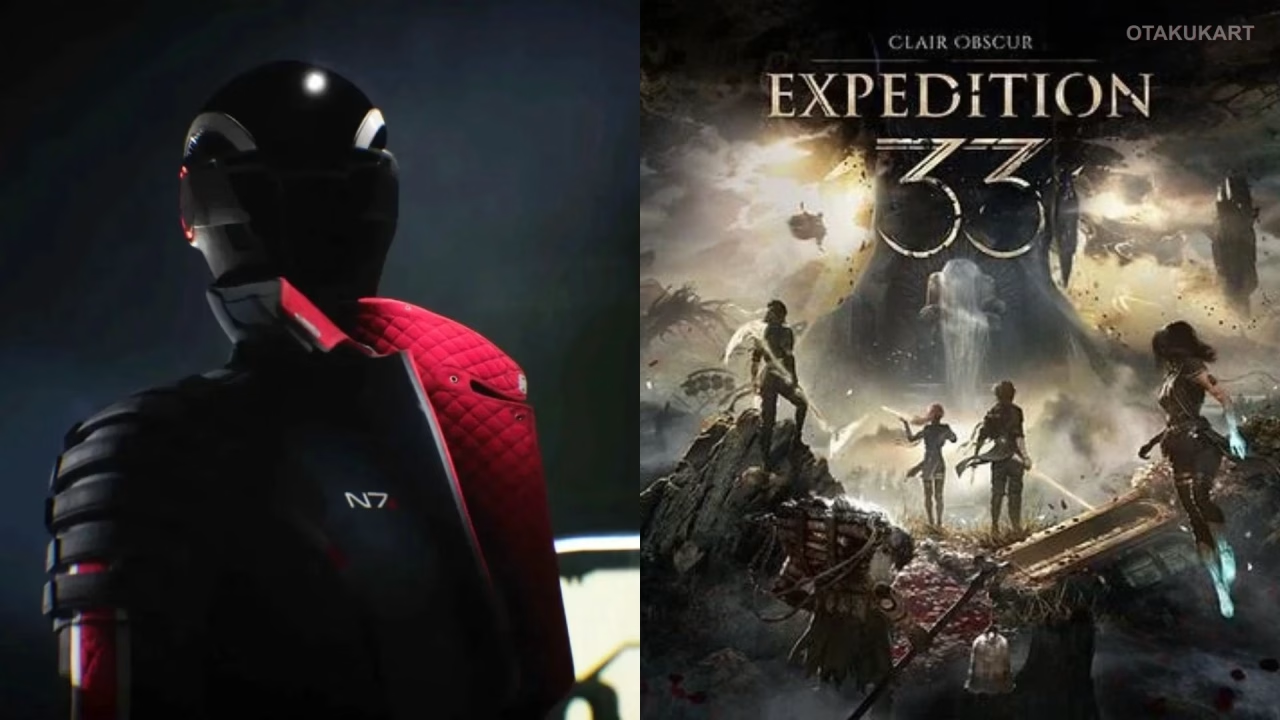
Image: otakukart.com
A smaller Mass Effect budget claim has become a bigger question
Former BioWare lead Christina Norman says another Mass Effect game could be made for “well under 200 million,” a claim that immediately cuts against the current fear around the franchise: that the next entry would be too expensive to justify after BioWare’s reported closure and the cancellation of its in-development Mass Effect Universe project.
Norman made the comment on X in response to reports that Clair Obscur: Expedition 33 cost less than $10 million to develop. As quoted by VGC, Norman wrote that Clair Obscur is “a good example” of why she thinks another Mass Effect could be made below that $200 million line, adding that “5x the budget of Clair Obscure: Expedition 33 should be more than enough” and that “clever small teams can get it done.” IGN similarly reported the comment and framed the implied figure as around $50 million.
That is the tension. BioWare co-founder Trent Oster recently estimated on X, according to IGN, that finishing Mass Effect Universe at the level fans expected would likely require “$200m+” in development costs, based on comparable modern productions. Norman is not saying a giant publisher could not spend that much. Her point is that a disciplined team might not have to.
For players searching for news on a Mass Effect new game, this is not confirmation that one is in production. The sources provided describe the opposite current situation: IGN and VGC report that EA shut down BioWare and that Mass Effect Universe was canceled. Norman’s comment is best understood as an argument about feasibility, not an announcement about new Mass Effect development.
The budget claim is less simple than the headlines make it sound
There are two numbers circulating around this discussion, and they should not be treated as identical.
The first is Oster’s “$200m+” estimate, which IGN reported as a rough ballpark for the cost of finishing Mass Effect Universe at the level fans would expect from a modern AAA entry. Oster also said, according to IGN, that a larger plan for the IP would be needed to make that kind of upfront commitment work. In other words, his estimate is tied to a premium, contemporary version of Mass Effect, not to the theoretical minimum cost of putting any Mass Effect-branded RPG into production.
The second number is Norman’s comparison to Clair Obscur: Expedition 33. If Sandfall Interactive’s RPG cost less than $10 million, then five times that budget would imply something under $50 million. OtakuKart’s headline presents Norman’s position as Mass Effect 5 being possible for under $50 million, while IGN describes it as around $50 million. VGC’s headline sticks to Norman’s direct phrasing, “well under 200 million,” while also quoting her five-times-Clair-Obscur comparison.
That distinction matters because the source coverage contains a numerical tension. VGC notes that a cheaper new Mass Effect would still be the most expensive Mass Effect ever made and cites Mass Effect: Andromeda as reportedly costing $100 million to develop. That statement makes sense only if the hypothetical new game lands above Andromeda’s reported budget. It does not line up cleanly with the roughly $50 million figure implied by Norman’s “5x” comparison. The safer reading is that Norman is arguing against the necessity of a $200 million-plus spend, while different outlets are extrapolating the lower figure with varying confidence.
Why Clair Obscur is the comparison point
Clair Obscur: Expedition 33 is being used in this debate because its reported cost challenges the assumption that visually ambitious RPGs must be built like the most expensive blockbuster games. VGC and IGN both cite reports that the French-made RPG cost less than $10 million, and Norman points to it as evidence that a smaller, capable team can deliver at a level that changes the budget conversation.
The comparison is useful, but only up to a point. Clair Obscur is evidence that scope discipline can produce strong results. It is not proof that Mass Effect, with its own inherited expectations, could simply copy Sandfall’s production model. A BioWare Mass Effect game carries baggage that Clair Obscur does not: a long-running science fiction setting, returning fan expectations, cinematic dialogue, party dynamics, combat feel, branching quest outcomes, and the question of whether the next game should acknowledge or continue parts of a decades-old continuity.
Norman’s own history makes her comment more interesting than a generic outside estimate. IGN reports that she spent more than six years at BioWare, worked on the original Mass Effect trilogy, was a lead programmer responsible for creating the franchise’s conversation system, and later became lead designer on Mass Effect 2 and Mass Effect 3, focused on improving gameplay. That background gives her budget argument a systems-level credibility: she is pointing less to raw visual scale and more to production discipline, team size, and prioritization.
For an RPG audience, that is the real comparison. Clair Obscur is being treated as a reminder that memorable role-playing experiences do not always require the largest possible team. The harder question is whether Mass Effect’s identity can be protected while cutting enough scope to avoid the financial gravity of a $200 million project.
A lower budget would force sharper design choices
If a new Mass Effect were built closer to the implied $50 million range than Oster’s $200 million-plus estimate, it would almost certainly have to be designed around constraints rather than excess. That is interpretation, not a confirmed development plan, but it follows from the budget gap the sources describe.
A smaller-budget Mass Effect would need to decide what the series cannot lose. For many players, that likely means meaningful squad interaction, consequential dialogue, a strong central campaign structure, and combat that supports build identity rather than simply checking the box for third-person action. Those are the RPG systems that make replaying Mass Effect feel different when you change class, party composition, romance path, morality choices, or quest resolutions.
The tradeoff would be scale. A lower Mass Effect budget could mean fewer explorable spaces, a tighter cast, fewer bespoke cinematic sequences, a shorter critical path, or a structure that favors dense hubs over sprawling production-heavy environments. None of those choices are automatically bad. Mass Effect 2 remains beloved in large part because of its loyalty mission structure and squad focus, not because it tried to be endless. But players would need to judge a leaner Mass Effect by whether its constraints strengthen the role-playing loop or expose missing ambition.
That is where the Clair Obscur Mass Effect comparison has bite. Clair Obscur is being invoked as a symbol of focus. Norman’s argument is that spending less does not have to mean thinking smaller in every area. It means spending on the parts that define the game and refusing to let modern AAA expectations inflate everything else.
The business problem is larger than the development estimate
Even if Norman is right about what a clever smaller team could build, the sources make clear that the path to another Mass Effect remains blocked by ownership, funding, and corporate appetite.
VGC reports that Norman’s comments come after EA’s decision to shutter BioWare, with that closure resulting in the cancellation of a fifth Mass Effect game, Mass Effect Universe. VGC also reports that the canceled project had a trailer ready to go. IGN likewise describes Mass Effect Universe as killed after EA shut down BioWare, and says discussion has since turned to whether EA chose to invest elsewhere, including Star Wars, rather than continue funding Mass Effect.
The rights issue is decisive. IXBT notes that Mass Effect still belongs to Electronic Arts, making independent development unlikely without EA’s involvement or a rights deal. VGC reports that BioWare co-founder Trent Oster has expressed interest in trying to acquire BioWare’s IPs from EA and has suggested bringing the team back together, with James Ohlen also saying he would like to join him. That is interest from notable former BioWare figures, not a confirmed acquisition, funding package, or greenlit project.
VGC also reports that many developers are struggling to secure investors, which is important context for any proposed revival. A $50 million project is much cheaper than a $200 million one, but it is still a major financing problem when attached to a licensed or publisher-owned IP. The reported petition to save Mass Effect had 325,605 signatures at the time of VGC’s writing, showing visible fan demand. Petitions can demonstrate audience energy, but they do not by themselves solve rights, payroll, technology, marketing, or distribution.
Where this leaves players waiting for the next Mass Effect
The confirmed reader guidance is simple: there is no active, announced new Mass Effect game in the provided source material, no release date, no platforms, no price, and no preorder or upgrade path to evaluate. The current discussion is about whether another game could be funded and scoped differently after the reported cancellation of Mass Effect Universe.
Players should also be careful with the label “Mass Effect 5.” Several outlets use it as shorthand, but the sources provided describe the canceled project as Mass Effect Universe. Without an official announcement from EA, there is no confirmed title, structure, protagonist, setting, platform plan, or continuity approach for a future entry.
The most useful takeaway is that the Mass Effect budget debate is now split between two models. Oster’s reported $200 million-plus estimate represents the cost of meeting modern AAA expectations at full scale. Norman’s counterargument, grounded in the reported sub-$10 million cost of Clair Obscur: Expedition 33, says a smaller expert team could build a new Mass Effect for far less if it chose scope carefully.
For a series built on choices, that feels fitting. The next Mass Effect, if it ever happens, may depend less on whether fans want it and more on which version of the game a rights holder or buyer is willing to fund: the maximal blockbuster, or a tighter RPG that bets on systems, squad writing, and player choice carrying the galaxy again.