
Former BioWare project lead Michael Gamble says Amazon's Mass Effect adaptation and the canceled Mass Effect Universe game were meant to complement each other, raising new questions about continuity, canon, and fan expectations.
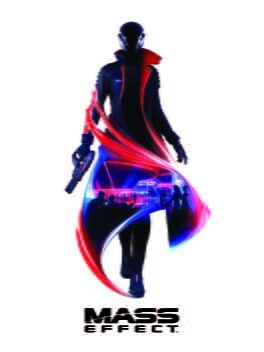
Image: IGDB
Gamble's brief answer creates a bigger canon question
Former BioWare project lead Michael Gamble has said that Amazon's Mass Effect adaptation and the canceled game known internally as Mass Effect Universe were intended to complement each other, not simply compete for the same story space. According to GamingBolt and Games.gg, Gamble gave the answer in response to a fan asking whether the plot of Mass Effect Universe would be used for Amazon's planned adaptation. His reply was short: “Both are meant to complement each other.”
That is the firmest development here, and also the source of the uncertainty. Gamble did not say that the Mass Effect Amazon series would adapt the canceled game's plot directly. He did not outline a shared timeline, confirm character overlap, or explain whether Amazon's Mass Effect TV show would have been set before, during, or after the game. The useful reading is narrower: at some point, the game and television project were being thought about as related pieces of the wider Mass Effect Universe rather than isolated products.
That distinction matters for an RPG series built around branching outcomes. Mass Effect's original trilogy asks players to invest in choices across quests, squad relationships, war assets, species politics, and ending-state consequences. Any screen adaptation has to decide how much of that accumulated player authorship it wants to touch. Gamble's comment suggests coordination, but it does not solve the hardest adaptation problem: whose galaxy is Amazon adapting?
Complementing the games does not confirm a direct adaptation
The safest interpretation of “complement” is that the Mass Effect adaptation may have been planned to sit alongside game continuity rather than replay Commander Shepard's story beat for beat. GamingBolt specifically notes that, while few details about the now-canceled Mass Effect project have been revealed, the TV adaptation “wouldn't have been a direct one.” VGTimes also reports that Gamble did not explain exactly how the two projects were supposed to connect.
For fans, that leaves several possibilities open. The show could have used a separate cast in a familiar era. It could have explored events referenced by the games without canonizing a full playthrough. It could have focused on a region, faction, or crisis that supports the tone of the next game while avoiding direct dependence on Shepard's major decisions. None of those approaches is confirmed by Amazon, MGM, EA, or BioWare in the provided material, but they are the kinds of structures that let a TV project add texture without flattening player choice.
The key is that “complement” is different from “replace.” If Amazon were adapting the canceled game's exact plot, the fan question Gamble answered would have invited a clearer yes. Instead, the answer points toward parallel planning. For a choice-heavy RPG audience, that is an important boundary. A complementary Mass Effect TV show can expand the setting. A direct adaptation of a specific player path risks telling longtime players that one version of their trilogy mattered most.
The canceled game reportedly aimed far beyond a Shepard sequel
The reports around Mass Effect Universe make the complement question sharper because the canceled game was reportedly moving the timeline away from the original trilogy's immediate aftermath. GamingBolt cites reports that the game would have taken place roughly 600 years after Mass Effect 3, with the original trilogy's conflict remembered in-universe as the “Reaper War.” That timing would have created room for legacy characters, old political consequences, and new power structures without putting Commander Shepard back at the center.
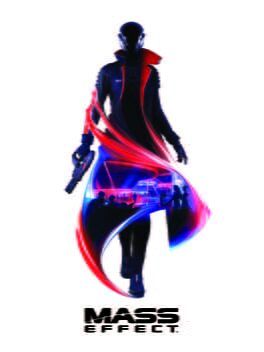
Those same reported details say Shepard was not planned to return as the protagonist. Instead, the game would have introduced a new playable character described as a customizable N7 agent, with a tone compared in the reports to a mix of John Wick and James Bond. GamingBolt also reports that the story would have involved three major factions in a “galactic Cold War”: humanity aligned with Krogan and Batarians, Council races forming another bloc, and the Geth emerging as a third superpower.
Those are reported details, not confirmed features from a released game. They should be treated as signals of direction rather than settled canon. Still, they help explain why a complementary Amazon series is easier to imagine than a direct conversion. A show set elsewhere in the Mass Effect Universe could establish political mood, cultural fracture, or public memory of the Reaper War while leaving the RPG to handle player agency through builds, mission paths, faction work, and consequences.
Player choice remains the adaptation's hardest system to translate
Former BioWare cinematic supervisor Tony de Waal, according to Games.gg and GamingBolt, described the canceled project as aiming for “a level of autonomy and choice that no other game has been able to match.” He also wrote that the team had been watching what Larian Studios and CD Projekt RED were doing, and that BioWare had “started down a path to bring Mass Effect to the next level while remaining true to the Trilogy.”
That quote sets a high bar. Larian's Baldur's Gate 3 and CD Projekt RED's large-scale RPGs are associated with dense quest reactivity, companion consequences, and player-driven outcomes. Whether Mass Effect Universe could have delivered that ambition is unknowable because the project was canceled, but de Waal's comments frame what BioWare wanted the game side to provide: agency as the core value proposition.
Television cannot replicate that system directly. It can show a decisive commander, a messy diplomatic outcome, or a loyalty conflict, but it cannot ask the viewer to resolve the genophage, spare or destroy a species, or decide who survives a suicide mission. That is why a complementary approach may be the least destructive route for the Mass Effect Amazon series. Let the show build atmosphere, institutions, conflicts, and character drama. Let the games remain the place where progression, squad composition, mission order, and consequence belong to the player.
Reported gameplay direction points to a different kind of Mass Effect
GamingBolt reports that missions in Mass Effect Universe were said to offer freer play styles, with level design compared to Hitman. The same report mentions “brutal close-range executions” as one reported player capability, though it also notes that moment-to-moment gameplay details have not been revealed. Liara T'Soni, a major figure from the original trilogy, was reportedly involved as an “incredibly powerful Asari Matriarch.”
Again, those details sit in the reported category. They are useful because they suggest the canceled game was not merely a nostalgic tour of trilogy locations. A customizable N7 operative working through factional cold-war spaces would give BioWare a structure closer to infiltration, political leverage, and tactical problem solving than a straightforward military campaign. If Amazon's show was planned to complement that, the adaptation may have been positioned to support the setting's political and emotional scaffolding rather than duplicate mission design.
For Mass Effect fans, the risk is tonal drift. A spy-thriller N7 pitch, a galactic cold war, and a prestige sci-fi TV adaptation could all fit the franchise, but only if they preserve the series' moral texture. Mass Effect works best when combat, diplomacy, squad loyalty, and species history feed the same decision loop. If the TV show leans only on armor, aliens, and Reaper iconography, it may look recognizable while missing the RPG structure that made the universe feel reactive.
Amazon's show is still short on public specifics
The practical guidance for readers is simple: there is no release date, casting, episode count, platform rollout beyond Amazon's involvement, or confirmed story premise in the provided source material. Games.gg and VGTimes state that Amazon and MGM announced production of a Mass Effect series in 2024. The recent reports covered here say the adaptation remains part of EA's plans despite BioWare's closure, while the game it was meant to sit beside has been canceled.
That creates an unusual situation. The Mass Effect TV show may still be moving, but the game that reportedly shared some planning relationship with it will not be released. VGTimes says it is still unknown whether the series will incorporate the canceled game's story. That uncertainty should temper expectations around any claim that the show will “continue” Mass Effect 5, adapt Mass Effect Universe, or resolve every ending from Mass Effect 3.
Social media has already filled gaps with broader claims. One included X post from RinoTheBouncer says the game was known internally as Universe, that it would have “complement and inform” the show's narrative, and that a reported multiverse mechanic would have allowed different trilogy endings to remain technically canon. The provided reporting from GamingBolt, Games.gg, and VGTimes does not establish that multiverse mechanic as confirmed. Treat such claims as rumor unless Amazon, EA, BioWare staff, or a verifiable project source provides clearer evidence.
The fan expectation problem is now Amazon's to manage
The Mass Effect Amazon series faces a demanding audience because the franchise's strongest memories are personal. Players remember who they romanced, which squadmates survived, how they handled the Council, what they chose on Rannoch and Tuchanka, and which ending they accepted or rejected. A complementary adaptation has a cleaner path if it avoids overruling those saves while still feeling consequential in the same galaxy.
Gamble's comment gives fans a reason to believe there was at least an effort to coordinate the adaptation with BioWare's broader plans. It does not give enough information to declare the show a continuation of Mass Effect Universe, a replacement for the canceled game, or a clean answer to trilogy canon. The most reasonable expectation is cautious: Amazon's project may draw from the franchise's larger setting and from planning conversations that once included the next game, but the exact shape of that connection remains unannounced.
For now, anyone waiting on the Mass Effect adaptation should watch for official story language. If Amazon describes the series as an original story, that would likely preserve the widest space for player choice. If it names Shepard, Liara, the Reaper War, or a specific post-Mass Effect 3 outcome, the canon debate begins immediately. Complementing the games is a promising phrase, but in Mass Effect, the details of a promise are where the real quest begins.