
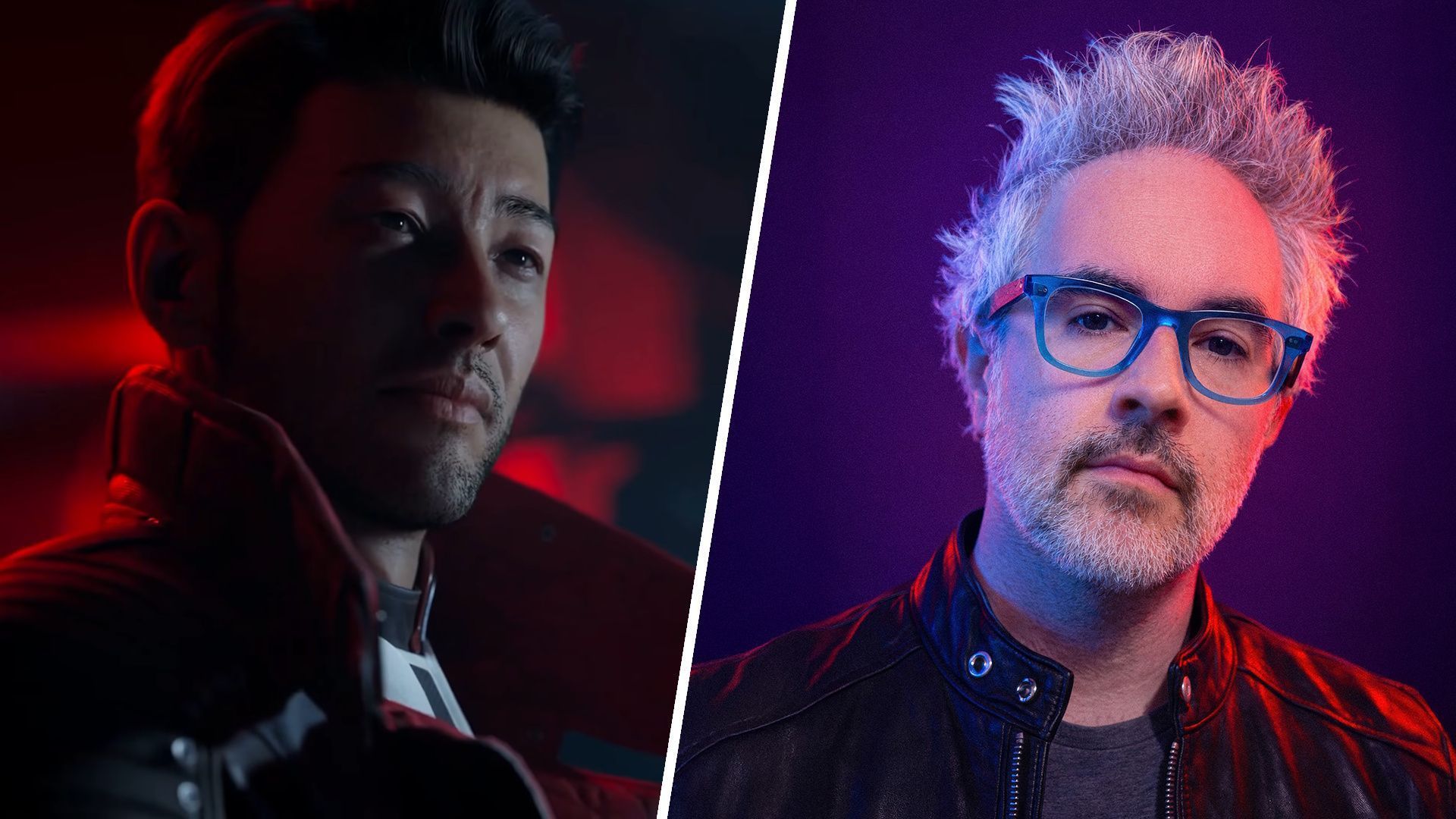

Original Mass Effect composer Sam Hulick released his re-scored N7 Day trailer, revealing the musical direction he hoped to explore for Mass Effect Universe after BioWare’s closure cut short internal demo plans.
Image: digg.com
Sam Hulick turned a leaked Mass Effect trailer into an N7 Day goodbye
Sam Hulick, one of the composers behind the original Mass Effect trilogy, has released a re-scored version of the leaked internal trailer for the next Mass Effect project on N7 Day, framing it on Patreon as both “closure” and “a love letter to the fans.”
That is the concrete development: fans now have a public listen to Hulick’s own musical read on the project Rock Paper Shotgun refers to as Mass Effect 5 and says was seemingly called Mass Effect Universe. The tension is that Hulick’s track arrives after the project’s future has been thrown into doubt. Rock Paper Shotgun reports that EA is shutting down BioWare and that Mass Effect 5 has been cancelled. Hulick, writing on Patreon, also refers to “BioWare’s untimely closing” while explaining why he wanted to answer questions about his possible involvement.
Hulick’s release is not an official game announcement, a release-date tease, or confirmation that he had been hired as the composer for the next BioWare Mass Effect game. In fact, he says the opposite. According to Hulick, BioWare had contacted him this year about potential work on an internal demo and told him it was “hoping to get some music written that would feel like Mass [Effect], supporting our new direction,” but the studio made clear that it had not officially selected a composer and could not promise anything beyond that demo discussion.
That makes the re-score a strange artifact for long-time fans: it is part tribute, part audition reel, part alternate timeline. It gives the community something emotionally legible on N7 Day, but it also underlines how little is publicly settled about the series’ creative future beyond the reporting and Hulick’s own account.
The score points to continuity without simply repeating the trilogy
Hulick says he built his re-score from two reference points: the original trailer’s use of French 79’s “Quartz,” which BioWare had edited to fit the internal trailer, and the musical tone of his own work on the first three Mass Effect games. He writes that the “Quartz” edit suggested “a slight directional shift in the score,” and that he used it as inspiration while returning to the studio.
For Mass Effect players who remember the first game’s colder, synthetic identity, that detail matters. The series has always used music as a form of worldbuilding, especially when the player is moving between political hubs, starship quiet, and galaxy-level crisis. Hulick’s original trilogy work sits in the memory of many fans alongside the Normandy, the galaxy map, and the melancholy of choices that carry forward. His Patreon post makes clear that he saw the new project as an opportunity to preserve some of that DNA while letting the sound move.
The important distinction is that Hulick was not pitching a museum piece. He says he knew BioWare wanted “to do something new with the music,” and that he wanted to be conscious about not simply repeating the original trilogy’s formula. That is the systems-level challenge of any new Mass Effect, whether in music, quest design, combat roles, or branching narrative: carry enough recognizable structure that returning players feel oriented, while making room for a new party, a new threat, and a different emotional cadence.
His re-scored trailer matters because it hears that problem clearly. It is not a definitive soundtrack for Mass Effect Universe, but it suggests a route the game’s music could have taken, one that treated legacy as a foundation rather than a cage.
BioWare’s internal demo outreach was real, but the role was never secured
Hulick’s Patreon post gives the clearest account of what was actually on the table. He says BioWare emailed him this year to ask if he was interested in working with the team on an internal demo. He accepted. Over Zoom, he says he was given a “very surface-level rundown” of what the team was thinking musically, left excited, and then waited to hear more about the demo.
That is as far as the confirmed involvement goes in the provided material. Hulick says BioWare had not officially selected a composer. Digg’s summary of the PC Gamer and Rock Paper Shotgun coverage also emphasizes that no composer had been officially chosen for the game. PC Gamer’s headline describes the N7 Day release as Hulick’s “re-scored” trailer and quotes his “my way of saying goodbye” framing, but the available source text does not establish any final production credit for him on a shipped or announced game.
For readers following Mass Effect 5 news, that distinction is crucial. A composer being contacted for an internal demo is meaningful, especially when that composer helped define the sound of the first three games. It is also not the same as a signed creative leadership role on a full production. Hulick’s re-score is therefore best understood as a public expression of what he might have brought to Mass Effect Universe if the internal demo path had continued.
The unanswered question is not whether Hulick cared about returning. His post makes that plain. The unanswered question is what BioWare’s broader creative plan would have become if the demo had moved forward, who would have owned the final score, and how far the “new direction” extended beyond the music brief he received.
The farewell tone lands because Hulick’s Mass Effect history is personal
Hulick’s post is not written like a detached portfolio update. He says “so much” of his identity as a composer is linked with the Mass Effect trilogy, and credits BioWare with taking a chance on him when he was a young, unproven composer. He also notes that the opportunity came after Jack Wall recommended him during BioWare’s composer search.
That history changes how the N7 Day trailer lands. Hulick is not an outside musician applying a style filter to a beloved franchise. He is one of the people whose work helped establish the franchise’s emotional vocabulary. When he calls the re-score his own closure, the language carries professional and personal weight.
He also ties the new release to a prior return. In 2020, Hulick says BioWare reached out about using one of his older, previously unused Mass Effect tracks in Mass Effect Legendary Edition. He describes that as an opportunity to rework an old piece for the remastered collection. Around the same time, BioWare revealed the first teaser for the next Mass Effect at The Game Awards, which he says thrilled him like other fans and left him cautiously optimistic about being part of the new game.
For long-time players, that arc is almost painfully tidy: the trilogy, the remaster, the teaser, the tentative internal demo outreach, then a goodbye track for N7 Day. Hulick’s farewell tone suggests someone who had reason to believe the door had reopened, only to find himself closing it publicly and carefully, at least for now.
The most revealing idea is his push for lyrical, synth-driven emotion
Hulick’s Patreon post also sketches a musical “pipe dream” for Mass Effect Universe. He says he thought it would have been “incredible” to bring more songs with lyrics into the game, pointing to the affection fans still have for the first Mass Effect’s end-credits song by Faunts. Rock Paper Shotgun reports that he named Gunship, NINA, and The Midnight as artists high on his collaboration list because of their moody, cinematic synthwave sound.
That detail is the clearest window into the version of Mass Effect 5 he was imagining. Songs with lyrics are not neutral decoration in an RPG. Used carefully, they can mark a character turn, a loyalty-style emotional payoff, a final choice, or a return to the ship after a mission that has changed the party. Used clumsily, they can collapse a scene into trailer language. Hulick’s stated interest in highlighting “more emotional moments in the narrative” suggests he was thinking about placement, not simply genre fashion.
The French 79 “Quartz” reference also matters here. Hulick says BioWare’s edit of that track hinted at a score shift. If his interpretation is right, Mass Effect Universe may have been exploring a sound that leaned further into cinematic electronic music while still carrying the trilogy’s signature atmosphere. That would have been a plausible route for a series trying to reconcile reverence for its first era with the need to sound like a new chapter.
This remains Hulick’s account of his ideas and impressions, not an official BioWare music direction document. Still, the combination of “Quartz,” trilogy motifs, and possible synthwave collaborations gives fans a clearer sense of the creative fork in the road than a standard teaser ever could.
What fans can actually do with this release now
The available path for fans is simple: Hulick’s re-scored trailer is watchable on YouTube, and his longer explanation is published on Patreon. There is no supported information in the provided sources about a playable Mass Effect Universe build, release timing, platforms, pricing, system requirements, or an upgrade path. Rock Paper Shotgun reports the game has been cancelled, while Hulick’s post is about a re-score made after the project’s apparent collapse, not a revived product.
That makes this N7 Day release something to listen to with adjusted expectations. It is not a stealth marketing beat for Mass Effect 5 in the source material we have. It is a creative document from a Mass Effect composer who was approached about possible internal demo work, had ideas for the series’ next musical identity, and chose to share his version of the trailer after those plans were cut short.
For returning players, the value is less practical and more archival. It preserves one credible answer to a question BioWare may never get to answer publicly: how could a new Mass Effect sound while still remembering where it came from? Hulick’s answer is melodic, synthetic, and openly elegiac. It reaches back to the trilogy, listens to the hinted shift in the leaked trailer, and leaves fans with a goodbye that feels unfinished by design.
That unfinished feeling is also the honest state of the story. Hulick has said goodbye “at least for now,” but the future of BioWare Mass Effect, as presented in these sources, is uncertain and clouded by closure reporting. Until EA, BioWare, or another official listing says otherwise, the re-scored N7 Day trailer should be treated as a farewell artifact rather than a roadmap.