
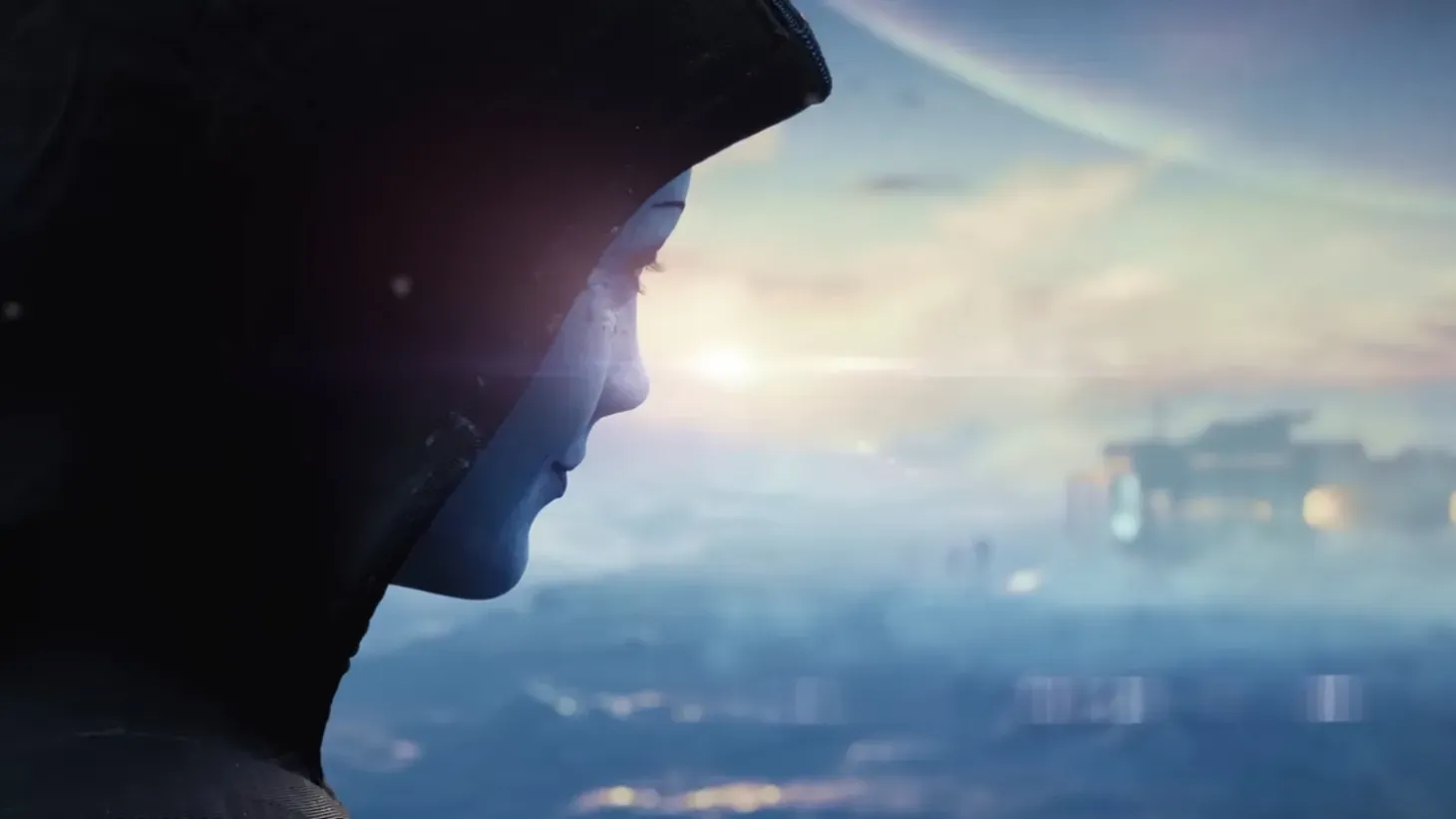

Austin Wintory has released early Mass Effect 5 music made during talks with BioWare and EA, offering a rare look at the sequel’s possible emotional direction without confirming its story.
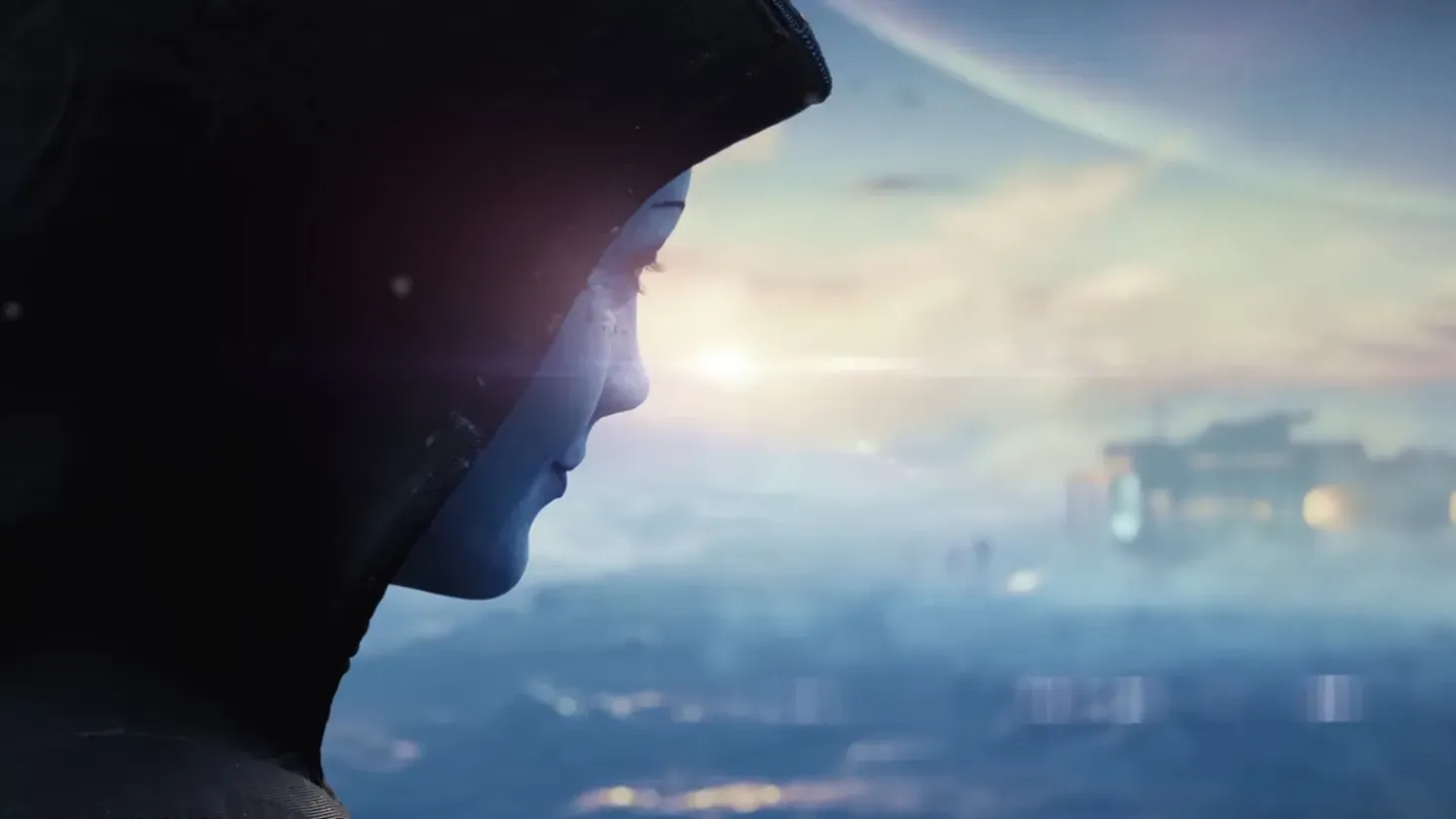
Image: gameinformer.com
A finished-sounding pitch for a game that never got finished
Austin Wintory has published roughly 20 to 22 minutes of Mass Effect 5 music he created while in serious conversations with BioWare and EA about scoring the now-cancelled RPG, turning an abandoned hiring pitch into one of the clearest creative artifacts left from the project.
The composer, known for Journey, Sword of the Sea, Assassin’s Creed Syndicate, Abzu, Stray Gods, and other work, uploaded eight tracks to YouTube after reports from outlets including IGN, VGC, Rock Paper Shotgun, Kotaku, GamingBolt, and Console Creatures that EA had cancelled the next Mass Effect and closed BioWare. Wintory described Mass Effect as his “career’s biggest dream project” and “white whale,” saying in the video description that he had been in serious conversations with BioWare and EA “for the last couple years.”
The tension is that these tracks sound like the beginning of an authored direction, but Wintory is explicit about their status. They were not an official Mass Effect score. GamingBolt notes that Wintory said in a YouTube comment he was ultimately not hired, and the composer says he had not learned narrative details when he made the music in 2025. That makes the release valuable in a narrow, specific way: it does not reveal the plot, companions, missions, ending state, or platform plan for the BioWare RPG cancelled by EA. It does reveal how one invited composer imagined Mass Effect should evolve if he were asked to take stewardship of its sound.
Wintory’s starting point was the first Mass Effect, not a clean break
Wintory’s own explanation is the most important source for reading the music. In the YouTube description quoted by VGC, IGN, and Rock Paper Shotgun, he says his suggestion was to treat Jack Wall and Sam Hulick’s score for the original Mass Effect as the starting point, then build from it with “deeper use of physical, analog synths” and “a more tightly interwoven use of the orchestra.” Console Creatures separately quotes his video text describing the concept as a direct homage to Wall and Hulick while leaning harder on true analog synths and integrating the orchestra in a more complex way, “almost akin to the hybrid nature of The Matrix.”
That is a meaningful creative choice for a series whose musical identity has shifted across entries. The first Mass Effect’s glassy synths, melancholy pulses, and coolly alien textures helped frame exploration as uncertainty. Later games increasingly emphasized cinematic escalation, combat drive, and character drama. Wintory’s pitch, as he describes it, appears to aim backward and forward at once: back to the electronic grammar that defined the first game’s awe and unease, forward to a denser orchestral architecture that could carry a modern blockbuster RPG’s larger emotional and combat demands.
As a systems-minded RPG listener, the key word is “interwoven.” In role-playing games, music is rarely a passive layer. It has to survive menu time, exploration loops, companion banter, combat transitions, hub idling, major choices, and long stretches of player indecision. A score that treats synths and orchestra as one system rather than two alternating moods would suit a Mass Effect sequel trying to reconcile legacy, spectacle, and authored choice. That reading is interpretation, not confirmation of BioWare’s design. Still, it follows directly from Wintory’s stated musical goal.
The track titles lean into legacy, but not confirmed story beats
The opening track, “The Legacy of Shepard,” has attracted attention because Commander Shepard’s name is the gravitational center of the original trilogy. Rock Paper Shotgun describes it as blending pensive piano with bombastic sci-fi swells, while GamingBolt says Wintory’s accompanying text roots the piece in Mass Effect’s “character and heart.” The final track is described by Rock Paper Shotgun as a funkier remixed version of that opener, suggesting Wintory was already thinking in terms of thematic recurrence rather than isolated cues.
That does not mean Shepard was confirmed as the protagonist, a party member, or even a living character in the cancelled game. Kotaku stresses that Wintory did not know the story and that the Shepard references in his titles were “mostly a vibes thing” rather than evidence of content planned for the game. Wintory himself says the work was “pure musical exploration.”
The distinction matters because Mass Effect’s audience is trained to read every proper noun as canon machinery. A phrase like “Legacy of Shepard” can sound like a quest title, a save-state import hook, or a thesis statement for how the sequel might handle the trilogy’s divergent endings. Based on the available source material, it is only confirmed as Wintory’s title for an exploratory cue. The safer and more interesting conclusion is musical: he saw Mass Effect’s next step as something haunted by Shepard, whether or not Shepard would have been present in the script.
Battle, hubs, and downtime point to an RPG pacing map
The eight-track structure matters because it sketches a functional RPG score rather than a single trailer theme. Rock Paper Shotgun describes the set as ranging from a main theme to intense battle tracks and story-moment cues. GamingBolt highlights track 4, “To Fight For Something More Than Credits,” as a fast-tempo piece with heavy percussion and orchestral flourishes that sounds suited to action. Rock Paper Shotgun singles out track seven, “Forever Calibrating,” as a relaxed, atmospheric cue that works as ambience.
Those descriptions line up with the practical demands of Mass Effect’s quest rhythm. A sequel would need music for firefights, squad preparation, dialogue-heavy interior spaces, mission debriefs, emotional reveals, and long navigational gaps between objectives. “Forever Calibrating,” with its obvious nod to Garrus Vakarian’s famous calibration routine, reads less like a plot clue than a recognition of how much Mass Effect identity lives in downtime. Some of the series’ strongest role-playing texture happens away from the critical path, when the Normandy becomes a build lab, a friendship hub, a romance corridor, and a place where consequences settle.
Wintory’s pitch seems aware of that pacing. The reported range of cues does not only chase the grand return of a beloved science-fiction property. It makes room for combat pressure, character memory, and ambient waiting. For a choice-driven RPG, that is where the score has to be sturdy. The player may sprint through a mission, hover over a dialogue wheel for thirty seconds, or stand in a ship corridor while considering who to check on next. Music has to support all of those behaviors without exhausting the ear.
A rare artifact from development, but not a leak of BioWare’s plan
The Austin Wintory Mass Effect release sits in an unusual category. It is public, deliberate, and directly explained by the creator, but it is also outside the official development pipeline. Wintory says he made the music as a surprise for BioWare and EA during ongoing dialogue. IGN reports that whether he would have gone on to officially create music for the project was unclear. GamingBolt states that none of the tracks were officially created for the Mass Effect project and that, because of that, Wintory was able to publish them.
That makes it different from reported internal trailers, leaked story information, or developer comments about planned systems. The music is not evidence of a BioWare quest, class structure, romance arc, platform target, release window, or canon ending. It is evidence that a major Mass Effect composer candidate was thinking seriously about how to continue the series’ musical language, and that BioWare and EA’s music department had given him enough access to make that exploration worth producing with synths, vocals, and a large orchestra in Los Angeles, as Wintory says in his description.
The runtime discrepancy across coverage is also worth handling plainly. Wintory describes the production as “nearly 20 minutes” or “close to 20 minutes” in quoted material, while VGC and IGN describe the upload as 22 minutes. That appears to be a difference between the composer’s rounded description and the published video’s runtime as reported by outlets, not a substantive conflict about the nature of the release.
What listeners can take from it now
For players asking whether there is anything to buy, pre-order, download as an official soundtrack, or connect to an upcoming release, the sourced answer is no. The next Mass Effect discussed in these reports has been described by multiple outlets as cancelled, with BioWare closed by EA. Wintory’s tracks are available to hear on his YouTube channel, but the sources do not describe a commercial album release, a platform launch, a price, or an official soundtrack rollout.
For listeners trying to understand the abandoned direction, the most grounded approach is to treat the Mass Effect 5 music as a composer’s playable-style design document. It proposes a franchise future built from analog synth inheritance, heavier orchestral integration, and a clear affection for Shepard-era emotional language. It also shows restraint compared with pure nostalgia bait because Wintory’s stated plan was to build on Wall and Hulick, not simply reproduce them.
That is why the release deserves attention apart from the wider cancellation and petition cycle. Fan campaigns can measure grief and demand, but this music measures craft. It captures one professional answer to a hard creative problem: how do you score a Mass Effect that must acknowledge an enormous past without sounding trapped inside it? Wintory did not get to answer that question inside the finished game. The uploaded tracks are the answer he was preparing to offer.