
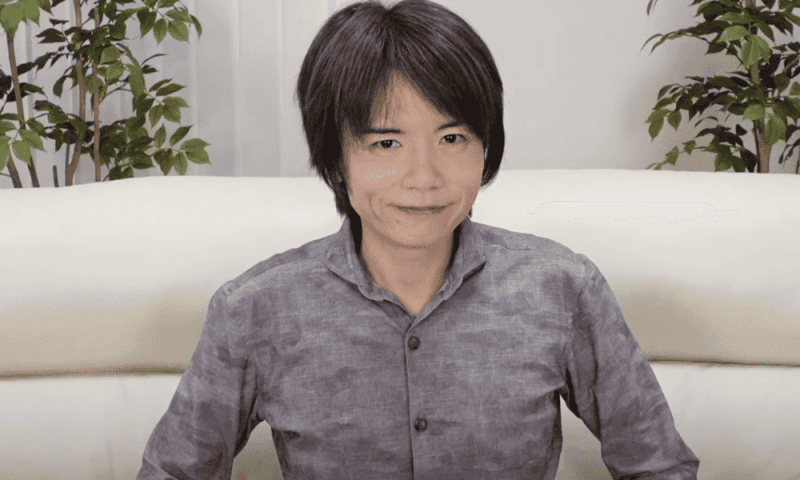

Masahiro Sakurai says AI will push Steam’s already huge release count higher, making original human-led game design more valuable as copycat games multiply.
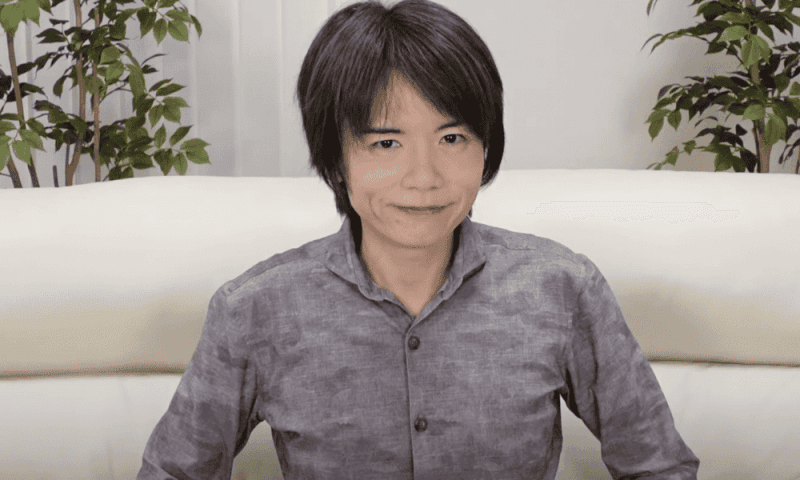
Image: gameranx.com
Sakurai’s warning starts with Steam’s release count
Masahiro Sakurai has linked the rapid growth in yearly Steam releases to a future where AI makes imitation cheaper, faster, and harder for players to filter. In a Japanese-language interview with Denfaminicogamer, reported in English by VGC, Eurogamer, PC Guide, Kotaku, and Digital Citizen, the Super Smash Bros. and Kirby creator was asked to reflect on how much the market has changed since his Game Designers Award began in 2010.
The number put to him in that interview was stark: around 275 games were published on Steam in 2010, compared with roughly 19,000 in the current year. Digital Citizen notes an important sourcing detail: those Steam figures came from the interviewer, not Sakurai himself. Sakurai’s answer accepted the premise of a much larger market and pushed it forward. He said the number would grow further because AI will increase the amount of game output.
That is the concrete development at the center of the story. Sakurai is not announcing a project, a policy, or a platform change. He is making a market prediction from the viewpoint of a designer who spent 16 years judging games for originality. His concern is that many AI games on Steam, along with cheaply mass-produced games generally, will reproduce systems players have already seen. In a market already flooded with new listings, that creates a discovery problem for players and an economic problem for developers trying to survive on originality.
The translation matters because his criticism is narrower than some headlines suggest
Several English reports describe Sakurai as saying many AI-driven releases will be “unprofitable.” That captures the broad commercial point, but Digital Citizen adds useful nuance from the Japanese text. According to its reading, Sakurai used the phrase 食えないタイトル, literally titles that nobody can eat from, rather than the standard Japanese term for loss-making. The distinction matters. He was not presenting a spreadsheet claim about profit and loss. He was saying many of these games may not provide a livelihood for the people making them.
Sakurai also grouped AI-generated work with 粗製濫造, a term Digital Citizen translates in context as shoddy mass production. In other words, his target was not every use of AI in development. PC Guide notes that AI use across the industry is already controversial, with some studios experimenting with the technology to speed up parts of production while others worry about originality. Sakurai’s comments focus on a particular outcome: AI as a multiplier for low-care, derivative output.
That makes the discussion more useful than a simple anti-AI quote. The risk he identifies is structural. If tools reduce the cost of producing a familiar mechanic, Steam gets more products that are easy to pitch because they resemble something known. The player then faces a larger catalogue with less meaningful differentiation. From a strategy perspective, that is a meta shift in the marketplace itself: the dominant pressure moves from making a game exist to making a game legible, trusted, and distinct.
His example is the copycat life cycle around simple puzzle ideas
Sakurai used Librarian: Tidy Up the Arcane Library as his example. As described by VGC and Eurogamer, the game is set in a magical library where books have been knocked over and players put them back in order. Sakurai treated that as a simple, understandable system that can be quickly echoed. He then pointed to similar premises: restocking products in an upended supermarket, returning screws to their places, or finding a needle in a haystack.
Eurogamer connects that comment to Needle in a Haystack Simulator, a Steam game built around finding a needle among 5 million pieces of hay. According to Eurogamer, the game went viral and was followed by copies quickly enough that developer Studio Bitdot added a bright red “original” tag to its Steam artwork. That detail shows the marketplace effect Sakurai is describing. Once a premise becomes visible, imitation can arrive before players have had time to sort out who made the original, which version is worth buying, or whether the new wave adds anything meaningful.
This is where the “AI games Steam” concern becomes practical rather than abstract. Simple puzzle hooks are especially vulnerable because the premise can be summarized in one sentence and recombined with a new setting. AI does not need to invent a new design language to amplify that pattern. It only needs to accelerate cloning, asset variation, store copy, and theme-swapping around systems that have already proven clickable.
The Fumito Ueda test explains what Sakurai thinks AI cannot do
Sakurai’s most important design claim is not that AI can never produce something polished. It is that AI works from what already exists. VGC and Eurogamer both report his example involving Fumito Ueda, the designer associated with Ico and Shadow of the Colossus. Sakurai said AI might study the atmosphere of Ueda’s past works and produce something similar. What it cannot do, in his view, is create whatever Ueda decides to make next.
That is the line Sakurai draws around originality. AI can reference a body of completed work, but it cannot reference a future choice that has not been made. Digital Citizen also notes that Sakurai qualified this idea by saying the limitation is not exclusive to AI. Many creative works lean on what already exists. His argument is that people who forge their own path, understand their own flavor, and can create from that point will become increasingly important in an era of mass production and low-quality goods.
For players, that frames “Sakurai generative AI” as a question of direction rather than tool purity. A human-led game can still be derivative. A game made with some AI assistance is not automatically empty based on these comments alone. The sharper test is whether a project has a point of view beyond replication. Does it make a player act, think, move, or cooperate in a way that could not be described only as a rearrangement of recent hits? Sakurai’s career gives weight to that test because, as Kotaku reports, he discussed Kirby and Super Smash Bros. as games built inside familiar genres but defined by unusual player actions and interactions.
Originality has weak sales power, which makes the problem harder
Kotaku’s report adds a crucial piece of context from Sakurai’s final year presenting the Game Designers Award at Tokyo Game Show. The award, which ran for 16 years, was centered on original game design ideas rather than sales performance. Past winners cited by Kotaku included Life Is Strange, Mario Kart: Home Circuit, Viewfinder, and Scribblenauts.
Sakurai’s bleak point was that originality does not necessarily sell strongly. Kotaku quotes him saying originality ranks low among the priorities that affect sales. He compared market behavior to limited-time convenience store drink flavors: novelty exists, but many people gravitate back toward familiar tastes. His warning was that an industry that loses originality will “die slowly,” because new ideas and experiences are part of what keep it alive.
That tension is the heart of the story. Players often say they want fresh ideas, but store behavior tends to reward recognisable formats, clear comparisons, and fast comprehension. PC Guide reports Sakurai’s observation that many modern games are explained as something-like, because that shortcut helps audiences understand the product. For a developer pitching to a team, publisher, or storefront audience, “like this known hit” is easier to sell than “you have not played this yet, but trust us.”
AI strengthens the familiar side of that economy. If familiar systems are easier to mass-produce, storefronts get more games optimized around recognition. The strategic counterplay for creative game developers is not simply to be weirder. It is to build originality that can be communicated, demonstrated, and trusted quickly enough to survive in a crowded list.
How players can read the coming AI-heavy storefront
There is no confirmed platform policy, pricing change, or release plan attached to Sakurai’s comments. Nothing in the source material says Steam is changing how it handles AI-heavy games, and Sakurai did not announce a new award replacement or a new game. The practical takeaway for players is about evaluation.
As storefront noise increases, players will likely need to look harder at authorship signals. The sources describe a market where clones can appear quickly around a viral premise. That makes developer history, demo quality, update behavior, clear design explanation, and community discussion more valuable. An “original” tag on art, as Eurogamer reports in the Needle in a Haystack case, is a symptom of the same pressure: creators are trying to distinguish authorship after imitation has already entered the room.
For developers, Sakurai’s comments point toward a difficult balance. A game still needs to be readable in a crowded shop window. But if its whole identity is a proven loop with a new coat of paint, AI and mass production can compress its advantage almost immediately. The durable edge is the part Sakurai says AI cannot anticipate: the future creative decision, the specific taste, the new interaction, the design conviction that has not yet become a template.
That is a forward-looking warning rather than a settled verdict on generative AI. AI may expand production. Steam may continue absorbing huge numbers of releases. But the more the catalogue fills with familiar systems, the more players may learn to value human-led design with a recognizable point of view. Sakurai’s argument is that originality becomes harder to find at the same moment it becomes more important to the health of the medium.