
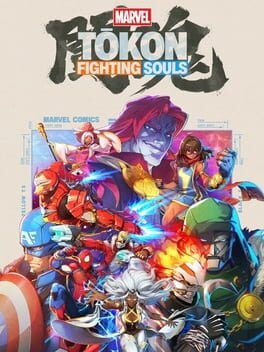

Sony’s Marvel Tokon: Fighting Souls is listed on SteamDB as unavailable in 132 countries, reviving PSN account concerns before the Arc System Works fighter launches.
Image: IGDB
Store links: Marvel Tokon: Fighting Souls on Steam
Marvel Tokon’s PC launch now has a region-lock problem
Marvel Tokon: Fighting Souls is listed on SteamDB as unavailable for purchase in 132 countries on Steam, a restriction that has triggered fresh backlash around Sony’s PC strategy and PlayStation Network availability. Push Square, Kotaku, TheGamer, Vice, and Gameranx all point to SteamDB subscription data as the visible evidence: the PC version of Sony Interactive Entertainment’s upcoming Arc System Works fighter is marked with country-level purchase restrictions ahead of launch.
The tension is immediate because this is a fighting game with online expectations baked in. Kotaku reports Marvel Tokon is scheduled for August 6, 2026, and describes it as a PS5 and PC exclusive. For a competitive game, the first month matters. Ranked population, matchmaking health, connection quality, tournament adoption, and early lab work all depend on players being able to buy in at the same time. A 132-country Steam block cuts against that momentum before anyone has had the chance to settle the matchup chart.
Sony has not provided an official public explanation in the cited reports. Kotaku specifically notes that the Steam store page does not explain the restriction, while Vice says Sony has not officially confirmed the region-locking. That leaves one confirmed layer and one widely inferred layer. Confirmed: SteamDB shows restrictions affecting 132 countries. Inferred by multiple outlets: the restriction appears tied to PSN availability and account requirements.
The PSN link is the center of the backlash
The common thread across the reporting is PlayStation Network. Push Square says the issue is the same one that has surfaced before: PSN is only officially supported in a limited set of countries, and an account is required for the ArcSys fighter. Kotaku says the 132 countries listed in SteamDB’s known restrictions are countries where PlayStation Network online services are not available, naming examples including Jamaica, Iran, Belarus, Egypt, and Nigeria.
That is the core of the Marvel Tokon Fighting Souls PSN concern. If a PC player lives in a region where Sony does not officially offer PSN, and the Steam version requires a PSN account for online access or linking, the storefront can become the choke point. Push Square notes that console players in unsupported PSN regions have long used accounts registered to another country as a workaround, while also stating that this is technically against Sony’s terms of service. On Steam, Push Square argues, that workaround is not comparable because the game is simply unavailable in restricted countries, and using a VPN risks a Steam account ban.
For fighting game players, that distinction is not cosmetic. A console workaround might get someone into casual sets, but a Steam purchase block stops the route at round start. It affects players who prefer PC for lower input latency tuning, monitor setups, controller flexibility, Discord-based matchmaking, or local scene setups built around laptops and cabinets. In regions with strong arcade and community tournament cultures but weaker official platform support, the Sony PC games region lock cuts into the exact audience that can keep a fighter alive after launch week.
Crossplay may explain the policy, but it does not settle the argument
Kotaku identifies crossplay as the most likely explanation, reporting that Marvel Tokon will feature crossplay between PC and PS5 at launch and saying this apparently means PC players will need to link a PSN account if they want to use it. Vice also reports that many players believe the restriction is connected to crossplay, while noting that Sony has not confirmed the reason. Gameranx goes further by connecting the affected countries to the lack of official PlayStation accounts and says PSN is required to play the game online, citing its earlier reporting.
The strongest confirmed point remains the SteamDB restriction. The PSN and crossplay explanation is plausible because it matches Sony’s recent PC history, but it is still not a publisher statement in the source material. That difference matters. If PSN is required only for crossplay, Sony could theoretically allow PC-only online play in unsupported PSN regions. If PSN is required for all online play, the restriction is closer to an infrastructure and compliance wall. If the listing is temporary, the story changes again. None of the cited reports includes a formal Sony clarification resolving those possibilities.
From a competitive perspective, mandatory account-linking is a netcode-adjacent problem even if it is not rollback code. Crossplay can be good for a fighter because it increases the pool, shortens queue times, and keeps niche characters from becoming lab-only mysteries in smaller regions. But if the crossplay layer depends on a network account that many countries cannot officially create, the feature improves access for one part of the player base while removing access for another.
Helldivers 2 is the comparison Sony cannot avoid
The backlash is sharper because players have already seen a version of this fight. Kotaku frames the Marvel Tokon Steam blocked countries issue as another Helldivers 2-style controversy and says the Marvel Tokon restriction lines up with the same 132 countries originally listed for Helldivers 2 on SteamDB. TheGamer also connects the two cases, saying Helldivers 2’s PSN requirement on Steam led to major negative review fallout and purchase blocks in more than 170 countries, specifying 177 in its own account.
Those reports do not agree on the exact historical number for Helldivers 2’s affected regions, and that discrepancy should stay visible. Kotaku’s comparison is based on a 132-country SteamDB alignment, while TheGamer describes a broader original Helldivers 2 impact. The shared point is stronger than the number dispute: Sony’s PC releases have repeatedly run into trouble where PSN account policy meets countries without official PSN support.
Push Square also cites Stellar Blade as a prior Sony PC release affected by similar regional setbacks, adding that developer Shift Up was able to get Sony to change course. Push Square’s interpretation is that Shift Up may have had more leverage because it owned the IP. For Marvel Tokon, Push Square says Arc System Works is the developer while Sony owns the franchise. That ownership structure could matter if players are hoping the developer can push the publisher into a listing change before release.
This is especially risky for a fighting game
Marvel Tokon is not being judged like a single-player PC port. It is a competitive fighter from Arc System Works, and the practical questions are sharper: who can enter day-one ranked, who can host sets, who can join crossplay lobbies, and whether early regional communities get split before they form. Gameranx describes Marvel Tokon as part of PlayStation’s live service strategy, citing PlayStation CEO Hideaki Nishino as having referenced the game in that context. Push Square similarly emphasizes the game’s online multiplayer focus while questioning whether Sony’s online infrastructure is creating the problem.
For a new fighter, restricted availability can distort the early meta. If players in affected countries cannot buy on Steam, they cannot contribute matchup data, tech clips, character guides, or tournament results at the same pace as supported regions. That matters in a tag or team-based game where lab monsters often solve assists, conversions, and defensive layers faster than official tutorials ever will. A Marvel fighter’s health depends on volume and variety. Fewer regions means fewer playstyles in the pool.
There is also a community trust issue. PC fighting game players already read store pages closely because launch details can decide whether they wait: rollback quality, crossplay scope, anti-cheat, shader compilation, controller support, and account requirements all affect the buy decision. In this case, the store restriction itself has become part of the pre-launch matchup. Players are not only asking whether Marvel Tokon will feel good at 60 frames per second. They are asking whether they are allowed to enter the bracket at all.
What affected Steam players should watch before launch
If you are in a potentially affected region, the cleanest practical move is to watch the Steam store page, SteamDB subscription data, and any official Sony or Marvel Tokon account-requirement language before buying hardware, planning locals, or committing to a platform. The cited reports do not include a price, PC specs, or a final publisher statement clarifying whether PSN is required for all online play, crossplay only, or purchase eligibility. Until Sony says so directly, treat the current SteamDB restriction as real storefront data and the PSN explanation as the leading reported interpretation.
Do not assume a VPN is a safe fix. Push Square specifically warns that using a VPN on Steam can be a quick route to an account ban. Also do not assume the PS5 workaround maps neatly to PC. Push Square notes that unsupported-region console players have historically made PSN accounts from other countries, but also says that sits in a terms-of-service gray area and does not solve a Steam purchase block.
There is still room for change. Push Square says Sony has eased PSN restrictions in previous titles, and Vice notes Marvel Tokon is still a month from launch, so the listing could change. But affected players should wait for a visible change, not a hopeful reading. For now, Marvel Tokon 132 countries is the live concern, and the PlayStation PC controversy has moved from message-board theory to store availability. If Sony wants the PC version to launch cleanly, it needs to clarify the account requirement, explain the regional policy, and make any availability changes before the first serious players start locking in their mains.