
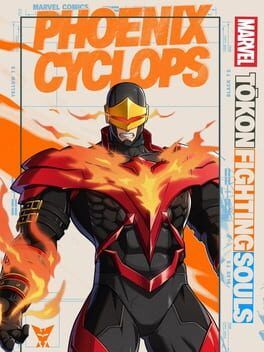

Phoenix Cyclops arrives in Marvel Tokon: Fighting Souls on November 2. Here is how Solar Shards, Dark Phoenix, Dark Ascension, and his revealed toolkit shape early competitive expectations.
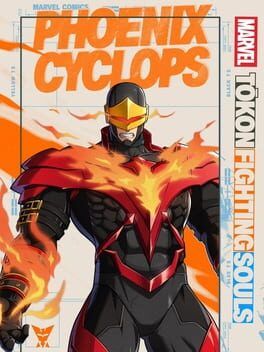
Image: IGDB
Phoenix Cyclops enters Marvel Tokon with a resource problem to solve
Arc System Works has released a full character guide for Phoenix Cyclops ahead of his November 2 arrival in Marvel Tōkon: Fighting Souls, according to GamingBolt and Push Square. He is the game’s first Year 1 DLC fighter, and the guide confirms the key tension in his design: Cyclops is an all-rounder with strong Optic Blast control, but his Dark Phoenix power is tied to Solar Shards, health loss, and a round-state penalty after the transformation ends.
That makes this reveal useful beyond character fandom. Phoenix Cyclops is not being presented as a standard beam character with a few fire effects added. The PlayStation Blog post by Arc System Works producer Takeshi Yamanaka says the team chose this version of Cyclops because it wanted a fresher visual direction and a more exciting fighting style than the traditional version players have seen across Marvel fighting games. The resulting kit looks built around routing decisions: gather resources, cash them out, accept the health cost, then deal with the Ashen State that follows.
For players looking for a Marvel Tokon character guide before launch day, the main caution is that the sources describe move functions, states, and conditions, but they do not provide frame data, damage values, assist behavior, cooldowns, or matchup numbers. Any competitive read right now has to stay grounded in the guide’s confirmed mechanics rather than pretend the lab work has already happened.
Optic Blast is his neutral tool and his Solar Shard engine
GamingBolt’s breakdown of the new character guide identifies Optic Blast as the starting point for Phoenix Cyclops’s gameplan. It is described as a simple beam attack that can be charged for increased damage, bounced off the floor, and used to evade projectiles. The same report says Optic Blast is also one way to gain Solar Shards, the resource that lets Cyclops trigger Dark Phoenix form.
That matters for how players should read his neutral. A beam that can be charged suggests a zoning layer, but the floor-bounce and projectile-evasion details point to something less linear than a stationary full-screen check. EventHubs, covering his earlier gameplay trailer, also singled out Optic Rage as a super that behaves like a full-screen beam attack, useful for checking opponents from anywhere on screen. Between Optic Blast and Optic Rage, Phoenix Cyclops appears to have multiple ways to make opponents respect horizontal space.
The unknowns are important. The guide information does not confirm whether charged Optic Blast is plus, punishable, reflectable, air-unblockable, or assist-safe. It also does not tell us how many successful uses are realistically needed to build Solar Shards under match pressure. GosuGamers reports that Cyclops can accumulate Solar Shards by using Optic Blasts and that four Solar Shards allow him to transform into Dark Phoenix. Until players can test startup, recovery, and cancel windows, the practical read is simple: his beam game is both pressure and economy, so opponents will likely want to contest the shard-building pattern early rather than wait for the install.
Dark Phoenix turns confirmed hits into movement, mix, and health risk
The reveal’s most important competitive hook is Dark Phoenix. GamingBolt reports that once Phoenix Cyclops transforms, his attacks are enhanced with Surging Flame. After Surging Flame connects, he can move in a chosen direction, but the effect costs health. GamingBolt names Heat Wave, Tactical Strike, and Phoenix Dive as examples of skills that become more dangerous through this system because the post-connect movement opens mix-up potential.
That phrasing gives us a clear structure, even without lab numbers. Surging Flame sounds like a conversion and positioning tool rather than a passive damage buff alone. If Cyclops can choose direction after connection, he may be able to alter spacing after blocked or landed sequences, set up left-right threats, or keep pressure near the corner depending on how Marvel Tokon’s defensive systems handle those situations. The guide confirms the concept of added layers. It does not confirm the exact mix-ups, nor whether they are reactable, fuzzyable, or vulnerable to invincible reversals.
The health drain is the brake. GosuGamers describes Dark Phoenix as a temporary power boost that comes at the cost of health depletion, and GamingBolt notes that Surging Flame itself takes some health. That makes Phoenix Cyclops an install character with a built-in risk curve. If the opponent can force him to spend life without securing meaningful pressure or damage, the transformation becomes a liability. If he can engineer safe entries into Heat Wave, Tactical Strike, or Phoenix Dive, Dark Phoenix could become the round-swinging state his design is clearly built around.
Dark Ascension changes function based on shard state
Phoenix Cyclops’s Ultimate Skill, Dark Ascension, is conditional. GamingBolt reports three different outcomes. If used after collecting all Solar Shards, Dark Ascension transforms him into Dark Phoenix. If used without them, Cyclops immediately attacks and transitions into the Ashen State. If used while already in Dark Phoenix form, it deals far more damage.
That is a meaningful fork for tournament decision-making. A super that can be a transformation trigger, a direct attack, or a higher-damage finisher asks players to plan meter and resources together rather than treat super as a universal cash-out. The strongest looking line, based only on the guide description, is to enter Dark Phoenix with full Solar Shards, use the enhanced state to force a strong interaction, then spend Dark Ascension while already transformed for the bigger payoff. The risk is that saving for the ideal route may leave damage unused in a game where team order and momentum can change quickly.
The harsher rule comes after Dark Phoenix ends. GamingBolt reports that once the transformation is over, Cyclops enters Ashen State, where he retains many of the same abilities as his default form, but Solar Shards cannot be gained for the rest of the round. That is the key limiter in Marvel Tokon Phoenix Cyclops gameplay. The install is not something to cycle repeatedly until it works. One mistimed activation can remove his resource engine for the remainder of that round, leaving players with a more conventional Cyclops while also having paid the health cost of the attempt.
His DLC status reflects Marvel Tokon’s roster design philosophy
Phoenix Cyclops also says something about the broader Marvel fighting game roster. The PlayStation Blog post from Arc System Works says Cyclops was an early leading candidate to join as a member of the Unbreakable X-Men team, but the studio challenged itself to find a version that felt different from his long fighting game history. Yamanaka says the narrative team proposed the Phoenix version, which let the developers pursue fresher visuals and a different fighting style.
EventHubs adds context from an interview with Marvel Tokon: Fighting Souls director Kazuto Sekine, originally cited to ComicBook. Sekine said the team wanted Cyclops in the game, but wanted to do something new by using the Avengers vs. X-Men Phoenix version. He also said that because Phoenix Cyclops would be in opposition to the rest of the X-Men, the team could not include him in the base roster as part of the X-Men team. EventHubs reports that he did not fit with any of the base roster teams, which led to the DLC approach.
That explains why the character feels mechanically specific rather than cosmetic. The Phoenix concept gives Arc System Works permission to build a resource install, health drain, fire-based area control, and an alternate state around a character historically associated with disciplined beam control. It also shows a roster strategy built around variants that create mechanical identities, even when that complicates team affiliation. For a tag fighter, that is a useful signal: DLC characters may be chosen not only for popularity, but for the gameplay problems they add to team construction.
Early team-building reads: protect the battery, spend the install cleanly
Based on the revealed kit, Phoenix Cyclops looks like a character who will reward teams that help him build Solar Shards safely and convert Dark Phoenix pressure into decisive damage. GosuGamers describes him as an all-rounder who can operate at long range and close range through versatile Optic Blasts, fire-based area control, projectiles, rushing attacks, throws, and setup tools. That breadth suggests he may fit several team roles, but the resource rules push players toward discipline.
If you are planning around him on day one, the first question is whether your team helps him win enough neutral to earn four Solar Shards. A character who can cover beam startup, force blocks long enough for charged Optic Blast, or extend pressure after Surging Flame movement would theoretically raise his ceiling. The second question is whether your team can stabilize after Dark Phoenix expires. Since GamingBolt reports that Solar Shards cannot be gained again for the rest of the round after the transformation ends, a team that depends entirely on Cyclops’s install may become predictable once Ashen State begins.
There is also an anchor question, but it should be treated as expectation rather than fact. High-damage installs often look tempting in last-character situations, especially when an Ultimate Skill gains extra damage during the powered-up state. The counterargument is the confirmed health cost. If Dark Phoenix drains life while the opponent can stall, disengage, or force bad trades, anchor Cyclops could lose the resource war. Until frame data and matchup testing arrive, the safer competitive read is that Phoenix Cyclops wants a team that creates clean activation windows rather than a team that asks him to gamble every round on raw install momentum.
Release timing, costumes, and what remains unannounced
Phoenix Cyclops releases on November 2. GamingBolt reports that he arrives for Year 1 Character and Stage Pass holders, while the PlayStation Blog says he is the first DLC character included in the Year 1 Pass. Push Square and GamingBolt both identify him as the first of four Year 1 additions, with Thor (Jane Foster), Venom, and Jubilee following over the course of the first year. The supplied sources do not list a standalone character price.
Arc System Works also confirmed through the PlayStation Blog that Cyclops is voiced by Ray Chase and that his Classic and Legacy DLC costumes become available on the same day. GosuGamers describes those costumes as more familiar yellow-and-blue looks for longtime fans, while the default Phoenix Cyclops design draws from the Avengers vs. X-Men storyline. The PlayStation Blog also says the game’s first PlayStation Store sale began ahead of his release and that PlayStation Plus subscribers received access to a three-hour Game Trial starting October 7.
For competitive players, the practical advice is to wait for the lab before declaring him top tier or too risky. The revealed Phoenix Cyclops gameplay gives us a strong outline: beam control, Solar Shards, Dark Phoenix install, health drain, conditional Ultimate Skill, and Ashen State as the post-install limiter. The missing pieces are the ones that decide tournament viability: startup, recovery, block advantage, defensive counterplay, assist synergy, damage scaling, and how costly the health drain feels over a real set. The design is already clear. The tier placement is not.