
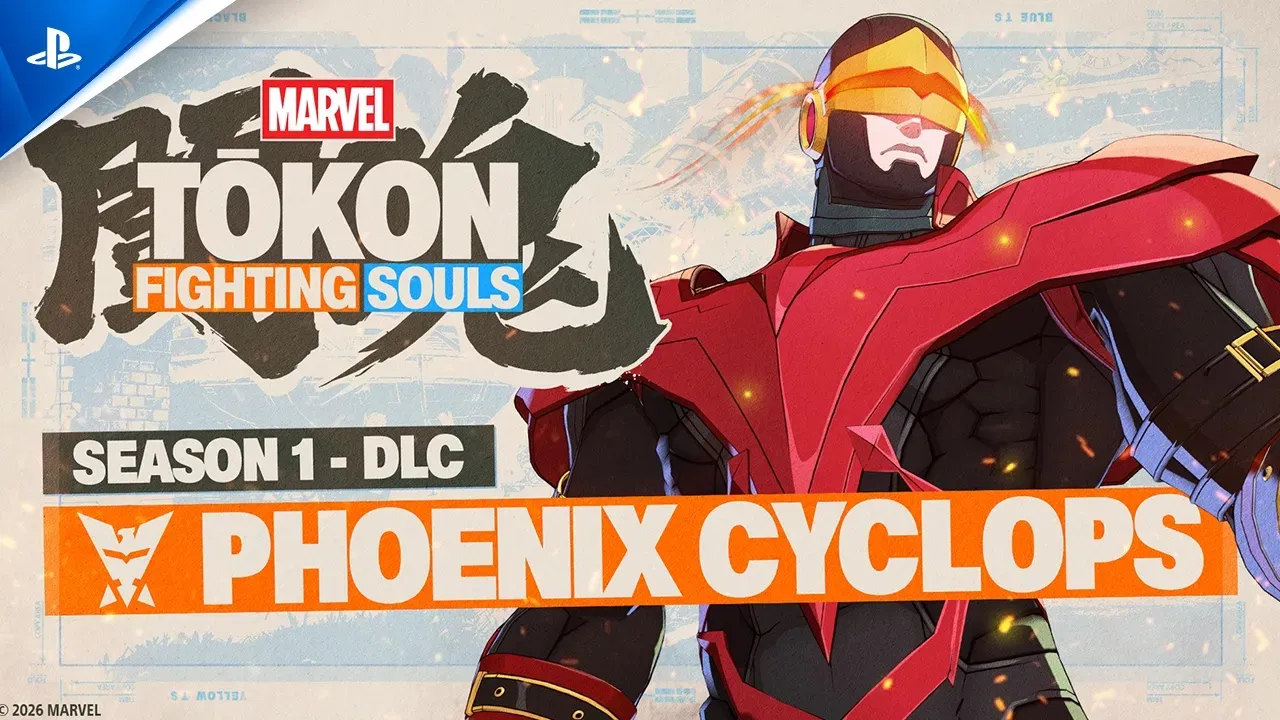

Marvel Tōkon’s PC launch is being hit by stutter, rollback complaints, Steam backlash, and an unverified Epic Games Store workaround that shows how quickly early fighting game momentum can collapse.
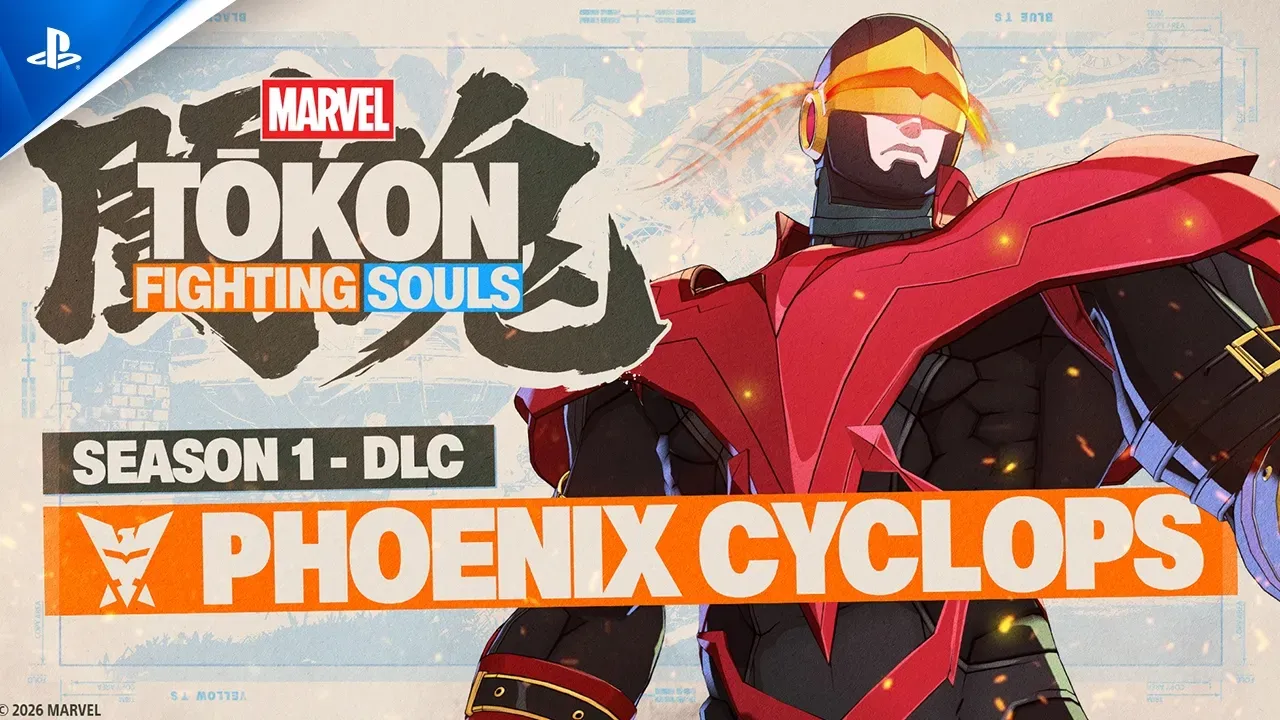
Image: playstation.com
Marvel Tōkon’s PC launch has become a fight against stutter
Marvel Tōkon: Fighting Souls launched on August 6 for Windows PC and PlayStation 5, but the first weekend conversation around Arc System Works’ 4v4 tag fighter has been dominated by PC performance complaints rather than team composition, routes, or matchup tech. IGN reported that the game’s Steam user reviews fell to 41% positive across all languages and 39% positive in English after launch weekend, while Polygon cited the Steam page sitting at 40% approval. Those numbers are snapshots taken at different times, but they point in the same direction: early PC sentiment is rough.
The core complaint is not cosmetic. Polygon, Eurogamer, GameSpot, Kotaku, and IGN all reported player frustration over stutters, frame drops, micro-jitters, launch failures, and online instability. For a fighting game, those are not background annoyances. A dropped frame can turn a punish into a block, a whiff punish into a trade, or a clean anti-air into eating a jump-in. Marvel Tōkon is asking players to learn a new 4v4 tag system, but the PC version is making some of them question whether the match state they are practicing against is stable enough to trust.
Sony Interactive Entertainment is the publisher and Arc System Works is the developer, according to IGN and Kotaku. Eurogamer reported that the developers have acknowledged technical reports on social media and said they are investigating. GameSpot also published Arc System Works’ day-one patch notes, which list PC-focused performance optimizations. That matters because these are not only social-media gripes. The studio had already identified PC problems during the open beta, according to GameSpot, and pledged a day-one patch. Players are now judging whether that patch was enough. Based on the reported backlash, many PC users are saying no.
The Epic Games Store workaround is a symptom, not a fix
The strangest detail in the Marvel Tokon PC issues story is the community workaround involving the Epic Games Store. Polygon reported that a suggestion circulating through the fighting game community told players to run the Epic Games Store once in the background, even if they bought and are playing Marvel Tōkon on Steam. The theory attached to the workaround, as Polygon described it, is that because Marvel Tōkon uses Unreal Engine 5 and communicates with Epic Games’ backend services, launching EGS might help those integrations behave more smoothly.
That is not confirmed by Arc System Works, Sony, or Epic in the provided source material. Kotaku tested the workaround and said it seemed to produce minor FPS improvements and less CPU impact in that writer’s session, but also cautioned that repeated relaunching and other uncontrolled variables could explain the result. Polygon likewise noted that some players in the X comments said the Epic Games Store trick helped, while others said it did nothing.
That uncertainty is exactly why the workaround has become a flashpoint. Fighting game players will grind ugly solutions if there is a clear reward. They will lab safe jumps for hours, time dash-blocks, and test meaty timings against every wake-up option. But asking the player base to leave an unrelated storefront running in the background, with no verified explanation and mixed results, lands differently. It makes the PC version feel like a community troubleshooting project rather than a tournament-ready release.
This is also where the Marvel Tokon Epic Games Store keyword can mislead readers. The sourced complaints are centered on the PC version broadly, especially the Steam release and Steam reviews. The confirmed Epic Games Store angle is the unverified workaround, not a documented official instruction from the developer. If you are seeing people tell you that EGS fixes Marvel Tōkon, treat that as community experimentation. It is not a patch note.
Why rollback makes one bad PC affect two players
The frustration is sharper because fighting games are locked to match rhythm. Marvel Tōkon needs a stable 60 frames per second to make its inputs, hit-confirms, defensive timings, and rollback corrections feel consistent. Eurogamer reported that players have described the PC version struggling to hold a consistent 60fps, with small drops creating a gameplay ripple during online matches. Polygon also highlighted the knock-on effect: even if your own PC is running the game well, an opponent’s technical issues can make the match stutter on your end through one-sided rollback behavior.
In practical terms, rollback netcode is built to preserve responsiveness by predicting game states and correcting when the two clients disagree. When both machines are stable and the connection is solid, that can feel excellent. When one player’s PC is dropping frames or stalling, the system has to reconcile a bad local simulation with the online match. That can make a clean-looking connection feel cursed. You can be on a strong rig with a wired connection and still get dragged into a choppy set because the other side is hitching.
That is why players are reacting harder than they might to ordinary PC port problems. In an action-adventure game, a hitch is annoying. In a competitive fighter, a hitch changes whether your confirm window exists. It changes whether a 2M whiff punish is real, whether your assist call gets protected, and whether your pressure reset is actually tight. If competitors cannot tell whether they lost to a player, a matchup, or the port, the learning loop breaks.
GameSpot reported a player claim that the stutter can occur regardless of high-end PC specs, quoting a Reddit user who argued that even an extremely powerful machine at low settings could still encounter the issue. That is a player report, not a benchmark from the developer, but it matches the wider pattern in the sources: users are describing a problem that does not cleanly disappear when they lower settings or throw hardware at it.
Max Dood’s uninstall turned private frustration into public damage
The most visible moment of the backlash came from Maximilian Dood, one of the biggest fighting game creators and a creator closely associated with Marvel vs. Capcom. IGN reported that Maximilian Christiansen uninstalled the PC version of Marvel Tōkon on stream after two days, calling the port “really s**t” and saying, “This is bad, chat. I don’t think I can play this anymore.” Polygon also reported that he moved to the PS5 version instead.
The quote that should worry anyone tracking early Marvel fighting game PC momentum is not the insult. It is the reason he gave. IGN quoted him saying the game was making him like Marvel Tōkon significantly less because dealing with stutter made it “un-fun.” That is the danger zone for a new competitive game. Players can forgive balance problems if the game is stable enough to test. They can forgive day-one matchup nonsense if losing still teaches them something. They are much less patient when the platform itself gets between the player and the decision tree.
IGN also reported that Maximilian pointed to another platform problem: no cross-progression. Moving from PC to PS5 means unlocking content again, according to his stream comments cited by IGN. That friction matters because the obvious escape hatch for many players is to buy or switch to the PlayStation 5 version, which multiple outlets say appears to be in better shape. But a platform switch is not free in time, setup, or community access.
The public creator effect is real, even if it is hard to measure. A launch weekend fighting game lives on streams, Discord tech sharing, beginner lobbies, and high-level players showing what is possible. When a major FGC figure spends that window uninstalling the PC version instead of demonstrating teams and routes, the audience learns a different lesson: wait, switch platforms, or avoid PC until Arc System Works proves the port is fixed.
The PC scene is already adjusting around the weak version
The backlash is moving beyond reviews and into community behavior. Eurogamer reported that some console players are turning off crossplay with PC. Polygon reported that the online tournament series Tampa Never Sleeps banned Windows PC players. Those are strong signals in a fighting game ecosystem, where the quality of the opponent pool matters as much as the quality of your own install.
Crossplay is supposed to increase matchmaking health, especially early in a game’s life when everyone is learning. If PS5 players are avoiding PC opponents because they fear stutter and one-sided rollback, the PC pool gets less useful and the console pool becomes the safer competitive environment. If online events exclude PC, serious players have another reason to migrate. That can create a feedback loop where the most motivated competitors leave the platform that most needs stable high-level activity.
Steam Deck and Linux players are facing a separate compatibility problem. Eurogamer reported that Marvel Tōkon does not appear to work on SteamOS without serious workarounds, and GameSpot reported that players hoping to run it on Steam Deck were disappointed that it could not launch in SteamOS/Linux. Eurogamer cited player criticism of the lack of Linux support, including comparisons to other Arc System Works and Sony-published games that have worked on Linux. Those are player-side comparisons, but they help explain why the issue feels broader than one bad graphics preset.
Arc System Works’ day-one patch notes, as published by GameSpot, show that the developer did target PC load problems. The notes mention removing unnecessary character animation updates to reduce CPU load, improving UI update load, and addressing performance deterioration when running overlay or capture applications such as OBS Studio Game Capture and Discord overlays or video capture. For streamers and tournament organizers, that last item is especially important. A fighting game that performs worse when captured is walking into the exact use case that drives launch-week visibility.
The unresolved question is whether the launch build’s remaining issues are isolated enough for hotfixes or rooted deeper in how the PC version handles shaders, overlays, backend calls, anti-cheat, or frame pacing. The provided sources do not establish a single cause. They do establish a player base testing RTSS caps, shader reloads, automatic graphics settings, EGS launches, and other workarounds because the official fix has not yet restored confidence.
Practical advice for PC players before buying or grinding ranked
If you are deciding whether to buy Marvel Tōkon on PC today, the safest read from the current sources is to wait for a clearer patch. The game is available on PC and PS5, according to IGN, and the PS5 version is being described by outlets and Maximilian Dood’s cited stream comments as the steadier option. That does not mean every PC user will have a bad experience. Eurogamer noted that some players are experiencing few issues. It does mean the public PC signal is unreliable enough that competitive players should be cautious.
If you already own it on PC, separate confirmed fixes from lab myths. Install the latest official patch. Try the in-game automatic graphics setting if you are troubleshooting, since Polygon cited that as one of the community-suggested steps. Be aware that RTSS frame limiting to 59.9fps, mentioned by Polygon through fighting game streamer Chris F, is a community workaround, not an official prescription in the provided sources. The same goes for running the Epic Games Store before launching on Steam. It might help some setups, it might do nothing, and current reporting does not prove causation.
For online play, test with intention. Training mode stability is useful, but it is not the whole match. Play a private set with someone whose PC performance and connection you trust before judging the netcode. If the match stutters only against certain opponents, you may be running into the rollback interaction Eurogamer and Polygon described. If every match stutters, your local setup, the game build, or both may be involved.
For tournament players, the platform decision is already becoming part of the matchup chart. If your local or online bracket follows Tampa Never Sleeps’ reported PC ban, or if your scene is mostly PS5 because crossplay is being disabled, PC may be the wrong practice environment for now. That is an ugly place for a new Marvel fighting game PC release to be in during its first week, but competitive players should optimize for stable reps, not platform loyalty.
Marvel Tōkon can recover on PC if Arc System Works delivers visible fixes quickly and communicates clearly about what has changed. The first weekend, though, has shifted the discussion away from team tech and toward whether the PC version can be trusted at all. For a fighter, trust is frame one.