

A deep-dive preview of Marvel Tokon: Fighting Souls, breaking down the 20-character launch roster, Episode single-player structure, massive 64-player online lobbies, and how Arc System Works’ tag-focused design could set it apart from past Marvel team fighters.
Marvel Tokon: Fighting Souls has gone from cryptic teaser to one of 2026’s most interesting fighting games overnight, thanks to an updated Steam page that seemingly went live ahead of schedule. Buried in that listing is the clearest snapshot yet of what PlayStation Studios, Marvel Games, and Arc System Works are actually building here: a 4v4 tag fighter with a tightly scoped 20-character launch roster, a story-adjacent Episode mode, and big, social online lobbies built around team play.
Below, we break down what that new info really suggests about the game’s structure, how it might feel to play, and why ArcSys is positioned to make Marvel Tokon very different from the Marvel vs. Capcom lineage it will inevitably be compared to.
A 20-character launch roster for a 4v4 tag fighter
The headline detail from the Steam page is simple: Marvel Tokon: Fighting Souls will launch with 20 playable characters.
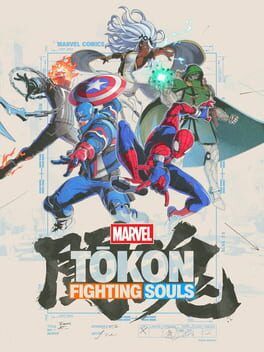
So far, eight of those have been officially revealed across trailers and key art: Captain America, Iron Man, Ms. Marvel, Spider-Man, Star-Lord, Storm, Doctor Doom, and Ghost Rider. That leaves 12 slots unannounced, which are almost certainly being held for an upcoming State of Play blowout.
On paper, 20 characters for a 4v4 tag fighter sounds lean. You are fielding teams of four, with both sides drawing from the same pool, which naturally compresses variety compared to a 1v1 roster of the same size. That concern shows up across community discussion and in coverage of the leak, and it is not unfounded if you come in expecting Ultimate Marvel vs. Capcom 3 scale right out of the gate.
Two pieces of context make that number more interesting though.
First, the Steam copy describes it as an “expanding roster” of 20 characters at launch. That strongly hints at a roadmap of post-launch additions. Arc System Works is very familiar with that model thanks to Guilty Gear Strive and Dragon Ball FighterZ, and Marvel as a license thrives on ongoing reveals and season-style content drops. A smaller, curated starting cast that gradually grows is probably the expectation inside the studio, not a compromise.
Second, 4v4 suggests there is more to each pick than just “another body” on the select screen. If Marvel Tokon leans into defined team roles, assists, and synergies the way ArcSys usually does, each character will likely be designed not only as an individual fighter but as a piece of a broader squad concept. That favors a focused roster that can be tightly balanced over a sprawling one where half the cast gathers dust.
In other words, Marvel Tokon may be less about raw headcount and more about how those 20 characters snap into coherent teams.
How 4v4 changes the Marvel formula
Marvel tag games have traditionally centered around 2v2 or 3v3 formats, with layers of assists, tags, and supers feeding into wild, momentum-heavy offense. Marvel Tokon’s 4v4 structure threatens to raise that complexity by another notch, but the Steam description hints at something more considered.
The game pitches itself around team dynamics, and leaks repeatedly call out that all fighters share a single life bar across the team. That structure alone changes the mental math of each match.
Fights likely become about managing an entire squad as one evolving unit rather than as individual health pools you rotate through for safety. Pushing for a damaged character’s tag-out makes less sense if the life bar is shared; instead, switches might be about accessing specific specials, buffs, or defensive tools at the right moment.
This is where Arc System Works’ track record matters. In games such as BlazBlue Cross Tag Battle and Dragon Ball FighterZ, team mechanics are tuned around cancels, delayed assists, and character-specific utility. If Marvel Tokon follows suit, you can imagine each Marvel hero and villain slotting into archetypes that matter for four-character compositions: you bring Storm for screen control, Ms. Marvel for agile mix-ups and extensions, Doom for oppressive pressure and support tools, and a more straightforward bruiser like Captain America as the foundation.
Four slots per team mean there is room for dedicated support-style characters who might be too narrow for a 1v1 design but thrive when their main job is to empower the other three.
Episode Mode: Story, tutorials, and team identity
The other big revelation from the Steam page is the inclusion of a single-player Episode Mode. Official text frames it as a mode that lets players ease into the mechanics while learning more about the lore, and several write-ups on the leak call out that it is focused on team dynamics and story.
That last point is key. Rather than a single overarching cinematic campaign, Episode Mode sounds more like a collection of character or team arcs that double as structured tutorials. Think of the character episodes in Guilty Gear Strive or arcade routes that feed you light narrative context while gradually layering in mechanics.
In a 4v4 fighter specifically, this offers ArcSys a handy way to teach players how Marvel Tokon wants to be played. One episode might walk you through a team built around aerial rushdown and tag combo routes, another might center on a zoning core with assists covering blind spots, and a third could highlight armor, counters, or tag-specific defensive techniques.
For Marvel fans, the appeal is obvious. This is a game that can naturally lean on existing comics storylines, mashups, and “what if” scenarios that justify unusual squads. Teams of four lend themselves to mini casts, not just duos. You could easily imagine an episode built around a Fantastic Four style lineup, one exploring an X-Men strike team, and another focusing on a cosmic alliance with Star-Lord as the connective tissue.
For players coming from anime fighters, Episode Mode could also serve as a safer, more digestible ramp compared to jumping straight into training mode and ranked queues.
64-player online lobbies and the push for a social Marvel fighter
The Steam page also notes that Marvel Tokon will support online lobbies for up to 64 players. Modern ArcSys lobbies have gone through several iterations across Guilty Gear Strive and earlier games, but the consistent goal is to create a space that feels more like a virtual arcade than a barebones menu system.
With 64-player capacity, Marvel Tokon’s lobbies can function as community hubs where multiple matches, spectating, and casual sets happen simultaneously. For a team-focused fighter, that scale matters. It should make it easier to fill rooms with friends, run community tournaments, and keep spectating alive even when you are not in a match.
If ArcSys continues the trend of allowing rematches, quick re-queueing, and flexible room rule sets, Marvel Tokon could end up one of the more social Marvel fighters to date, especially on PS5 where first-party integration for parties and voice chat is baked in.
The key will be netcode and matchmaking. Guilty Gear Strive’s rollback netcode raised the bar for ArcSys, and fans will expect Marvel Tokon to match or exceed that standard. The Steam page does not spell out that detail yet, but the combination of cross-platform play (PC and PS5), large lobbies, and a tag-heavy fighter almost demands a robust rollback implementation.
How Arc System Works can differentiate Marvel Tokon from past Marvel fighters
Even before these leaks, Marvel Tokon was always going to invite comparisons to Marvel vs. Capcom. Now that the 4v4 structure, smaller launch roster, and Episode Mode are in the open, it is easier to see how ArcSys might deliberately steer the game into its own lane.
The first big differentiator is presentation and identity. Marvel Tokon is described across multiple listings as an anime-inspired Marvel fighter. That signals a willingness to stylize heroes and villains closer to ArcSys’ own aesthetic than to the more photoreal look of Marvel vs. Capcom Infinite or the comic panel flair of earlier titles. Think Guilty Gear’s expressive facial work and camera sweeps, applied to Marvel supers and tag combos.
Mechanically, the shared life bar and 4v4 teams suggest a slower burn of resource and team management compared to the all-or-nothing snowballing you often see in 3v3 Marvel. Instead of one character getting touched and dying in a single extended sequence, Marvel Tokon might emphasize longer, more back-and-forth rounds where the tension comes from how you rotate roles within a single health pool.
ArcSys is also known for highly defined character archetypes. Rather than filling the game with slightly tweaked shoto variants or overlapping rushdown kits, its designers tend to carve out fighters with clear identities and game plans. That philosophy could be what makes a 20-character launch roster feel bigger than it sounds. If every pick meaningfully changes what your four-person team wants to do, exploration and matchup depth will come from combination theory as much as from raw cast size.
Finally, the very existence of Episode Mode and the emphasis on lore signal a more guided, narrative-friendly approach than many competitive-first fighters pursue. Marvel vs. Capcom games historically made story a side dish; Marvel Tokon looks prepared to put narrative and character dynamics closer to the center, which suits Marvel’s transmedia storytelling.
The Marvel fighter to watch ahead of State of Play
On paper, Marvel Tokon: Fighting Souls is still a list of bullet points on a storefront page: 20 characters at launch, 4v4 tag teams, Episode Mode, 64-player online lobbies. In practice, those details sketch out a very specific vision for what an ArcSys-driven Marvel fighter can be.
A smaller, curated cast suggests a game about team-building and synergy rather than endless mirror matches. A shared life bar across four heroes nudges players toward thinking of their squad as a single, flexible organism instead of three or four isolated health pools. Episode Mode hints at an accessible entry point that can onboard Marvel fans who have never touched an anime fighter, while still teaching the sort of layered team mechanics tournament players care about.
With an updated State of Play showcase looming, it will not be long before we see if Marvel Tokon: Fighting Souls can turn that promise into something that feels as good in motion as it sounds on paper. For now, the leaked Steam page has done its job: this is suddenly one of the most intriguing experiments in licensed fighting games on the horizon, and an unmistakably Arc System Works take on the Marvel formula.