
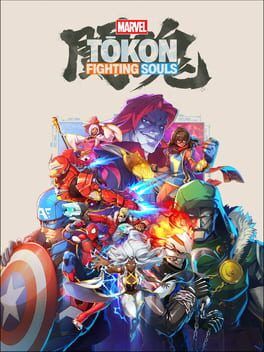

Marvel Tokon: Fighting Souls reportedly sold only 2,814 retail copies in Japan during its first week. A new PS5 and PC patch now tackles matchmaking, PC performance, input behavior, and key gameplay bugs.
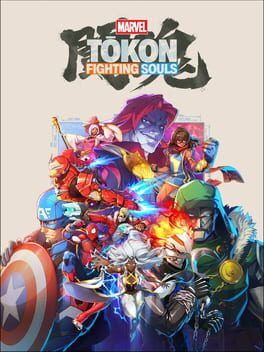
Image: IGDB
Store links: Marvel Tokon: Fighting Souls on Steam
A tiny Japan retail debut creates a bigger problem for Tokon
Marvel Tokon: Fighting Souls reportedly sold 2,814 physical copies in Japan during its first week, according to Game Data Library figures cited by Video Games Chronicle and Twisted Voxel. That number does not include digital sales, but it is still the sharpest concrete sign yet that Arc System Works’ Marvel fighter has opened weakly in one of the developer’s home markets.
Game Data Library described the result as below 3,000 retail units and, excluding especially niche cases such as DNF Duel, the weakest Japanese launch for an Arc System Works fighting game. The same report placed it below most Guilty Gear and BlazBlue releases, below Under Night In-Birth, and under every Marvel vs. Capcom comparison raised by the account. VGC also quoted Game Data Library saying that even if digital made up 70 percent of sales, the total would remain “very lackluster.”
That framing matters because this is a physical Japanese sales report, not a worldwide sell-through total. It cannot tell us how many players bought the game on PlayStation Store, Steam, or Epic Games Store. It also cannot settle how well the game is doing outside Japan. It does, however, make one thing plain: Marvel Tokon Fighting Souls sales at Japanese retail are far below the kind of opening many would expect from a Marvel-branded fighter developed by Arc System Works.
The patch arrives while the launch window is still fragile
Arc System Works has now pushed a new update for Marvel Tokon: Fighting Souls on PS5 and PC, with Push Square reporting that the patch is live across both platforms. The timing is important. A fighter’s first few weeks set its matchmaking density, word of mouth, tournament curiosity, and training-mode retention. If queues feel slow, PC matches stutter, or core mechanics behave inconsistently, players leave before the meta has time to mature.
The official Marvel page lists Marvel Tokon: Fighting Souls as available now on PlayStation 5 and PC through Steam and the Epic Games Store, with an August 6, 2026 release date. Marvel’s listing says PlayStation Studios, Arc System Works, and Marvel Games joined forces on the project, while Twisted Voxel identifies Sony Interactive Entertainment as publisher. The game’s broad pitch is a Marvel tag-team fighter from the studio behind Guilty Gear and BlazBlue, but the first-month story has become messier than that pitch.
VGC reports that the Steam version had a Mixed reception, with 46 percent of English-language Steam reviews positive at the time cited. VGC also says the game peaked at more than 24,000 concurrent players near launch but was later drawing fewer than 5,000 daily concurrent users according to SteamDB. Twisted Voxel similarly cites a launch Steam peak in the roughly 24,500 to 25,000 range, while noting that the open beta had surpassed 33,000. Those numbers point in the same direction: curiosity was real, but retention has been under pressure.
PC players get the most direct technical fix
For PC players, the headline change in the latest Marvel Tokon patch notes is performance. Push Square says the new version includes further PC performance improvements, and the official notes specify a fix for an issue where the system could periodically experience heavy processing loads during matches.
That is a meaningful fix for a fighting game because performance instability is not cosmetic. If a PC spike hits during a punish, assist call, air scramble, or defensive timing window, the match stops feeling like a test of decisions. In a game built around Marvel-style pace and Arc System Works visual density, intermittent processing load can affect confidence even when the netcode itself is not the named problem.
The patch notes do not provide benchmark targets, frame-time graphs, minimum specification changes, or a guarantee that every stutter case is gone. Players who bounced off the PC version because of performance should treat this as a reason to re-test, especially in real online matches, rather than proof that all optimization complaints have been solved. If your concern is Steam Deck support, the provided sources do not list a new Steam Deck compatibility change in this update.
PS5 fixes target lost settings and bad match flow
The PS5 side gets several practical repairs. According to the patch notes published through PlayStation and relayed by Push Square, Arc System Works fixed an issue where online battle settings, lobby avatar customization settings, and team-building settings could reset after restarting the game. That kind of bug sounds small until you are grinding ranked and have to rebuild preferences before playing.
The update also fixes a PS5 issue where players could automatically forfeit if they did not press the Participate button within a specific window, even while still inside the eligible time limit. For ranked players, that is the kind of system-level loss that feels worse than dropping a combo. It affects trust in the queue before the round even starts.
Across PS5 and PC, the update fixes badge progress on the battle result screen not saving correctly. Push Square also highlighted a fix connected to the “I Can Do This All Day” Trophy. These are not balance changes, but they reduce friction around progression and platform features, which matters for players deciding whether Tokon is stable enough to keep in daily rotation.
Matchmaking and gameplay fixes matter for the competitive layer
The most important player-facing online change may be matchmaking. Push Square reports that casual and ranked matchmaking have been improved, noting that long wait times had been a sore spot for players. The patch notes excerpt does not quantify how matchmaking was changed, so there is no confirmed new search radius, skill-matching rule, region behavior, or crossplay adjustment in the provided material. Still, better queues are essential for a young fighter trying to keep both beginners and lab monsters active.
The gameplay fixes are more specific. The patch fixes an issue that allowed unintended follow-up attacks after Champion’s Cosmic Smash, a bug where Crossover would not activate if a button was being held while guarding, and a case where an Assist could not be used again after a member change because its cooldown did not complete. Those are real competitive issues. Assist availability, guard-state input recognition, and post-hit follow-up legality all affect routing, defensive muscle memory, and matchup prep.
Arc System Works also changed dash and backdash inputs so they can only be performed after passing through neutral. In practical terms, that is an input-cleanliness change. Players who were getting movement they did not intend, or who were exploiting lenient double-tap behavior, should go back to training mode and test their dash cancels, backdash defense, and scramble movement. It is the sort of adjustment that can make the game feel slightly different without reading like a traditional balance patch.
Other fixes remove visual and state problems. Peni Parker’s Cyber Web and Assemble Assist Shooter should no longer become invisible while retaining hitboxes. Spider-Man’s Web Slam should no longer leave an opponent stuck in an attacked state and unable to move under certain circumstances. Carnage’s Guillotine Axe camera issue at high hit positions has also been addressed. These are the kinds of bugs that damage match integrity because they interfere with what players can see, confirm, or control.
The sales story is regional, but the warning is global
The Japanese retail figure should not be stretched beyond what it says. It is not a full Japan total, and it is not a global sales number. Softonic separately claimed Marvel Tokon: Fighting Souls sold roughly 485,000 copies in its first week, with about 74 percent of buyers on PS5, but that article is making a broader claim than the Game Data Library retail report. The two claims can coexist if digital and overseas sales are carrying the load, but the provided material does not give us a unified official sales statement from Sony, Marvel, or Arc System Works.
That leaves a familiar fighting-game tension. A game can have a respectable worldwide opening and still struggle in a key local market. It can peak strongly on Steam and still shed players quickly if performance, matchmaking, and launch perception cut into the week-two crowd. It can be backed by Marvel and Sony and still need ordinary fighting-game maintenance: stable frame pacing, reliable online queues, clear inputs, readable assists, and bug-free competitive states.
There is also an expectation problem. MonsterVine’s review argues that Tokon is better understood as a 1v1 fighter with three assists than as a direct Marvel vs. Capcom successor, citing its shared health bar and team-role structure. That interpretation helps explain some early friction. Players arriving for traditional tag-team character attrition may read Tokon’s design differently than players approaching it as an assist-heavy Arc fighter with Marvel speed. The patch cannot rewrite that identity, but it can remove the technical and rules-noise that makes players less willing to learn it on its own terms.
Should players jump back in after the update?
If you already own Marvel Tokon: Fighting Souls on PS5, this is an easy patch to test. The PS5 update addresses settings resets, a bad auto-forfeit case, progression saving, and matchmaking improvements. Those fixes directly touch the daily ranked loop. If you were waiting because you heard queues were rough, the new update gives you a concrete reason to check again, but player population in your region and rank will still decide how it feels.
If you are on PC, the answer depends on your tolerance for launch turbulence. The patch specifically targets periodic heavy processing loads during matches, which is the right problem to attack first. I would still recommend testing training mode, offline matches, and several online sets before judging the improvement. Fighting games live on consistency. One clean benchmark is less useful than an hour of matches with assists, supers, camera swings, and stage effects all firing under pressure.
For players comparing Marvel Tokon Fighting Souls sales headlines with the patch notes, keep the categories separate. The reported Japan retail launch is a business signal, not a verdict on whether the game is worth learning. The patch is a maintenance signal, not proof that the launch is recovered. The useful question now is whether Arc System Works can keep tightening the game fast enough for the remaining player base to stabilize, teach the system, and build the match footage that sells a fighter better than any brand name can.