
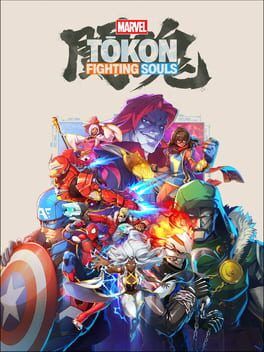

Ghost Rider’s Vengeance Gauge gives Marvel Tokon: Fighting Souls players a clear pressure identity: big mid-range threat, high damage upside, and real burnout risk if Robbie Reyes is mismanaged.
Image: IGDB
Store links: Marvel Tokon: Fighting Souls on Steam
Ghost Rider’s guide finally defines the risk behind his reach
The new Marvel Tōkon: Fighting Souls Ghost Rider character guide puts Robbie Reyes in a familiar fighting game role with an unfamiliar tax: he can threaten from mid-to-long range with fiery chain and scythe attacks, but his own offense can push him toward a self-stun state.
That is the key concrete development from the latest character spotlight. GamersHeroes, citing the official Marvel Tōkon social post and trailer release from Arc System Works, Marvel Games, and PlayStation Publishing, describes Ghost Rider as a character who hits hard from mid-to-long range and warns that his power comes with risk. IGN’s listing for the same 6:45 guide also points to Robbie Reyes using long-range chain and scythe attacks.
The risk is clearer in GamingBolt’s breakdown of the guide. Ghost Rider’s Vengeance Gauge builds as players execute skills. When the gauge enters the Red Zone, those skills deal increased damage, reportedly even more than the Heavy versions of the same skills. If the gauge maxes out, however, Reyes is stunned and cannot move or use skills until the gauge returns to its starting zone.
For fighting game players, that makes Marvel Tokon Fighting Souls Ghost Rider less of a simple big-button zoner and closer to a pressure character who has to budget aggression. The trailer details confirm the shape of the mechanic, but they do not yet give the data that decides tournament viability: startup, recovery, block advantage, pushback, invulnerability, assist interactions, or exact gauge values.
Vengeance Gauge turns damage into a tempo problem
The most important detail is not that Ghost Rider gets stronger in the Red Zone. It is that the Red Zone is positioned next to a fail state. According to GamingBolt, skills gain damage once the Vengeance Gauge reaches that range, but filling it completely stuns Reyes and shuts off movement and skills until the gauge falls back.
That creates a classic Arc System Works style question: how long can you stay at the edge of danger before the resource becomes your opponent’s win condition? If Ghost Rider’s best routes naturally build gauge, then every pressure sequence has an implied timer. The attacker wants to cash out while boosted skills are active. The defender wants to survive long enough for the same offense to become unsafe resource management.
That is different from a standard super meter decision, where spending usually asks whether damage, oki, or reversal value is worth the cost. Ghost Rider’s character resource appears to ask whether continuing pressure is worth the chance of losing agency. A self-stun in a tag fighter is especially severe because Marvel Tōkon is built around teams and assists. The provided sources do not give full system rules for punishing a stunned character, but being unable to move or use skills is already a major opening in any competitive 2D fighter.
The practical read is simple for beta players: do not treat Red Zone as a permanent buff. Treat it as a short window to end a sequence, force a meaningful defensive choice, or hand the turn to another teammate before the gauge becomes the opponent’s punish.
His pressure tools look built around controlled extension
GamingBolt names several ways to manage the gauge: Revelator Chain, Hell Throttle, Ghost Rider’s Super Skill, switching team members, casting an Ultimate Skill, and Hell Ride. The same report says Revelator Chain attacks multiple times when held, while Hell Throttle deals damage around him. Those details suggest a kit with both range control and close-range denial, even before exact frame data is available.
Revelator Chain matters because a holdable, multi-hit attack can be a pressure stabilizer if it keeps the opponent blocking or checks movement at a range where short normals cannot easily contest. Without startup and recovery numbers, no one should assume it is plus, safe, or gapless. Still, the described function gives Ghost Rider a tool that can occupy space while the player watches gauge state.
Hell Throttle is the more interesting pressure piece because GamingBolt describes it as damaging the area around him. In fighting game terms, that kind of move often helps a character discourage scrambles, jump-ins, or close-range mash attempts. We do not yet know whether Hell Throttle is a reversal, a callout, a combo piece, or a pressure reset. The confirmed part is that it affects space around Ghost Rider and is part of his gauge-control kit.
This is where Ghost Rider’s offense may become matchup-specific. Against characters who need to approach through his chain and scythe range, he may be able to spend early gauge to build a life lead, then cool the resource through team movement or a controlled conversion. Against characters who can contest from similar range, his player may need to be stricter, because whiffing or overextending near max gauge could turn his own mechanic into a punish starter for the opponent.
Hell Ride looks like the character’s highest-stakes callout
Hell Ride is the move that most clearly defines Ghost Rider’s risk-reward loop. GamingBolt reports that Hell Ride reduces the Vengeance Gauge when it lands, but increases it when it misses. That single rule gives the move a very different value depending on whether the player is using it as a confirmed route ender or as a neutral gamble.
On hit, Hell Ride sounds like a release valve. If the Vengeance Gauge is high, landing it can keep Ghost Rider from burning out while potentially preserving offensive momentum. On miss, it pushes him closer to the stun state. That makes raw Hell Ride especially dangerous if the opponent can bait it with movement, assist cover, or spacing.
Until players test the open beta, the smart assumption is that Hell Ride should be routed into rather than thrown out. If it can be confirmed from chain hits, scythe pokes, or assist extensions, it may become Ghost Rider’s safest way to remain threatening in Red Zone without tipping into max gauge. If it is slow, punishable, or easy to evade, then its gauge penalty on whiff could make it a matchup liability.
That is the kind of mechanic competitive players should lab first. The question is not only how much damage Hell Ride does. It is whether the move can be confirmed consistently, whether it works after common starters, how it behaves near the corner, and how much gauge relief it actually gives on hit.
Team switching may be his real defensive resource
Marvel Tōkon: Fighting Souls uses a team format, and the provided Wikipedia entry describes the game as a 2.5D tag fighter with a 4v4 system that grows into fuller team play over the course of a match. That context changes how Ghost Rider’s gauge should be read. A dangerous character resource in a solo fighter usually demands disengagement or a hard reset. In a tag fighter, the answer may be rotation.
GamingBolt specifically lists switching team members as one way to temper the Vengeance Gauge. That is a major design clue. Ghost Rider may be intended to enter, spend skills to create damage or pressure, approach the Red Zone, then leave before the gauge reaches the stun threshold. If so, his best teams may be the ones that let him cash out without staying on screen too long.
The Super Skill and Ultimate Skill options also matter, though the sources do not provide costs, inputs, frame properties, or exact gauge interaction beyond listing them as management tools. For now, the player-facing takeaway is that Ghost Rider’s meter decisions probably cannot be separated from team order. If a Super Skill or Ultimate Skill stabilizes the Vengeance Gauge, it may be worth saving resources for gauge control rather than spending only for raw damage.
That could make him a strong second or rotating threat rather than a character who wants to sit point forever. He appears to bring reach, damage, and pressure, but the Vengeance Gauge punishes autopilot offense. In a tag environment, the best Ghost Rider players may be the ones who know when to leave the screen.
What to test in the July beta before calling him top tier
GamingBolt reports that Marvel Tōkon: Fighting Souls will hold an open beta from July 24 to July 26, with Ghost Rider playable alongside 14 other characters, ranked play, and a look at Episode Mode focused on the Amazing Guardians’ story. The full game is listed for August 6 on PS5 and PC, with GamersHeroes also pointing readers to the PlayStation 5 page and the PC version via Steam. IGN’s trailer page likewise lists an August 6 launch for PlayStation 5 and PC through Steam.
That beta is the first real chance to move from guide interpretation to character guide work. The Vengeance Gauge needs numbers. Players should verify how much gauge each skill builds, whether blocked skills build the same as hits or whiffs, how quickly the gauge drains after maxing, how punishable the stun state is, and whether team switching fully solves the problem or only delays it.
Matchup testing should focus on three lanes: whether Ghost Rider can safely occupy mid range, whether opponents can force him to spend gauge management tools early, and whether Hell Ride is confirmable enough to be a practical release valve. If his long-range chain and scythe attacks control neutral without giving opponents easy whiff punishes, he may become a strong tempo character. If those attacks are slow or leave him exposed, the Vengeance Gauge could make every mistake hurt twice.
The Penance Stare is also confirmed, but not as a standalone neutral tool. GamingBolt says it appears during Reyes’ Tōkon Assemble, when Ghost Rider takes over and attacks an enemy. That makes it flavor and spectacle for now, not the core of his competitive plan.
The responsible pre-release read is that Ghost Rider has the ingredients of a high-impact pressure pick: reach, boosted skill damage, area control, and a gauge mechanic that rewards active routing. He also has one of the clearest built-in fail states shown so far. For players searching for a Marvel fighting game character guide before launch, he looks worth learning if you enjoy resource tension. If you prefer stable, low-maintenance offense, wait for beta data before locking him into your main team.