
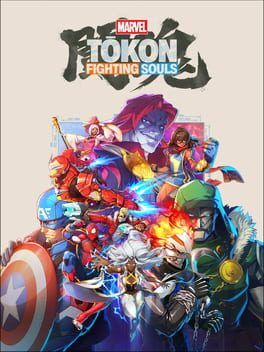

Marvel Tokon Fighting Souls is picking up attention after launch because Arc System Works has turned Marvel into a 4v4 anime fighter with serious tag-game questions.
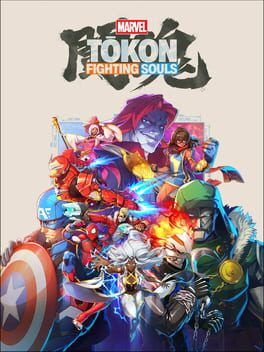
Image: IGDB
Store links: Marvel Tokon: Fighting Souls on Steam
A Marvel fighter is becoming an Arc System Works story
Marvel Tokon Fighting Souls is now available on PlayStation 5 and PC through Steam and the Epic Games Store, according to Marvel’s official game page, with PlayStation Studios, Arc System Works, and Marvel Games listed as the companies behind the new Marvel fighting game. The concrete release is only half the story. The sharper development is how quickly the conversation has shifted from Marvel nostalgia to Arc System Works credibility.
Polygon reports that Marvel Tokon has reached half a million copies sold and an 86 on Metacritic after what it describes as a rough Windows PC launch. Metacritic currently lists the game as “Generally Favorable,” with PlayStation 5 reviews far outnumbering PC reviews, 62 critic reviews on PS5 compared with five on PC in the provided listing. That split matters for any fighting game player trying to judge the state of online play, training mode stability, input consistency, and tournament-readiness.
The buzz is real, but it is unevenly documented. PlayStation’s store page shows a 4.41 user rating from 5.4K ratings, a $59.99 Standard Edition, and PS5 Pro Enhanced support. GameSpot says recent PC fixes have left the PC version “in great shape,” while Polygon frames the launch as having survived early Windows issues. The safer read is that Marvel Tokon Fighting Souls has momentum, but PC players should still check the current patch state before treating the launch narrative as settled.
Arc System Works is the main competitive hook
The reason anime fighting games fans are watching Marvel Tokon closely is straightforward: Arc System Works is the developer. Marvel’s official page describes the game as a tag-team fighter from PlayStation Studios, Arc System Works, and Marvel Games, with reimagined characters, stages, an anime-inspired look, and intuitive mechanics. PlayStation’s store page uses similar language, calling it a 4v4 tag-team fighter built around team synergy and strategy.
That Arc System Works Marvel pairing carries specific expectations. Polygon connects the attention around Tokon to Dragon Ball FighterZ, Arc’s 2018 anime fighter that it says became a favorite in the competitive scene and among casual players. The comparison is not cosmetic. FighterZ built a large audience by making explosive tag pressure, assists, and cinematic supers readable enough for newcomers while leaving room for lab monsters to optimize routes and team order. Tokon is being measured against that standard before players even talk about which Marvel character is strongest.
GameSpot also frames Tokon as closer to Dragon Ball FighterZ than to NetherRealm’s Injustice 2, noting that Tokon is tag-team-centric while Injustice uses a more familiar one-on-one structure. That distinction is important for players coming from Mortal Kombat or Injustice. In Tokon, the neutral game is not only about your point character’s buttons. It is about when assists become available, how they cover approach angles, and how much risk you accept to turn one hit into a team situation.
The 4v4 format changes how players learn the matchup
Game Informer’s review, based on the PlayStation 5 version, describes Marvel Tokon as a 4v4 fighter with a shared team health bar. Its account says matches begin with a main character and one assist, then gradually grant access to additional teammates. Polygon also reports that Tokon’s four-person teams share one health bar and that access to half the team is unlocked during the match.
That structure is the mechanic anime fighter players are dissecting. A shared health bar lowers one of the usual tag-fighter stresses because losing a character is not the same as watching your team collapse one body at a time. At the same time, delayed teammate access changes the early-round economy. You are not starting with the full combo tree, full assist coverage, and full defensive rotation. You have to earn or survive your way into a bigger toolset.
Game Informer says special and super moves can be performed with simple button presses alongside standard fighting game inputs, which makes character sampling less intimidating. It also says the format lets players use teammates primarily for assists without memorizing four complete movesets. For competitive-minded players, that does not make the game shallow. It shifts the first learning goal. Instead of immediately optimizing four characters, the practical first step is to identify your point character’s safest starters, your assist’s best coverage, and the moment your team becomes fully functional.
There is one roster detail worth treating carefully. Polygon says the game pits 21 Marvel characters against each other. PlayStation’s store page, however, describes an Ultimate Edition cosmetic unlock for “all 20 launch characters” and says the Year 1 Character and Stage Pass includes four post-launch characters and one stage. Those listings do not cleanly match in the provided material, so readers should treat the exact launch-count framing as source-dependent unless checking the in-game roster directly.
Tokon is courting lab players and mode players at the same time
The strongest sign that Marvel Tokon is reaching beyond one audience is the way different outlets are highlighting different parts of it. Game Informer focuses on the core match rhythm, assists, simple inputs, shared health, and the attack-forward incentives created by teammate access. That is the language competitive players care about because it points to snowball control, tempo, and how quickly a player can force the opponent into layered defense.
GameSpot’s account points to a broader feature set. It says the story modes are fights against various teams, interspersed with cinematic and comic book-style storytelling, and that they teach the game’s mechanics while rotating players through teams. It also says it spent most of its time in Arcadia Rumble, a mode where players pick characters, customize an avatar, collect shards, level up perks, use Mario Kart-style power-ups, earn stars, and finish avatar-led rounds with a fighting session that awards more stars based on KOs.
That split is useful for buyers. If you are coming from Guilty Gear Strive, Dragon Ball FighterZ, or BlazBlue Cross Tag Battle, the draw is probably assist timing and how Tokon’s 4v4 pacing holds up after the first week of lab work. If you are a Marvel fan who wants structure before ranked anxiety, GameSpot’s description suggests the game has offline and party-style ways to learn buttons before committing to standard online sets.
PlayStation’s listing confirms 1 to 2 local players, optional online play, PS Plus required for online play on PS5, and support for up to 64 online players with PS Plus. It also lists optional in-game purchases and user interaction. That is the practical console picture: the game can be played offline, but the main online ecosystem on PS5 sits behind the usual PlayStation Plus requirement.
Reception is strong, but the PC question is still the pressure point
Metacritic’s listing shows Marvel Tokon Fighting Souls with a “Generally Favorable” Metascore and user score, and the critic breakdown provided is heavily positive on PlayStation 5. Polygon adds that reviewers have largely played the PS5 version. That platform weighting should shape how players read early praise, especially in a genre where PC input feel, shader stutter, matchmaking health, and patch timing can change the experience.
Polygon specifically refers to a rough Windows PC launch, while GameSpot says recent PC fixes have improved the state of the game. Those two statements can both be true: a troubled launch can be followed by meaningful patches. The unresolved question is how consistently the PC version now performs across hardware and regions, which the supplied sources do not fully answer.
For tournament organizers and ranked grinders, the safe approach is to separate system design praise from platform confidence. The former is well represented in the provided reviews and store descriptions. The latter is still thinner on PC because Metacritic’s listing shows far fewer PC critic reviews than PS5 reviews. If you plan to compete primarily on PC, look for current patch notes, recent player reports, and event platform choices before buying around day-one impressions.
Editions, price, and the smartest entry point
PlayStation’s store page lists the Standard Edition of Marvel Tokon Fighting Souls at $59.99. It also lists an $84.99 Digital Deluxe Edition that includes the base game, the Year 1 Characters and Stage Pass, a Howard the Duck lobby avatar, and a Cosmo lobby pet. The $99.99 Ultimate Edition adds five character costumes and an Animated Chromatic color unlock. The standalone Year 1 Character and Stage Pass is listed at $34.99 and includes four characters and one stage post-launch, according to the same PlayStation listing.
GameSpot reports a Fanatical deal at $53.99 / £53.99 for a Steam key and discloses that the story was created in collaboration with Fanatical’s deals team, with both GameSpot and Fanatical owned by Fandom. That disclosure matters because it identifies the commercial context around the deal coverage. The useful fact for PC players is that the cited deal is for a Steam key, while Marvel’s official page says the game is also available through Epic Games Store.
For most players, the Standard Edition is the clean test. Buy there if you want to learn the system, find a point character, and see whether the assist unlock rhythm works for you. The Deluxe or Ultimate paths make more sense if you already expect to follow Year 1 characters or care about cosmetics. Fighting game season passes are strongest when you know you will keep pace with the meta, and Tokon’s first year will likely be defined by whether those four post-launch characters deepen team construction without creating mandatory picks.
The next test is whether the meta stays readable
Marvel Tokon’s momentum comes from a rare overlap: Marvel’s character pull, Arc System Works’ anime fighter reputation, and a 4v4 structure that sounds approachable without removing team-building depth. That is why Arc System Works fans are not treating it like a simple licensed release. They are watching whether the game develops the kind of stable, expressive meta that keeps training mode open months after launch.
Polygon’s Dragon Ball FighterZ comparison raises the clearest design tension. It praises FighterZ tools like Vanish Attack, Dragon Rush, and Super Dash for helping players close distance, then says Marvel Tokon’s “sluggish characters” could benefit from similar movement tools. That is not a universal verdict on Tokon’s speed, but it flags the question competitive players will keep asking: does the game’s deliberate pacing create better decision-making, or does it make some matchups feel stuck before assists are fully unlocked?
Right now, the confirmed picture is strong but incomplete. Marvel and PlayStation confirm the platforms, release date, publisher-developer partnership, PS5 pricing, edition structure, and 4v4 tag identity. Game Informer, GameSpot, Polygon, and Metacritic support the picture of a well-received launch with meaningful Arc System Works DNA and some PC-launch caveats. The interpretation is where anime fighter players come in: Marvel Tokon Fighting Souls has the shape of a serious tag game, but its long-term reputation will be decided by balance patches, PC stability, online population, and whether its team system produces variety after the first wave of optimized routes arrives.