
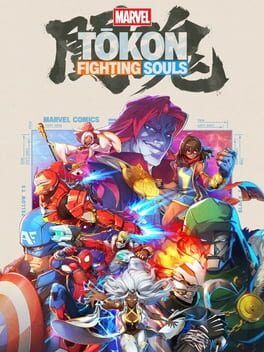

Doctor Doom’s Marvel Tokon character guide shows Nullify Shield, Satellite Laser and a control-heavy role that could help shift attention back to the 4v4 fighter after PSN region-lock concerns.
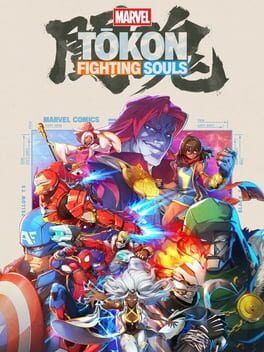
Image: IGDB
Store links: Marvel Tokon: Fighting Souls on Steam
Doctor Doom gives Marvel Tokon a cleaner competitive pitch
The latest Marvel Tokon Doctor Doom gameplay guide puts a specific tool at the center of his kit: Nullify Shield, which GameSpot’s official guide listing says can block enemy projectiles and turn that firepower back against them. IGN’s video page also highlights Nullify Shield alongside Satellite Laser and describes Doctor Doom’s play as heavy-hitting. That is the most concrete new gameplay read on Doom so far, and it arrives at a useful moment for Marvel Tokon: Fighting Souls, a 4v4 tag fighter that has recently been discussed as much for PC availability and PSN requirements as for its actual match flow.
The tension is obvious. Arc System Works and Marvel Games are trying to sell players on a large-team Marvel fighter that, according to GameLoop’s EVO 2026 interview with the developers, is meant to make 4v4 battle look easier than it appears. At the same time, Rock Paper Shotgun reported that Steam backend data lists Marvel Tokon as unavailable to activate or purchase in 132 countries, with the outlet tying the list to the kind of PSN-region concerns that previously surrounded PlayStation PC releases. For a competitive game, especially one launching on PS5 and PC, that availability question is not a side issue. A tag fighter needs opponents, regions, lobbies and tournament confidence.
Doctor Doom’s guide is the first kind of trailer that can push the conversation back toward actual play. A character with a projectile answer, a screen-control super or special such as Satellite Laser, and a ruler-of-Latveria power fantasy gives players something useful to evaluate: where he fits on a team, what problems he solves, and whether Marvel Tokon’s 4v4 structure can be understood through roles rather than roster chaos.
What the Doctor Doom character guide confirms, and what it leaves open
The confirmed Doctor Doom tool list is still narrow, but meaningful. GameSpot’s description of the official character gameplay guide says players can “master Nullify Shield” to block enemy projectiles and turn the opponent’s firepower against them. IGN’s page for the same guide says the trailer shows Doom’s moveset, including Nullify Shield, Satellite Laser and more, while calling the footage heavy-hitting. The video is listed at six minutes across GameSpot, IGN and YouTube pages, and the game is identified as Marvel Tokon: Fighting Souls, an Arc System Works-developed Marvel fighter launching for PS5 and PC via Steam on August 6, 2026.
For competitive players, the missing data matters as much as the named moves. The public listings do not provide startup, recovery, guard advantage, durability values, meter cost, assist behavior, cooldowns, projectile-class rules or whether Nullify Shield is vulnerable to throws, lows, armor breaks or delayed active frames. Without that information, it would be irresponsible to call Doom top tier, a zoner, an anchor, or a battery. What we can say is narrower: the marketing is presenting him as a character who can contest projectile-based space and threaten large-area control through Satellite Laser.
That distinction is important because Marvel Tokon roster discussion can get ahead of the actual systems. Doctor Doom has a long history in Marvel fighting game culture, but this guide should be read on Tokon’s terms. Arc System Works is building a different tag structure, and the available material frames Doom around defensive conversion and oppressive presence, not around a full legacy move-for-move return. Until players have frame data or hands-on lab time, the smart read is that Doom is a control specialist candidate, not a solved archetype.
Nullify Shield could define Doom’s team value
If Nullify Shield functions exactly as described by GameSpot, Doom’s value starts with matchup coverage. A projectile shield that can also reverse or repurpose incoming fire changes how opponents are allowed to run neutral. In tag games, projectiles are often less about raw damage and more about permission. They let a team call assists, move behind cover, force jumps, pin an opponent for a mix-up, or create the first safe tag route into a stronger point character. A character who can block that layer and punish the attempt threatens the whole rhythm of a projectile-led team.
That does not automatically make Doom a pure anti-zoner. The strongest version of this kind of tool depends on details the guide pages do not disclose. If Nullify Shield activates quickly, recovers safely and beats common assist projectiles, it can become a neutral tax on teams that rely on screen clutter. If it has long recovery or loses to layered attacks, it becomes a read-based callout that Doom players must protect with spacing and assists. If it requires meter, it becomes a resource decision. If it reflects only certain projectile types, matchups will decide its value.
The team-building implication is still clear enough for early theory. Doom looks like the kind of character you pick to stabilize a lineup. He may allow a more aggressive partner to approach without fearing every fireball, beam or projectile assist. He may also force opponents to change their assist timing, which is often as valuable as a punish in a tag fighter. A player who wants a clean gameplan should watch whether Nullify Shield creates advantage immediately, whether Doom can call assists during or after it, and whether it turns projectile denial into a real conversion rather than a reset to neutral.
Satellite Laser suggests a second role: controlling transitions
IGN specifically names Satellite Laser as part of Doctor Doom’s moveset, but the public guide descriptions do not explain its command type, meter cost, targeting rules or follow-up potential. Even so, its inclusion beside Nullify Shield gives Doom a coherent advertised identity: he is being shown as a character who affects space at range and can make the opponent respect vertical or large-area threats. In a 4v4 game, that matters because space control is rarely only about one character standing at full screen. It is about buying time for assists, tags and team unlock conditions.
Public descriptions of Marvel Tokon’s match structure describe a tag system where players begin with a single fighter and an assist character, then work toward a full four-character lineup through mid-match conditions such as damage accumulation and Wall Breaks that move the fight across stage areas. That structure changes how a move like Satellite Laser might be valued. In a traditional one-on-one fighter, a big laser is often judged by damage, safety and setup potential. In a team fighter that expands over time, it can also be judged by whether it helps force the stage state forward, protect a tag, lock down an assist call or cash out after a teammate opens the opponent up.
The practical question is whether Doom is better placed early or late in the order. If his tools are strong before a full team is unlocked, he could be an early stabilizer who helps a lineup reach its 4v4 phase. If Satellite Laser and Nullify Shield become stronger when covered by multiple assists, he may scale better as a later-position control piece. The guide does not answer that, but it gives players a concrete checklist for future footage: watch when Doom is deployed, whether his laser ends sequences or starts them, and how often Nullify Shield creates enough time for team actions.
The developers’ EVO 2026 message is about readability
GameLoop’s EVO 2026 interview with Arc System Works and Marvel Games centered on a simple developer goal: the team wants to show that 4v4 battle is easier than it looks. That is the right problem to attack. Four-character tag games can become unreadable fast, especially when the screen contains point characters, assists, projectiles, cinematic attacks and stage transitions. Marvel Tokon’s challenge is not only balance. It has to teach players why they lost, what they could have done, and how a team plan can be built without memorizing every interaction on day one.
Doctor Doom is a useful test case for that philosophy. Nullify Shield is an understandable concept even before frame data enters the conversation. Opponent throws projectile, Doom blocks or nullifies it, Doom uses their firepower against them. Satellite Laser is similarly legible as a space-control threat. Those are moves a new player can identify on sight, while stronger players can still argue over timing, durability, punish windows and assist layering. That kind of tool design helps a large-team fighter feel less like noise.
Arc System Works’ fighting game audience will still demand specifics. Competitive players will want training mode data, replay tools, stable online play, clear assist rules and tournament-legal settings. But the Doctor Doom character guide at least communicates role identity. In a game where the roster will inevitably attract players because of Marvel names first, role clarity is what converts curiosity into practice. Doom’s pitch is not subtle: he appears built to make projectile players hesitate and to make the opponent fight under the threat of large-scale control.
The PSN controversy is still the biggest practical caveat on PC
The gameplay reveal does not erase the PC availability issue. Rock Paper Shotgun reported that Marvel Tokon’s Steam backend lists the game as unable to be activated or purchased in 132 countries, counting three unknown country-code entries. The outlet also noted that the Steam page includes mentions of a PSN account requirement for online play and for accessing pre-order bonus items. Rock Paper Shotgun said it was unclear from the listing whether a PSN account would be required simply to launch the game and play story mode, but it read the online requirement as explicit.
That creates a direct problem for a competitive fighter. Online ranked and casual play are where many players learn matchups, build team routes and decide whether to travel for events. If a large set of regions cannot purchase or activate the Steam version, or if online access depends on PSN availability, the PC player base becomes harder to read before launch. This is especially sensitive because PlayStation PC releases have already faced backlash around account-linking and region restrictions, with Rock Paper Shotgun comparing the situation to the earlier Helldivers 2 controversy.
For now, the practical advice is simple. Players in affected or uncertain regions should check the Steam page and regional availability before pre-ordering. PC players who primarily care about online competition should wait for Sony Interactive Entertainment or the Steam listing to clarify account requirements and purchase access. Players on PS5 have a clearer platform path based on the current public launch information, but cross-region competitive health still depends on how broad the total player base is at release.
How Doom can help Marvel Tokon regain attention
Marvel Tokon: Fighting Souls is scheduled for August 6, 2026 PT on PS5 and PC, according to GameSpot’s official Doctor Doom guide page, with IGN also listing an August 6 launch for PlayStation 5 and Steam. The date gives Arc System Works, Marvel Games and Sony time to keep publishing character guides, explain systems and address PC access questions. The Doctor Doom guide is a strong step on the gameplay side because it gives players a role to discuss instead of only a brand to recognize.
The next phase should be specificity. Show Nullify Shield against different projectile types. Show whether Satellite Laser is a combo ender, neutral callout, assist setup or super-level threat. Show Doom in actual 4v4 team sequences, not only isolated move demonstrations. If the developers want players to believe the format is easier than it looks, the best proof is a character guide that teaches how one fighter supports a full lineup.
Doom’s tools already suggest a practical team identity: pair him with characters who benefit from protected approaches, use him to discourage projectile autopilot, and test whether his large-area control helps secure the game’s stage and tag transitions. That is enough to make him one of the more strategically interesting revealed pieces of the Marvel Tokon roster. Whether that interest carries into launch will depend on two things the guide cannot settle: how his frame data actually holds up, and whether the PC version is available broadly enough for the competitive scene to form around it.