
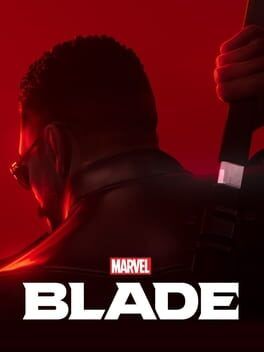

Arkane Lyon's union alleges a 19-month Microsoft hiring freeze caused delays on Marvel's Blade. Here is what is confirmed, what is claimed, and how the dispute could affect production.
Image: IGDB
Arkane Lyon's Blade dispute now centers on a 19-month hiring freeze claim
A French union representing workers at Arkane Lyon has accused Microsoft and Xbox of damaging Marvel's Blade development by blocking new hires for 19 months, creating the sharpest public dispute yet around the game's future.
The allegation comes from STJV, the Syndicat des travailleureuses du jeu vidéo, in a statement covered by Video Games Chronicle, Eurogamer, and GamesIndustry.biz. According to those reports, STJV says work on Marvel's Blade is "going fine" and that the game is still aiming for the level of quality players associate with Arkane. The union acknowledges internal delays, but claims those delays were "artificially caused" by Microsoft's hiring freeze and are now being used as part of the economic case for closing the studio.
That is the core tension for players watching Marvel's Blade: the game has not been publicly dated, Microsoft has not publicly answered the union's accusations in the cited reports, and Arkane Lyon's own future is now tied to a sale process that GamesIndustry.biz says has been extended to December 13. In production terms, this is no longer simply a question of when Blade ships. It is a question of who finishes it, under what ownership, with which staff, and with how much schedule damage already baked in.
What is confirmed, and what remains an allegation
The confirmed facts are narrower than the rhetoric around them. Arkane Lyon is developing Marvel's Blade, and Eurogamer lists the game for PC and Xbox Series X/S. Arkane became part of Microsoft when ZeniMax was acquired in 2021, and GamesIndustry.biz notes that Xbox closed Arkane Austin in 2024. The Lyon studio, according to GamesIndustry.biz, has 217 staff, with contractors and freelancers also affected by the studio's situation.
It is also confirmed through multiple reports that STJV has made public demands linked to Arkane Lyon's future. The union wants employees to have a say in choosing a potential buyer, a fund to protect staff laid off by a new owner within two years, and, if closure goes ahead, a €200,000 redundancy payment per worker plus two years of Microsoft-funded redeployment support. Video Games Chronicle and GamesIndustry.biz both reported that Microsoft had not responded to STJV's claims at the time of publication.
The strongest claims in the dispute remain allegations from the union. STJV says Microsoft imposed a 19-month hiring freeze, that the freeze caused delays and extra costs, and that Microsoft is now using those consequences to justify shutting Arkane Lyon. STJV also argues that Arkane is profitable but "not profitable enough for Microsoft," and that closing the studio now would probably be more expensive than finishing Marvel's Blade. Those claims are central to the union's case, but the provided reporting does not include Microsoft financial data, production budgets, or an Xbox response that would let readers verify the full chain of causation.
That distinction matters because development delays can have many causes, especially on large licensed games. The union's claim is specific and serious: a hiring policy allegedly constrained production capacity for 19 months. The confirmed public record, however, stops at the existence of the allegation, the reported sale deadline, the lack of a Microsoft response in the cited coverage, and the fact that Marvel's Blade remains in development at Arkane Lyon.
The production problem behind a hiring freeze
From a production strategy view, a 19-month hiring freeze would be especially disruptive if a project is moving from concept and pre-production into heavier content creation. Large action games need a stable ramp: level design, combat design, animation, cinematic work, mission scripting, technical art, QA planning, tools support, production management, and licensed approvals all start pulling against each other as the build becomes more concrete. If a studio cannot add people when the work expands, the schedule usually absorbs the pressure.
STJV's argument is built around that kind of pressure. The union says development is going fine creatively, but that Microsoft prevented Arkane from hiring developers for over a year. In the union's framing, that restriction did not merely slow hiring. It created the very delays and costs now being cited against the studio. Eurogamer summarized the accusation as Microsoft supposedly inflating the game's budget and causing additional internal delays through the freeze, then using those outcomes as a reason to close Arkane.
There is no public production calendar for Marvel's Blade in the provided sources, so we cannot say how far along the game is or how much time the alleged freeze added. What can be said is that staffing uncertainty tends to produce compounding risks. If senior developers leave and cannot be replaced, knowledge gaps form. If teams are undersized, dependencies stack up. If a studio is also trying to find a buyer, leadership attention shifts from shipping the game to preserving the company.
That is the strategic danger for Marvel's Blade. Even if STJV is correct that the game is healthy in quality terms, the project still faces a resource and ownership meta-game that can delay delivery without changing the creative vision. Good internal builds do not automatically solve capacity, approval, budget, or retention problems.
The sale window creates a new timeline risk
GamesIndustry.biz reported that Microsoft set a November 13 deadline for a sale of Arkane Lyon, then said a Microsoft representative confirmed that the deadline had been extended by one month to December 13. Eurogamer similarly reported that Arkane had been given until December to find a new buyer. Ubisoft has been reported by VGC, Eurogamer, and GamesIndustry.biz as one of the potential interested buyers, but the same reporting says nothing has been finalized.
For Marvel's Blade, that puts the near-term milestone outside the game itself. The next decisive event may not be a trailer, release window, gameplay reveal, or platform update. It may be whether Arkane Lyon is sold, closed, or kept in some altered arrangement. STJV's public position is that the studio wants to remain open and finish Blade, and GamesRadar's provided source text quotes workers saying they want to finish Blade and release it to players. That desire does not settle the ownership problem.
A sale could preserve the studio and keep development moving, but it would also introduce questions that the provided sources do not answer. Would Marvel's Blade stay with Arkane Lyon after a sale? Would Microsoft retain publishing control? Would Disney or Marvel need to approve changes tied to ownership? Would platforms remain PC and Xbox Series X/S as currently listed by Eurogamer? None of those points are confirmed in the material provided.
A closure would be more severe. STJV claims closing Arkane today would probably cost more than finishing the game, but that is the union's financial assessment, not a published Microsoft accounting. If closure happened, Marvel's Blade could be cancelled, transferred, restarted, or placed into some other arrangement, but the sources do not confirm which outcome Microsoft would choose. The practical read is simple: the game's public timeline is now hostage to a corporate decision with a December deadline reported by GamesIndustry.biz, not to a conventional marketing beat.
The Xbox studio controversy adds context to Arkane's case
Arkane Lyon's dispute is unfolding inside a wider Xbox restructuring story. Eurogamer reports that Xbox's cuts and divestments have affected several first-party studios, with Double Fine, Compulsion Games, and Undead Labs buying their independence while laying off some staff as a result. GamesIndustry.biz also notes that Ubisoft, the reported interested Arkane buyer, is undergoing restructuring of its own and organizing studios into six "Creative Houses."
That context changes how to read STJV's accusation. The union is not only arguing that Marvel's Blade was delayed by a Microsoft hiring freeze. It is arguing that Arkane Lyon is being evaluated through a corporate optimization lens that does not reflect the value of finishing the game or preserving the team. Video Games Chronicle reports STJV's statement saying the possible closure is the result of a "never-ending search for maximum profit optimisation," and that Arkane is profitable, but not profitable enough for Microsoft.
WindowsForum's summary of the STJV statement adds another piece of the union's framing: STJV claims Arkane's earlier games, which it says sold tens of millions of copies in total, do not show up in the studio's results, and that cash is drained to the wider group through a cash-pooling mechanism. That report also notes the statement gives no figures for those points and that Microsoft has published none to compare against. Those details should be treated as union claims, not established financial fact.
Still, the structure of the dispute is clear. Microsoft, according to the reports, is weighing closure or sale. STJV says that path ignores both the state of Blade and the cost of stopping now. Players see a superhero game from the studio behind Dishonored and Prey. Workers see a fight over whether a specialist immersive-sim studio survives long enough to deliver it. Microsoft has not, in the provided reports, publicly laid out its counter-case.
What players can realistically expect from Marvel's Blade now
For anyone tracking Marvel's Blade, the most important practical point is that no release date or release window is confirmed in the supplied reporting. Eurogamer lists the game for PC and Xbox Series X/S, but the sources do not provide a price, store launch plan, preorder status, performance target, or confirmed gameplay schedule. Any attempt to pin the game to a specific year would go beyond the evidence here.
The safest expectation is uncertainty through at least the reported December 13 sale deadline. If Arkane Lyon secures a buyer and the project remains with the team, Marvel's Blade may continue under a clearer production plan, though ownership changes can still slow decision-making. If the studio remains under Microsoft but with altered terms, Microsoft would need to clarify staffing, scope, and publishing support before the timeline becomes readable. If closure proceeds, the project enters a much riskier zone, because the current sources do not confirm whether the game would be transferred, paused, or cancelled.
STJV's statement does provide one meaningful signal: the union is not describing Marvel's Blade as a broken project. It says work is going fine and that quality expectations remain in line with Arkane's reputation. That is encouraging only within limits. A good creative trajectory can still be undermined by staffing gaps, sale negotiations, or a publisher decision to stop funding.
For now, players should separate the game from the corporate fog around it. Marvel's Blade is still publicly associated with Arkane Lyon and listed by Eurogamer for PC and Xbox Series X/S. The Arkane union alleges a Microsoft hiring freeze harmed the production timeline and is being used to justify closing the studio. Microsoft had not responded in the cited reports. Until ownership and staffing are resolved, the most honest timeline for Blade is not a launch window. It is a waiting period for the fate of Arkane Lyon itself.