
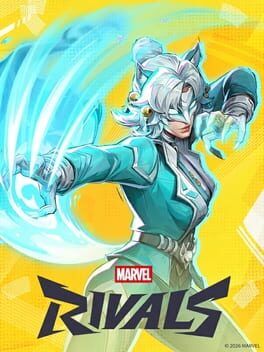
With Marvel Rivals now confirmed for Nintendo Switch 2, NetEase’s hero shooter has a rare second shot at platform growth. The real story is not the port itself, but how performance targets, cross-play rules, and cross-progression will decide whether Switch 2 becomes the game’s most important audience hub.
Marvel Rivals is finally coming to Nintendo hardware, with Marvel Games’ Danny Koo confirming that a Nintendo Switch 2 version is actively in development. That short quote – “We’re working on it… we will do it” – is easy to file under routine port news, but for a live-service hero shooter trying to grow beyond its early adopters, this is a strategic pivot.
Switch 2 is not just another box to tick on a platform slide. It is potentially the only place where Marvel Rivals can be both a living room competitive shooter and a handheld Marvel toybox that travels with players. Whether it becomes that depends on three things: how hard NetEase pushes the hardware, how seriously it treats cross-play and input balance, and whether cross-progression finally becomes a first-class feature rather than a late patch.
The hardware question: 60 FPS or bust
Marvel Rivals lives and dies on readability and reaction time. It is a 6v6 hero shooter full of explosive team‑up abilities and destructible environments, closer in pace to Overwatch than something like Splatoon. On PC and current consoles the expectation is simple: 60 frames per second as the baseline, with higher refresh on powerful rigs.
Switch 2 has been widely reported as a substantial step up over the original Switch, but it is still a mobile‑class device that has to juggle power draw, heat, and handheld battery life. For Marvel Rivals, that means a few likely compromises and optimizations that will quietly define how viable the platform feels to competitive players.
First, resolution needs to be flexible. It is hard to imagine NetEase locking Marvel Rivals to a native 4K output on Switch 2 when dynamic resolution can keep the game at 60 FPS while still looking sharp enough on both TV and handheld screens. A smart implementation would target a higher ceiling in docked mode but aggressively scale down during big ult chains, debris‑heavy moments, and crowded choke points.
Second, effects and destruction will probably be tuned down compared with high‑end PC settings. One of Marvel Rivals’ signatures is its reactive maps, with walls collapsing and cover being chewed away mid‑fight. On Switch 2 the core mechanics need to stay intact, but particle density, physics complexity, and debris lifetime are obvious knobs to turn. If blowing a hole in a building still changes the fight but showers fewer sparks and rubble chunks, most players will accept that trade if it preserves responsiveness.
Third, memory and CPU‑side optimizations will dictate how faithful the hero roster and loadouts feel. Hero shooters thrive on instant swapping and snappy ability use. That requires aggressive streaming of character assets, animations, and voice lines. NetEase will need to lean on better compression, shared materials across costumes, and careful preloading at hero select and spawn so that swapping from Iron Man to Venom on Switch 2 never feels like waiting on a mobile port.
Finally, there is the handheld factor. A docked 60 FPS target is one thing, but maintaining that on battery in portable play could force a separate “Performance Handheld” profile with lower resolution and pared‑back effects. That sounds like a concession, but it is actually an opportunity: make it clear in‑game that the handheld profile is the recommended competitive setting on Switch 2, and the community will quickly treat it as the default for ranked.
Input and cross‑play: how Switch 2 fits into the battlefield
Marvel Rivals already supports cross‑platform play across PC, PlayStation, and Xbox, but with caveats about ranked modes and input segregation. Bringing Switch 2 into that ecosystem is not just a question of toggling one more platform flag. It forces NetEase to decide exactly what kind of player it imagines on Nintendo hardware.
If the typical Switch 2 player is on Joy‑Cons or a Pro Controller in handheld mode, then lumping them into the same competitive pool as mouse and keyboard users is a non‑starter. The current approach on other platforms – cross‑play in casual and customs, tighter rules in ranked – gives NetEase a template. For Switch 2, the studio will likely need to go further and treat the console as a semi‑separate pool with strict input detection.
Aim assist will also have to be tuned carefully. Too generous and PC players will complain in mixed lobbies. Too stingy and handheld players will feel like they are fighting the controls instead of the enemy team. NetEase’s task on Switch 2 is to make aim assist and stick acceleration feel consistent with the existing console versions so players can swap between living room and handheld without having to relearn muscle memory.
Latency and tick‑rate are another invisible but essential part of the puzzle. Hero shooters punish delay more harshly than almost any other online genre. The Switch 2 audience will span players on wired docks and those playing in kitchens on spotty Wi‑Fi. To make Marvel Rivals feel as responsive as its PlayStation and Xbox counterparts, the netcode and matchmaking logic must account for wider ping variance, potentially favoring regional buckets or looser MMR tolerances to keep queues flowing without pitting high‑latency Switch 2 players against ultra‑low‑ping PC squads.
Cross‑play settings also need to be surfaced clearly. One of the quiet successes of games like Fortnite on Switch was giving players immediate, readable control over who they were matched with and why. Marvel Rivals should follow suit on Switch 2, explaining in‑client how ranked pools work, when cross‑play is active, and what trade‑offs that implies for queue times and match quality.
Cross‑progression: the non‑negotiable feature for a hybrid console
Where cross‑play shapes who you can play with, cross‑progression determines whether it is even worth adding a second platform to your rotation. Marvel Rivals launched without full cross‑progression, with developers repeatedly framing it as a technical and policy challenge. Since then the team has been rolling out account linking and shared unlocks across PC and console, with some modes and ranked stats still tied to specific devices.
Switch 2 turns that ongoing backend work into a make‑or‑break issue. A hybrid console is uniquely suited to becoming a second screen for a live‑service game, but only if every minute invested on the bus or in bed translates into progress for your main account. If Marvel Rivals arrives on Switch 2 as a siloed profile that cannot see your heroes, skins, or battle pass from PlayStation, Xbox, or PC, it will immediately be treated as a curiosity rather than a real home for existing players.
For Marvel Rivals to make sense on Switch 2, cross‑progression needs to hit a few clear marks.
Players should be able to link their existing Marvel Rivals account the first time they boot the game on Switch 2, pick a primary identity, and immediately see their unlocked heroes, cosmetics, currencies, and season pass progress. That mirrors how Destiny 2 and Fortnite became true multi‑platform games rather than a cluster of disconnected releases.
Ranked MMR and seasonal competitive rewards can stay device‑specific if NetEase believes input balance demands it, but that should be clearly communicated as a competitive integrity choice, not a limitation of the platform. The important thing is that time spent grinding out heroes and cosmetics never feels duplicated or wasted.
Backend systems should also account for Switch‑first players who later upgrade to another device. Nintendo‑centric fans will often start on the console they already own. Marvel Rivals on Switch 2 needs to be architected so that if someone’s first login is on Nintendo hardware, they can later bring that account, and everything on it, seamlessly to PC or another console without penalty.
Why Switch 2 matters for Marvel Rivals’ long‑term audience
In its first year, Marvel Rivals has been battling for attention in the shadow of Overwatch, Apex Legends, and established free‑to‑play ecosystems. It has Marvel’s brand power and a flashy, destructible spin on hero combat, but its audience is still consolidating around the core trio of platforms where most competitive shooters live.
Switch 2 changes the equation by giving the game a shot at reaching one of the most engagement‑heavy, franchise‑driven player bases in the industry. Nintendo fans have shown repeatedly that they will invest deeply in long‑running games if the platform respects their time. Splatoon, Fortnite, and even free‑to‑start games like Warframe on Switch prove that a strong live‑service loop can thrive there when performance and account systems are handled correctly.
For Marvel Rivals specifically, being on Switch 2 could mean:
The Marvel audience that primarily lives on Nintendo systems finally has a native hero shooter to latch onto instead of watching from the sidelines. That alone could expand the game’s casual player pool and keep queues healthy for off‑peak modes or experimental events.
The ability to play matches on the go without progress loss, once cross‑progression is fully realized, encourages more frequent, shorter sessions. Live‑service games are built on habit, and a handheld form factor is one of the strongest habit builders available.
Cosmetics and event passes become more attractive purchases when you can use them everywhere. If a skin looks just as sharp during a docked session as it does in handheld, players are more likely to treat Marvel Rivals as a persistent hobby rather than a game they only boot up on their highest‑end device.
Perhaps most importantly, Switch 2 gives Marvel Rivals a chance to diversify its community. A healthy live‑service title is not just a small core of competitive die‑hards. It is a mix of casual Marvel fans, lore‑focused players, competitive grinders, and social squads. Nintendo hardware has historically skewed toward the first three, which could ease pressure on balance patches and give NetEase more room to experiment with PvE modes, event playlists, and more offbeat hero designs.
More than a checkbox on a slide
The easiest way to misread the Switch 2 announcement is to treat it as an inevitability. Big live‑service shooters eventually find their way to every device that can run them. The reality is that Marvel Rivals is arriving at a moment when players are becoming more selective about which long‑tail games they commit to, when cross‑progression is no longer a nice‑to‑have, and when performance expectations on Nintendo systems are higher than they have ever been.
If NetEase treats Switch 2 as a full citizen in Marvel Rivals’ ecosystem instead of a lower‑tier port, the platform could become the game’s most important growth engine over the next few years. That means prioritizing a stable 60 FPS target, sensible visual trade‑offs, clear and fair cross‑play rules, and truly seamless account progression that respects players’ time on every device.
Marvel Rivals coming to Switch 2 is not the end of a porting story. It is the beginning of a larger design challenge about what it means for a hero shooter to live across living rooms, desks, and backpacks at the same time. If NetEase gets that right, this will not just be another announcement. It will be the moment Marvel Rivals stops being something you play where you can and starts being something you take with you wherever you are.