
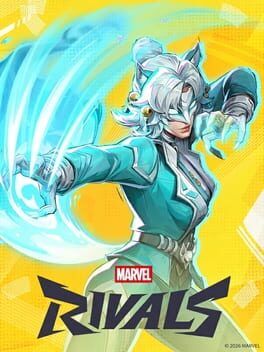
NetEase’s creative director calls Marvel Rivals a “comprehensive Marvel moving anime experience.” Here’s what that actually looks like in-game, from animation style to live‑service events and MCU crossovers.
Marvel Rivals’ creative director Guangyun Chen recently described the game’s long‑term goal as becoming a “comprehensive Marvel moving anime experience.” It is an odd phrase, but if you look at what is already in the game and what NetEase is planning, there is a concrete design vision hiding under the marketing-speak.
This is less about turning Marvel Rivals into a literal anime and more about pushing it toward a highly stylized, serialised, character‑driven live service that feels closer to a long‑running animated show than a static competitive shooter.
A comic-book art style that already leans toward animation
The first step toward that “moving anime” idea is visual. Marvel Rivals does not chase photorealism. Its heroes are chunky, exaggerated and colorful, with outlines, sharp silhouettes and clean materials that sit between Saturday morning cartoon and modern shonen anime. Thor’s cape snaps dramatically, Magneto’s effects carve bright arcs through the air, and smaller details like Gwen’s hoodie strings and Loki’s fabric layers constantly flutter.
In motion, the game is closer to a comic panel brought to life than a cinematic MCU shot. Ultimate abilities are framed like cut‑ins, with rapid camera pulls and big, saturated effects that briefly dominate the screen. Even standard movement has a bit of squash and stretch, with characters snapping from sprint to slide to leap in a way that prioritizes readability and spectacle over strict realism.
This look makes sense for a live service that wants to run for years. It is easier to plug new heroes, skins and themed maps into a flexible, stylized pipeline than to endlessly chase higher fidelity. An “anime” look in this context means repeatable, extensible production that can grow with each season.
Animation as character storytelling
Where the “moving anime” pitch starts to come through more clearly is how animation is used to sell personality. Marvel Rivals does not just give every hero a kit and a passive. It gives them small character beats every time they enter the arena.
Intro animations linger on poses and facial expressions in a way that recalls pre‑fight stingers in fighting games and anime opening credits. Rocket might swagger across the frame twirling a new gadget, while Doctor Strange floats in with layered magical circles spinning around him. Victory poses last just long enough to read as mini character skits rather than simple win screens.
In the middle of matches, team‑up abilities turn moment‑to‑moment animation into little crossover vignettes. Iron Man boosting Hulk into the air, or Scarlet Witch amplifying another hero’s attack, are more than just damage multipliers. They are animated call‑outs to comic relationships, rendered with coordinated motion and synchronous effects that feel scripted, even though they are fully controllable abilities.
That is the “anime” in practice: a focus on animation that frames combat as a constant stream of character moments, not just a flow of cooldowns and damage numbers.
The live-service “season” as an anime arc
Chen’s comment was tied directly to future content plans, and that is where the vision becomes most obvious. NetEase is not positioning Marvel Rivals as a closed, match‑only shooter. It is shaping it as a season‑driven series where each block of content functions like a new story arc.
The headline example is Path to Doomsday, a major in‑game event planned to connect with the Avengers: Doomsday film. NetEase describes this as one of Marvel Rivals’ main themes for 2026, with multiple updates built around the Infinity Saga.
Instead of a single one‑off crossover, the team is planning five separate updates themed around different parts of the Infinity Saga. Each is expected to layer in its own modes, cosmetics and event structure. That is structurally similar to how anime will dedicate entire cour-length runs to a particular villain or storyline before pivoting to the next arc.
For players, that could mean logging in during a “Civil War” phase, then a “Ragnarok” phase, then an “Infinity War” phase, each with its own featured heroes, map variants and limited‑time modes. The MCU connection is obvious, but the important part for Marvel Rivals is the idea of long, coherent arcs of content instead of isolated holidays and battle passes.
Event storytelling beyond PvP
If Marvel Rivals is going to feel like a moving anime, its events have to do more than reskin the user interface. NetEase’s approach so far suggests a shift toward more structured event storytelling that escapes the confines of strict 6v6 PvP.
The Halloween Marvel Zombies event was the first test of this idea, dropping players into a PvE mode that temporarily reinterpreted the game’s roster as enemies and survivors rather than evenly matched teams. The execution left some critics cold, but it showed NetEase is interested in borrowing from co-op shooters and seasonal horde modes to push Marvel Rivals toward a wider set of experiences.
Future PvE content hinted at by Chen and others could lean harder into boss encounters, scripted set pieces and cooperative challenges that tell self‑contained stories. Imagine a Path to Doomsday chapter built around a multi‑phase fight against an empowered Ultron or Thanos variant, where the arena literally falls apart across phases as cut‑scene-style mid‑fight transitions move the story forward.
Those kinds of events would make Marvel Rivals feel closer to a weekly anime episode drop: limited‑time story beats, new villains stepping into the spotlight, and bespoke scenarios that have more narrative flavor than a ranked match queue.
Character intros and presentation like an ensemble cast
Hero shooters already treat their rosters as stars, but Marvel Rivals leans into the idea of an ensemble cast that rotates through the spotlight. That fits the “moving anime” framing perfectly.
The lobby presentation, character select screens and matchmaking intros all contribute to this. Players are not just picking a role. They are drafting a lead for this episode. The way cameras frame squads running into battle, or cut briefly to quips between characters, suggests a future where seasonal arcs give specific heroes more screen time, more lines and more event‑specific interactions.
As the game grows, it is easy to imagine seasonal menus and splash screens functioning like new key visuals from an anime season, with certain heroes pushed forward to signal whose story is being advanced. Skins, emotes and victory poses can then be aligned with those arcs to make progression feel like collecting scenes from your favorite show rather than just filling a cosmetic checklist.
Crossover ambition as serialized fan service
Marvel Rivals is built on crossover ambition at its core. This is a game where Spider‑Man, Magneto, Loki, Black Panther and a deep bench of Marvel heroes and villains can all appear on the same battlefield, pulling powers together through team‑up mechanics.
Chen’s moving anime vision reinforces that Marvel Rivals will not shy away from treating the game as a big, long‑running crossover project. The Path to Doomsday plan alone shows a willingness to tie directly into MCU tentpoles, using films like Avengers: Doomsday and touchstones like the Infinity Saga as scaffolding for in‑game arcs.
Functionally, that means new heroes and maps are not just being added because a season needs content. They are slotted into overarching story themes. A Doctor Strange variant, a Kamar‑Taj map and a cosmic event mode can all be linked in a way that feels like a coherent anime saga about dimensional collapse rather than three unrelated unlocks.
For a hero shooter fighting to stand out, that is crucial. Overwatch, Valorant and Apex Legends all have recognizable rosters, but their live‑service storytelling tends to feel modular and often disconnected from daily play. Marvel Rivals is trying to make its crossover machine feel more like an ongoing series where every batch of additions slots into a larger narrative season.
A stronger identity in the hero-shooter crowd
Underneath the unusual catchphrase, NetEase’s goal is straightforward. Marvel Rivals needs an identity strong enough to stand out in a crowded market of team‑based shooters tied to massive IP.
The creative director’s “moving anime” label points toward a few defining pillars. First, a stylized art and animation direction that emphasizes readable action and expressive heroes over realism. Second, a live‑service structure where seasons and events are treated like narrative arcs, especially when they tie into known Marvel storylines or the MCU. Third, a willingness to invest in PvE modes, boss fights and scripted events that make the game feel like it has episodes, not just patches.
If NetEase can keep building around those ideas, Marvel Rivals could occupy a distinct niche: a competitive hero shooter that also works as a long‑running animated crossover series in playable form. The phrase “moving anime” may be vague, but the path to making it real has already started to appear in the game’s heroes, events and upcoming Path to Doomsday plans.