
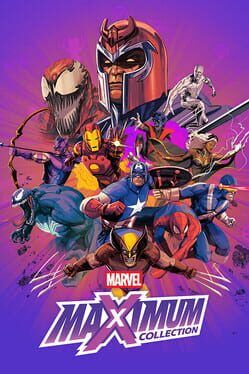

Limited Run’s Marvel Maximum Collection finally dates its Switch release, reviving classic Konami-era superhero brawlers with a preservation-first mindset. Here’s what’s in the package, why it matters for Marvel licensing history, and whether it holds up beyond rose-tinted memories.
Marvel Maximum Collection is finally locked in for a March 27, 2026 digital release on Nintendo Switch, with a physical edition to follow through Limited Run Games. On paper it looks like another retro compilation trading purely on 90s kid nostalgia. In practice it is one of the most aggressive acts of Marvel game preservation we have seen so far, and a surprisingly thoughtful museum piece for a notoriously messy slice of licensing history.
What games are actually in this thing?
There has been some confusion around the count thanks to marketing that talks about six “titles” and 13 “games.” The simplest way to understand it is that Marvel Maximum Collection gathers six core releases, then preserves multiple console and handheld variants as separate playable entries.
The headline lineup is built around Konami and 16-bit Marvel staples, including X-Men: The Arcade Game, Captain America and The Avengers, Spider-Man/X-Men: Arcade’s Revenge, Spider-Man/Venom: Maximum Carnage, Venom/Spider-Man: Separation Anxiety, and the infamously difficult Silver Surfer. On Switch that means you are getting the arcade original where applicable along with SNES, Mega Drive/Genesis and portable interpretations where those existed.
Limited Run is not just tossing ROMs in a menu. The collection layers in modern comforts like save states, a full rewind function, and a suite of visual filters that range from clean pixel output to CRT and scanline styles meant to mimic 90s living room setups. There is a dedicated music player that lets you dig into each version’s soundtrack, and a museum-style archive that pulls in high resolution scans of box art, manuals, promotional materials and other ephemera from the period.
Multiplayer is also getting specific attention. X-Men: The Arcade Game, the crown jewel of the set, includes online play backed by rollback netcode so four-player beatdowns of Sentinels and the Brotherhood of Mutants are viable well beyond your couch.
Why this bundle matters for Marvel licensing history
Across the last two console generations Marvel’s gaming presence has been defined by big, tightly controlled projects like Spider-Man on PlayStation or Marvel’s Avengers. Before that you had a fragmented landscape of short-term licenses where Konami, Acclaim, LJN and others all took stabs at superheroes, often for just one system and one region at a time. That era created cult favorites and notorious misfires, but it also produced a licensing labyrinth that made reissues borderline impossible for years.
Marvel Maximum Collection represents a rare three‑way alignment between Marvel Games, Konami and Limited Run that cuts through some of that red tape. X-Men: The Arcade Game in particular has been stranded for decades. It briefly resurfaced in digital form during the Xbox 360 and PS3 generation before vanishing again when rights expired. Captain America and The Avengers and Spider-Man/X-Men: Arcade’s Revenge have never had meaningful re-releases. Maximum Carnage and Separation Anxiety were locked to aging cartridges and spotty emulation.
By pulling all of these under one roof and explicitly preserving the separate console and handheld variants, this collection acts as a formal record of how Marvel games evolved across early 90s hardware. You can move from the lavish arcade sprite work of X-Men to the compromises of its home versions, or compare Spider-Man’s handling and level design quirks between 16-bit and portable editions that were often treated as throwaways at the time. That kind of A/B comparison has typically been the domain of YouTube historians or collectors with shelves of aging hardware.
It also quietly documents Marvel’s willingness to let different publishers and developers reinterpret the same characters without a unified brand bible. You can see how tone lurches from the relatively serious Maximum Carnage, dripping with red comic-book grit, to the goofier, more Saturday morning feel of Captain America and The Avengers. Preserving that range matters because it captures how flexible and experimental licensed games used to be before modern cinematic universes locked down tone and continuity.
Preservation features that actually matter
A lot of retro packages pay lip service to preservation while shipping barebones front ends with a few filters and a rewind button. Marvel Maximum Collection goes a step further in treating these games as artifacts as much as entertainment.
The museum section is key here. High resolution scans of boxes, manuals and even old advert art give context to how these games were sold. For a Switch audience that may have never seen a Maximum Carnage cartridge in its deep red plastic shell, or the lurid rental-store covers that made Spider-Man/X-Men: Arcade’s Revenge stand out on shelves, this archival layer provides the missing texture.
The music player is equally important. 16-bit soundtracks are a big part of how players remember these games, and Maximum Collection lets you move between versions to hear how themes were reinterpreted on different hardware. Listening to X-Men’s arcade OST next to the SNES and Mega Drive takes you straight back to crowded arcades and bedroom TVs, and it underlines why fans have held onto these games so tightly.
From a usability perspective the inclusion of full save states, instant rewind and accessible difficulty tweaks is not just convenience. It is what makes notoriously punishing titles like Silver Surfer and Separation Anxiety viable for modern players who may not have the patience or free time to brute-force memorization-heavy level design. Preservation is pointless if the games are so hostile that most people bounce in ten minutes.
Finally, bringing rollback netcode to X-Men: The Arcade Game is quietly huge. Classic arcade beat em ups were built around social play. Making that experience reachable globally without the input lag that usually kills retro online sessions speaks to a mindset that wants these games to be actively played, not just admired behind glass.
Is Marvel Maximum Collection compelling beyond nostalgia?
The obvious audience for Marvel Maximum Collection is the player who grew up hammering through these titles on SNES, Genesis or in smoky arcades. For them the value is easy to justify. You are getting a curated, legally clean way to revisit games that have been trapped behind rising cartridge prices and discontinued digital storefronts for years, wrapped in extras that treat your memories with respect.
The more interesting question is how it plays for someone coming in fresh, or for a Marvel fan raised on the MCU and Insomniac’s Spider-Man who has no nostalgia for 16-bit beat em ups.
As pure action games this lineup is a mixed bag. X-Men: The Arcade Game remains a crowd-pleaser with punchy combat, expressive sprites and a breezy pace that still works in short sessions. Captain America and The Avengers is charming but clunky, full of stiff hitboxes and cheap enemy patterns that feel very of their time. Maximum Carnage and Separation Anxiety sit closer to Streets of Rage in structure, and when approached with the safety net of rewind and save states they can still be a satisfying evening or two of co op brawling.
Silver Surfer and Spider-Man/X-Men: Arcade’s Revenge are harder sells. Both are famous for brutal difficulty spikes and design that can feel unfair or opaque by contemporary standards. Experienced retro players might enjoy them as challenges or curios, but they are unlikely to convert new fans on gameplay alone.
Where the package earns its keep beyond nostalgia is in how it contextualizes all of that. The museum, music player and variant versions effectively turn the collection into an interactive documentary about a specific chapter of Marvel and Konami history. If you care about how licensed games are made, how rights issues can bury whole subgenres, or how character branding evolved from comics-first to multimedia empires, there is a genuine critical value here.
On Switch in particular, Marvel Maximum Collection also fits neatly into the handheld’s growing role as a retro hub. The ability to pop open X-Men or Maximum Carnage for ten minutes on a commute, bounce out with a save state, and then later dig into manual scans or soundtrack tracks makes it more approachable than hunting down original hardware.
Who should keep this on their radar?
For collectors, the upcoming physical release through Limited Run is the obvious target. Given the company’s track record, expect reversible cover art, a proper manual and potentially larger special editions packed with extra goodies. That physical cartridge will likely become the most future-proof way to own these games in a single place, especially given the volatile nature of digital licensing.
For players mainly chasing tight mechanics and modern pacing there are stronger beat em up compilations out there. The Capcom Beat ’Em Up Bundle and TMNT: The Cowabunga Collection remain better pure gameplay propositions. Marvel Maximum Collection is more focused on being a historical vault for a specific brand of 90s superhero gaming.
If that pitch resonates, the Switch version looks like one of the more compelling retro releases of the year. It is not just selling the warm fuzzies of arcade cabinets and red SNES cartridges. It is acknowledging that this messy, uneven, sometimes unfair run of games matters to Marvel’s interactive legacy, and giving you the tools to experience and study it on your own terms.