
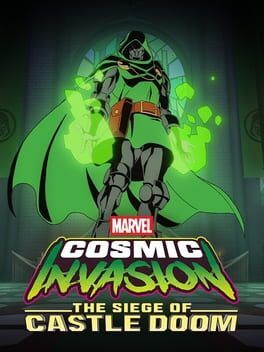
The Siege of Castle Doom is out now for Marvel Cosmic Invasion, adding Doctor Doom, Invisible Woman, and a run-based mode that reshapes progression without replacing the core brawler combat.
Image: IGDB
Store links: Marvel Cosmic Invasion: The Siege of Castle Doom on Steam
Castle Doom opens with two playable headliners
Marvel Cosmic Invasion: The Siege of Castle Doom is out now as paid DLC, and its clearest hook is immediate: Doctor Doom and the Invisible Woman have joined the playable cast alongside a new run-based mode set inside Doom’s stronghold. Twisted Voxel reports that Dotemu and Tribute Games released the expansion on November 10 for PC via Steam, PS4, PS5, Xbox Series X|S, Nintendo Switch, and Switch 2, priced at $7.99. Output Lag, citing the announcement sent to its news desk, lists the same price and says a 10% launch discount runs through November 17, with the European Nintendo eShop discount ending November 14.
That makes Marvel Cosmic Invasion Siege of Castle Doom a larger proposition than a simple character pack. The tension is whether this DLC pulls Tribute Games’ co-op beat ’em up away from its arcade rhythm, or whether the roguelite structure is a frame around the same screen-clearing combat that defined the base game. The reported answer is specific: the new mode changes how a run is paced, rewarded, and pressured, but the moment-to-moment fighting remains Marvel Cosmic Invasion’s familiar brawler foundation.
The setup, as described by MonsterVine, is pure Doom theatre. Victor von Doom has built the Cosmic Inductor, a weapon intended to counter Annihilus, but its instability threatens the planet. Players storm the castle to shut it down. That is the narrative runway, not a full campaign replacement. The real design shift is Castle Doom itself, where floors, doors, perks, hazards, and gauges create a gauntlet that asks players to think beyond surviving the next wave.
The roguelite structure changes the route, not the punch
MonsterVine’s review is the most direct source on the core question. It says that despite the new rogue-like mode, Cosmic Invasion’s core beat ’em up gameplay stays the same. Players still move through rooms and floors, hit enemies, manage character strengths, and push toward a boss. Console Creatures lands in a similar place from a different angle, calling the new mode a formula change “a bit” rather than a reinvention, while noting that the campaign can still be played solo or with friends in the older style.
The difference is in the sequencing. Instead of moving through a linear arcade stage, Castle Doom asks players to climb through floor after floor, choose between paths, and accept the risks attached to each door. Console Creatures describes choices that can lead to health, special-ability buffs, tougher enemy waves, or rewards such as reviving a fallen teammate. MonsterVine compares the door language to familiar roguelite rewards, with rooms offering battery cells, healing items, special equipment, event encounters, or an infinite room that grants unlimited ammo or focus for that space.
That distinction matters for anyone expecting either a new story campaign or a true genre conversion. Based on the supplied reviews and reports, The Siege of Castle Doom does not turn Marvel Cosmic Invasion into Hades with Marvel skins. It uses roguelite tools to rearrange pressure and reward inside a brawler. The combat rhythm stays built around positioning, crowd control, character kits, and co-op timing. The run structure decides when you are healing, gambling, powering up, or being pushed toward Doom before you feel ready.
Siege mode turns mistakes into tempo
The most interesting design wrinkle is how Castle Doom converts damage into momentum for the enemy. Multiple sources describe the run as a tug of war against Doom’s plan, though they emphasize different systems. GamerHeadlines, summarizing Tribute Games’ PlayStation Blog details, says Siege mode is built around Doom’s charging Cosmic Inductor and a Stabilizer fed by batteries earned through victories. Twisted Voxel reports that players choose from 12 perks across defensive, offensive, and tactical categories, while failed objectives can apply debuffs.
MonsterVine explains the run economy through battery cells and stabilizer charges. Defeating enemies earns cells, the stabilizer has three charge slots, and each charge grants a perk that lasts for the run. The examples are practical rather than cosmetic: melee buffs, ranged attack improvements, reduced environmental damage, or increased projectile ammo. That gives a character like Iron Man a different tactical profile if a player leans into repulsor range and damage, while a close-range fighter can be pushed toward heavier melee output.
The pressure system is where Castle Doom gets harsher. MonsterVine says the siege gauge increases when the player takes hits and also rises slowly on its own, with enemies becoming stronger as it fills. Console Creatures describes a related punishment curve: the more you get hit, the earlier you may need to fight Doom, and an earlier fight can leave the team feeling less powerful. The descriptions are not worded identically, so the safest read is that Siege mode uses damage, time, or failed execution to accelerate danger and reduce the comfort of a fully prepared final confrontation.
For an action game, that changes pacing more than controls. A standard beat ’em up often lets skilled players settle into a room, clean up mobs, and move on. Castle Doom appears designed to stop that comfort from lasting too long. Every sloppy exchange can raise the castle’s threat, and every detour for a reward has to be measured against the cost of taking more hits.
Doctor Doom and Invisible Woman broaden the roster, even if the count is unclear
The two playable additions are the cleanest confirmed piece of the Marvel Cosmic Invasion DLC. Output Lag reports that the Invisible Woman brings light-bending powers and force field manipulation, which the studio says are new to the game. Twisted Voxel similarly describes Susan Storm fighting with light-bending abilities and force fields. Doctor Doom, meanwhile, is described across Output Lag and Twisted Voxel as entering combat with advanced armor, occult skills, and his intellect.
Those additions fit the castle’s theme from both sides of the battlefield. Susan Storm gives the roster a Fantastic Four anchor centered on protection and control, at least according to the reported ability descriptions. Doom is stranger because he is both the villain of the mode and a playable fighter, which gives the expansion a familiar comic-book elasticity without the sources spelling out how the mode justifies mirror matches or narrative contradictions.
One detail should be treated carefully: the total roster count is inconsistent across the supplied reporting. GamerHeadlines’ pre-release piece says the DLC lifts the roster to 17 characters, based on 15 in the base game plus Cyclops and The Thing from the first DLC. Twisted Voxel, however, reports that the base game features 19 playable superheroes. Those numbers cannot both describe the same roster state in the same way. Because the supplied sources conflict, the firm takeaway is narrower: The Siege of Castle Doom adds Doctor Doom and Invisible Woman as playable characters to the existing lineup, following an earlier DLC that added Cyclops and The Thing.
That unresolved count does not affect the practical buying question, but it is worth flagging because roster size is a common selling point for brawlers. Readers comparing editions or bundles should rely on current storefront listings for the exact character total available in their region and version.
Castle Doom adds hazards, unlocks, and some readability concerns
Beyond doors and gauges, Castle Doom also changes the texture of encounters. Console Creatures notes new obstacles such as cold and ice that can freeze players and enemies if exposure lasts too long, along with falling debris from Doom. The same review says many enemies are new and calls out added Doombots as a fresh challenge. Twisted Voxel also reports branching paths, new enemies, and time-sensitive objectives.
The mode’s longer-term progression comes through Reed’s Lab, according to MonsterVine and GamerHeadlines. MonsterVine says fully charged stabilizer batteries can be invested in permanent upgrades or modifiers for future runs, including equipment such as the Earth Idol of Golthana, which attacks airborne enemies, and buffs involving vibranium. It also describes modifiers that change future attempts, including one where charging a stabilizer cell heals the hero. GamerHeadlines likewise identifies Reed Richards’ Lab as part of the mode’s replayability layer.
That structure gives failed runs some value, which is important for a brawler audience that may not want pure reset punishment. But the supplied reviews also point to rough edges. Console Creatures says the colored symbols used for door choices are not explained very well, causing early runs to involve guesswork. MonsterVine says some runs can become difficult, especially solo, because the siege gauge can climb quickly when bad luck and incoming damage stack together.
There are also completion rewards for players who want repeat runs. Twisted Voxel reports that new color palette options for every playable superhero unlock by defeating Doctor Doom with the respective character. Output Lag also notes that composer Tee Lopes returns with additional tracks that adapt to gameplay. Those are not mechanical overhauls, but in a repeatable mode built around character experimentation, palette unlocks and adaptive music help give the climb a stronger sense of occasion.
Who should buy The Siege of Castle Doom now
If you wanted Marvel Cosmic Invasion to stay an arcade brawler, the available reporting suggests The Siege of Castle Doom does not abandon that identity. The new mode keeps the core action loop intact, then adds a run-based layer of route choice, perk building, hazards, escalating pressure, and permanent upgrades. That is likely the key dividing line. Players who mainly wanted new campaign stages may find the emphasis different from a traditional level pack. Players who wanted a reason to return after clearing the campaign get a structure designed for repeated attempts.
For pricing, Twisted Voxel and Output Lag both list the DLC at $7.99. Output Lag says the 10% launch discount runs through November 17 on most storefronts, with Europe’s Nintendo eShop window ending November 14. Twisted Voxel also reports a Marvel Cosmic Invasion: Year of Doom bundle priced at $37.99, including the base game and both DLC expansions released this year. The Steam page supplied in the source material lists a 10% discount for Marvel Cosmic Invasion: The Siege of Castle Doom, matching the broader launch-discount reporting.
The expansion appears most attractive for co-op groups and players who enjoy squeezing new timing out of familiar combat kits. Console Creatures calls the Siege mode a solid multiplayer experience, while MonsterVine’s main caution is solo difficulty when the gauge climbs fast. If you play Marvel Cosmic Invasion for clean, readable arcade flow, it may be worth watching for whether Tribute Games adjusts door-signposting or run balance after launch. If you already like the game’s combat and want Doctor Doom Marvel Cosmic Invasion content with a stronger repeatable structure, this is the DLC built around that exact ask.