

Nintendo Switch Online’s MAR10 Day 2026 update brings Virtual Boy cult curios and a Game Boy Advance classic to modern hardware. Here’s the history behind Mario’s Tennis, Mario Clash, and Mario vs. Donkey Kong, how their emulation looks on Switch and Switch 2, and which 2026 players each one is really for.
Nintendo is celebrating MAR10 Day 2026 by digging deep into Mario history. Instead of another mainline platformer reissue, this year’s party is all about curios and cult favorites: two Virtual Boy titles, Mario’s Tennis and Mario Clash, and a Game Boy Advance puzzler, Mario vs. Donkey Kong, are all joining Nintendo Switch Online + Expansion Pack on March 10.
For retro fans, it is a milestone moment. This is the first time Mario’s short-lived Virtual Boy era has ever been re-released, and it is also the first chance to play the original 2004 Mario vs. Donkey Kong on a TV since the GameCube’s Game Boy Player.
Below is a look at how each game fits into Mario history, what is notable about its new emulation on Switch and Switch 2, and who each title will appeal to in 2026.
Mario’s Tennis: A Launch Relic Finally Escapes Virtual Boy
Mario’s Tennis started life in 1995 as one of the very first Virtual Boy games. On original hardware it was intended as the “friendly” showcase of the system’s stereoscopic effect, putting Mario and friends on a 3D court with exaggerated depth and big, readable sprites. The console’s red-and-black display and ergonomic problems sank the platform within a year, but Mario’s Tennis quietly set the template for later Mario sports titles.
You can see early versions of ideas that Mario Tennis on Nintendo 64 and Game Boy Color would refine years later. Character-specific stats, straightforward but punchy animations, and an emphasis on arcade-like timing over strict simulation all begin here. There is no deep career mode, but the basic appeal of slamming a shot past Bowser is already in place.
On Switch and Switch 2, the game arrives through the Nintendo Switch Online Virtual Boy app. That matters, because for decades the only way to experience Mario’s Tennis was on aging original hardware. The emulation lets Nintendo sidestep some of the Virtual Boy’s most infamous problems while trying to preserve its strengths.
Instead of a single red monochrome display, the Virtual Boy app renders the original dual-screen image in a comfortable widescreen format. Players can typically pick from several display options: a faithful red look, a high-contrast mode, and a more modern recolor that softens the strain without losing the depth cues. The stereoscopic effect is simulated visually rather than through the original headset’s optics, which makes long play sessions far more practical.
Control-wise, Mario’s Tennis maps cleanly to modern controllers. The Virtual Boy had dual D-pads and a handful of face buttons, but the game itself used a fairly simple layout. On Switch controllers and Switch 2’s pads, it feels closer to an early 3D-era tennis game than an experimental oddity. The built-in suspend, rewind, and save features also make it much easier to hop in for a quick match than it ever was in 1995.
In 2026, Mario’s Tennis is best suited for historians, Virtual Boy-curious fans, and anyone who has tracked the evolution of Mario sports games. It is not as mechanically rich as later Mario Tennis entries, and it will feel barebones if you come straight from Aces, but as a living museum piece and a quick-score party game it finally has the accessible home it always needed.
Mario Clash: The Weirdest Mario Platformer Gets a Second Life
If Mario’s Tennis is a prototype for future hits, Mario Clash is more like an alternate-timeline sequel that never got the chance to influence anything else. Released in 1995 as well, it reimagines the single-screen arcade design of the original Mario Bros. through the lens of Virtual Boy’s 3D layering.
Each stage is built around two planes: a foreground where Mario stands and a background where enemies move. You grab shells and lob them between the planes, timing throws to hit enemies as they pop in and out of your line of fire. It feels like a hybrid of Mario Bros., a light gun gallery, and a puzzle game, all filtered through the constraints of mid 90s 3D.
Historically, Mario Clash is important because it shows Nintendo trying to modernize its oldest Mario formula without copying Super Mario World or Super Mario 64. Its multi-plane layouts foreshadow later experiments with depth and perspective in games like Wario Land 4 and some of the 3DS entries, but the specific design of “shell tossing between layers” never returned elsewhere.
The Switch and Switch 2 Virtual Boy emulation goes a long way toward making Mario Clash more approachable than it ever was. On original hardware, the parallax effect and narrow field of view could make lining up throws tricky, and the red-only color scheme turned some enemies into eye-straining blobs during longer runs.
On a modern screen, the sharper resolution and configurable display make the two planes easier to read. The emulated stereo look gives you enough visual separation to track background movements without the discomfort of the original headset. Save states and rewind are especially valuable here, since Mario Clash becomes pretty demanding by the later stages and used to require long, unforgiving sessions to see everything.
In 2026, Mario Clash will appeal to arcade-score chasers, challenge-run fans, and players who love seeing “what if” branches in series history. It is a short game built around high replay value rather than a big single clear, so it pairs well with online leaderboards, personal best runs, and short daily sessions. If you are looking for a “lost mainline” Mario, this will feel too small and repetitive, but if you like compact arcade design it might become your favorite part of the MAR10 drop.
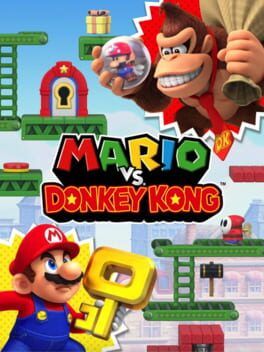
Mario vs. Donkey Kong (GBA): The Puzzle-Platformer That Bridged Eras
Compared to the Virtual Boy pair, Mario vs. Donkey Kong is practically mainstream, but it occupies its own interesting place in Mario history.
Released on Game Boy Advance in 2004, it is both a spiritual successor to the Game Boy classic Donkey Kong 94 and the foundation for the Mario vs. Donkey Kong puzzle subseries. The early stages play like a tight, puzzle-heavy platformer, where Mario can perform handstands, triple jumps, and clever gymnastics to navigate compact, enemy-filled levels.
Midway through, the focus shifts to guiding wind-up Mini Mario toys through Rube Goldberg style environments. You clear hazards, hit switches, and rearrange platforms so your little train of toys can march safely to the exit. That blend of action and planning would later be expanded in DS and DSi sequels, but the original GBA game maintains a stronger focus on hands-on Mario moves than the later, more purely puzzle-oriented entries.
The 2024 Nintendo Switch remake of Mario vs. Donkey Kong updated the visuals, added co-op, and tweaked level design. The MAR10 Day 2026 release of the original GBA version through the Nintendo Switch Online + Expansion Pack GBA app sits alongside that remake rather than replacing it.
As GBA emulation, this version preserves the original pixel art, snappier physics feel, and mid 2000s tone. On a modern OLED handheld or a TV, the sharp scaling keeps sprites clean without the ghosting or washed-out look that some original GBA screens had. You also get the standard Switch Online perks: suspend points, rewind for tricky puzzles, and easy capture for sharing interesting solutions.
Having both versions on the same platform invites direct comparison. The remake is more visually polished and friendly for newcomers, especially with its added hinting and flexibility. The GBA original is a little more strict, which puzzle purists tend to prefer. For long-time fans who first played it on original hardware or via the 3DS Ambassador Program, this is a straightforward, faithful way to revisit the exact game they remember.
In 2026, Mario vs. Donkey Kong on GBA is perfect for players who like methodical puzzle-platforming, completionists who enjoy collecting every Mini Mario and perfecting bonus stages, and anyone curious to see the roots of the modern Minis-focused subseries.
What This MAR10 Drop Says About Nintendo’s Retro Strategy
Bringing Mario’s Tennis and Mario Clash to Nintendo Switch Online is more than a fun one-day celebration. It signals that Nintendo is willing to treat even its least successful hardware as part of an ongoing living archive.
For years, Virtual Boy’s library sat in limbo. Collectors could track down the original cartridges, but there was no legal way to experience these games without hunting down fragile, uncomfortable hardware. With the Virtual Boy app, the company is committing to preserving this short, strange chapter of its history in a more accessible form.
Pairing that with Mario vs. Donkey Kong on GBA shows how broad the Nintendo Classics approach has become across Switch and Switch 2. MAR10 Day 2026 is not just about nostalgia for the biggest hits like Super Mario World or Super Mario Galaxy. It is also about giving players a path through the side roads of Mario history, from an experimental stereoscopic arcade riff to a puzzle-platformer that quietly bridged the gap between classic arcade Donkey Kong and modern Minis puzzlers.
For subscribers to Nintendo Switch Online + Expansion Pack, these three games are a compact but meaningful snapshot of how flexible the Mario formula has always been. For the curious player in 2026, they are a chance to experience that variety on modern hardware without the compromises of the original platforms, all bundled into one tidy MAR10 celebration.