
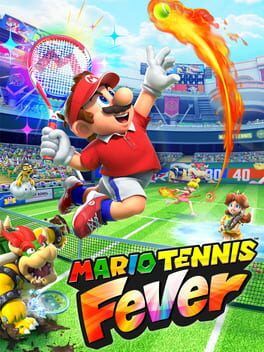

Breaking down the Mario Tennis Fever opening cinematic, its new Fever mechanics, and what they could mean for competitive play compared with previous Switch-era entries.
Nintendo’s newly released opening movie for Mario Tennis Fever is more than just a glossy sizzle reel. Buried in the slow-motion smashes and dramatic close-ups are our best early clues about how the new Fever system will reshape matches on Switch 2, and how Camelot is positioning this sequel after the mixed reception to Mario Tennis Aces on the original Switch.
A Cinematic Statement Of Intent
The Fever opening cinematic wastes no time framing tennis as a stadium-filling, almost combat-like spectacle. Mario charges onto a neon-soaked center court as the crowd erupts, flanked by familiar faces from across the Mushroom Kingdom. Rallies are shot like fight scenes, with quick cuts between players, ball trails streaking with color, and courtside environmental details reacting to each impact.
What stands out is how frequently the camera lingers on rackets, shoes, and glowing energy around characters rather than just on the ball itself. The animation makes a point of showing energy building with each rally, as characters’ rackets begin to emit colored auras. This is our most direct visual tease of the new Fever mechanics, and it suggests a shift from the individually powered-up shot system of Aces toward a meter and gear-driven power cycle that all players have to manage.
Decoding The New Fever System From The Trailer
Nintendo has already confirmed the presence of a Fever Gauge, Fever Shots, and collectible Fever Rackets, and the cinematic backs this up with several telling visual cues.
During long rallies, characters are framed with a swirling aura that intensifies with each successful return. The ball trail changes color partway through a point, hinting that certain thresholds on the Fever Gauge may alter basic shot properties even before a full Fever Shot is unleashed. At key moments, the camera pushes in on a character’s racket just as a logo or emblem flares to life across its strings, followed by a spectacular, court-altering hit.
Taken together, these touches hint at a three-step flow: build Fever with consistent play, trigger a Fever state where shots gain enhanced properties, then cash out that energy with a signature Fever Shot that can be modified by your equipped Fever Racket. The cinematic’s emphasis on different racket designs suggests that this gear is not just cosmetic but tightly tied to what happens when you spend your Fever Gauge.
Fever Rackets As Tactical Loadouts
The opening movie repeatedly cuts to close-ups of themed rackets: fiery designs, crystalline patterns, galaxy swirls and mechanical motifs. These are almost certainly the 30 Fever Rackets already confirmed for the game. Rather than simply boosting stats, the way the cinematic pairs particular rackets with specific visual effects implies that each one unlocks or augments a distinct Fever Shot archetype.
A fire-themed racket is shown as Mario launches a blistering topspin that leaves a burning trail across the court surface, briefly obscuring the opponent’s view. A crystalline design appears as a defensive player returns a smash that ricochets at an unexpected angle, with shards of light marking a distorted bounce zone on the opponent’s side. Elsewhere, a galactic motif accompanies a lob that seems to slow dramatically in midair before plunging down in a steep arc.
If these sequences are representative of in-game effects, then Fever Rackets are effectively your loadout choice before a match, shaping how your Fever Gauge is best spent. Offense-oriented rackets might turn Fever Shots into high-risk, high-reward finishers, while control or defensive rackets could let you use Fever in smaller bursts to escape bad positions or reset the tempo of a rally.
Competitive Implications: Meter Management On The Court
The big question for competitive play is how central the Fever system will be to match outcomes. Aces revolved around Zone Speed, Trick Shots, and Special Shots, making meter management a constant concern. Fever appears set to refine that idea into something a bit more flexible and less all-or-nothing.
If the cinematic’s pacing reflects gameplay, Fever will build gradually through rallies, rewarding consistency over reckless aggression. Players who can keep points alive, mix their shot selection, and avoid unforced errors should gain access to Fever more often. This naturally favors disciplined baseline play, but the presence of different Fever Rackets may open doors for more diverse strategies.
In a competitive setting, you can easily imagine distinct Fever archetypes forming. Some players may prioritize fast-build setups that grant frequent but modest Fever boosts, using them to pressure returns or secure safe court positioning rather than fishing for highlight-reel winners. Others might purse slow-build, explosive Fever loadouts that aim to convert a single extended rally into a devastating Fever Shot that can crack even solid defense.
The cinematic also hints at how Fever might influence positioning. Several shots show characters dashing into exaggerated, almost superheroic stances just as they enter a Fever state, accompanied by a quick burst of motion blur. This could signal short windows of enhanced movement or expanded reach while Fever is active, rewarding players who time their activations to chase down wide angles or step in aggressively for net play.
Balancing Spectacle With Clarity
One of the criticisms of Aces at higher levels was visual overload. Zone Shots, slow-motion counters, and racket damage effects stacked on top of busy stages and character animations that could be hard for new or casual players to parse. The Fever cinematic is spectacular, but it also appears more color and icon driven, which could be a subtle but important shift in design.
Fever auras are distinct in color and intensity, so it is easy to see at a glance who is “hot.” Racket effects and ball trails are tied to particular visual motifs: fire, ice, lightning, cosmic energy and so on. If this carries into gameplay, players will be able to identify an opponent’s Fever loadout immediately and adjust their expectations based on that knowledge.
For competitive integrity, this kind of readability is crucial. It allows online and tournament play to feature big, cinematic moves while still letting players make informed split-second decisions. The trailer’s editing makes it look like Camelot is trying to thread that needle, delivering big power-up moments that feel deserved after building up Fever, but signaling them so clearly that counterplay remains possible.
A Bigger, Bolder Roster
The cinematic leans on the game’s 38-character lineup, showing quick-cut rallies between all-stars like Mario, Luigi, Peach, Daisy, Rosalina, Bowser, Bowser Jr., Wario and Waluigi, as well as deeper cuts for long-time fans. The sheer density of cameos adds to the sense that Mario Tennis Fever is pitched as the definitive modern entry in the series.
With a roster this large and a loadout system built around Fever Rackets, the competitive meta could become far more varied than in Aces. Each character’s unique animations and shot specialties, layered with specific Fever effects, should create a range of “synergy pairs” that players can explore. A defensive character combined with a disruptive Fever Racket might grind opponents down over time, while an already aggressive character paired with a high-impact Fever finisher could become a glass cannon, terrifying in the right hands but punishable without meter.
The risk is complexity creep. Too many overlapping systems can make it difficult for new players to get invested or for tournament organizers to maintain clear rulesets. Yet the cinematic’s focus on simple, readable motifs suggests that Mario Tennis Fever is being built to scale, with straightforward core tennis at its base and Fever mechanics that add depth in layers.
From Aces To Fever: A New Switch Era
On the original Switch, Mario Tennis Aces tried to balance story content, traditional tennis, and fighting-game-like mechanics. It launched strong but some players bounced off its emphasis on Specials and meter tricks, especially in casual settings where one flashy move could dominate a rally.
Mario Tennis Fever, by contrast, is debuting as a flagship sports title for Switch 2. The opening movie’s higher production values and more cohesive visual themes underscore this generational jump. Court surfaces are more detailed, lighting and shadows are richer, and character animations look smoother and more expressive, even in short clips.
More importantly, Fever’s design appears to reposition power moves as something that grows out of good tennis fundamentals instead of overshadowing them. If you have to build Fever through consistent rallies and smart shot choice, then the best way to access those flashy cinematic moments is simply to play better tennis. That philosophy could make Fever more welcoming as a pack-in competitive staple on fresh Switch 2 consoles.
Looking Ahead To Launch And Competitive Play
With release right around the corner and a demo already playable at retail, the opening cinematic feels like a mission statement for Mario Tennis Fever. It sells the fantasy of tennis as a full-contact spectacle, but the details it reveals about Fever Gauges and Fever Rackets hint at a more measured, tactical approach than some past entries.
If the final game delivers on what this movie promises, competitive players can expect a meta shaped by meter management, gear-driven loadouts, and character and racket synergy. The key to its long-term success will be how well the systems are tuned. Fever needs to feel powerful and exciting without rendering standard play obsolete.
For now, the cinematic does what it needs to do. It introduces Mario Tennis Fever as both a celebration of the series’ over-the-top heritage and a fresh competitive platform for the Switch 2 era. Once players get their hands on the full set of Fever Rackets and start discovering which combinations define early tournaments, we will see whether this spectacle-first trailer was also a preview of a genuinely deep and strategic new Mario sports staple.