
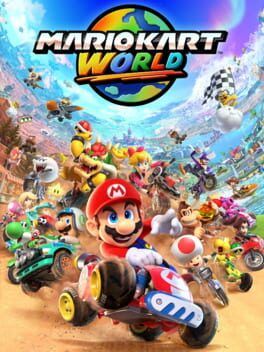
Mario Kart World’s 1.4.0 update quietly rewires the online meta and local couch chaos. Here is how custom item rules, revamped Koopa Troopa Beach routes, and the new “now playing” music display actually change the way you race.
Mario Kart World’s 1.4.0 patch reads like a standard balance update, but once you dig into it, this is the moment the game truly starts to feel like a platform. Custom item rules reshape online lobbies and local nights with friends, Koopa Troopa Beach and its connected routes finally flow like real races, and the new “now playing” music HUD pulls double duty as a fan-service feature and a subtle learning tool.
Below is a breakdown of how each of the key 1.4.0 features changes the way Mario Kart World actually plays.
Custom Item Rules: The New Center of the Meta
The headline feature in 1.4.0 is the Custom Items toggle, which you can enable in VS Race, Balloon Battle, Coin Runners, and Rooms for online and local wireless play. Functionally it works like the item customization introduced in Mario Kart 8 Deluxe, but within Mario Kart World’s more complex, interconnected course structure it has a deeper impact.
At its simplest, Custom Items lets you hand-pick which items can appear at all. That means you can remove problem items such as Lightning or Blue Shells, build chaos-centric rulesets like “only shells and bombs,” or even construct defensive, coin-heavy pools for technical driving sessions. The important detail is that these settings carry into Rooms online, so communities can standardize custom rules for weekly lobbies or tournaments.
Online, expect three broad metas to emerge.
The first is the “no comeback items” meta, where Lightning and Blue Shells are disabled. In Mario Kart World, where strategic use of the world map and route transitions is already powerful, removing global punishers heavily rewards front-running. Strong drivers who can nail their lines through Koopa Troopa Beach and its connecting routes will hold leads for much longer, while middle-of-the-pack players lose some of their bailout options. Characters and karts that emphasize mini-turbo and top speed benefit the most here, since there is less need to factor in recovery after global disruptions.
The second is the “high-pressure pack” meta, where strong attack items remain but global disruption is toned down. Here, communities often disable Lightning while keeping Blue Shells, Red Shells, and bombs. That changes how players approach choke points on courses with tight tunnels or dangling hazards such as Manta Ramp and Dragoneel. Instead of everyone being flattened at once, pressure comes from constant targeted hits that encourage drafting and slipstream play but still punish mistakes. This is especially important on Mario Kart World’s new knockout tour structure, since staying out of the danger cluster is more valuable than relying on miracle comebacks.
The third is the “party chaos” meta, the one most local groups will gravitate toward. Flipping Custom Items to only Blue Shells, only bombs, or only Mushrooms transforms familiar tracks into mini-games. Races on tight city layouts like Crown City or Peach Stadium become survival challenges when every item is explosive. On the flip side, a Mushrooms-only ruleset turns Koopa Troopa Beach into a time attack playground, rewarding players who know every off-road shortcut and ramp chain.
Because Custom Items also work in Balloon Battle and Coin Runners, they quietly refresh those modes as well. Battles restricted to Green Shells and Bananas feel like classic arena duels that reward prediction and positioning. Coin Runners with only Mushrooms play almost like a platformer, emphasizing route optimization over raw aggression.
The trade-off is that players who join random Rooms may need to adapt constantly. With radically different item pools from lobby to lobby, the “standard build” loses importance in favor of flexible character and kart choices that can handle both pressure-heavy and item-light environments.
Koopa Troopa Beach and Route Tweaks: Fixing the Flow
Mario Kart World’s most experimental idea is its network of point-to-point routes that string together classic-style circuits with overworld travel. Pre-1.4.0, one of the loudest complaints was how often these routes funneled you to Koopa Troopa Beach, only to give you a single lap on the beach before dumping you back into an intermission. The new patch directly tackles that problem.
Any race that ends at Koopa Troopa Beach now gives you two full laps there instead of just one. For races like Koopa Troopa Beach to DK Spaceport or routes that connect Crown City or Peach Stadium through to the beach, this simple change alters pacing dramatically. Instead of feeling like a long commute with a short “real race” at the end, the finish becomes a proper arena where leads can be contested and reclaimed.
From a systems perspective, two laps on Koopa Troopa Beach equal more item cycles and more opportunities to leverage Custom Item rules. In lobbies that disable Lightning, skilled players can better chain mini-turbos through beach corners and time shortcuts through the cave and water sections, knowing that the race will not abruptly end after one lap. In chaos-focused rule sets, the extended time on the beach makes hazards like Dash Food and coins on water, which now respawn faster, central to the mid-race economy.
The patch also adds subtle layout tweaks to several routes that use Koopa Troopa Beach as a destination. These are not wholesale redesigns but targeted edits to address awkward transitions and edge cases. Combined with bug fixes that reduce instances of slipping through walls or getting stuck on certain terrain, routes involving Koopa Troopa Beach now reward riskier lines and tighter drifting instead of punishing them with random stalls.
The change to Bullet Bill behavior is another quiet meta shift. Bullet Bill no longer collides with Dragoneel, which removes a specific but frustrating source of variance. In knockout-focused lobbies, you can safely use Bullet Bill through Dragoneel segments without worrying about a surprise crash that costs you the run. Since Custom Items lets organizers adjust how often Bullet Bill appears in the first place, the item becomes a more trustworthy comeback tool in the pools where it is allowed.
Even smaller tweaks, such as gaining a proper dash when riding on Manta Ramp’s back and faster respawns for on-water coins, affect optimal lines. Coin-heavy laps become more predictable and less about who happened to pass first after the previous pack cleared the route. In long-form knockout tours, that stability is crucial for players planning consistent lap strategies.
Local Play: Designing Your Own House Rules
Locally, 1.4.0 effectively turns Mario Kart World into a party game toolkit. Previously, if your group disliked items such as the Boo or Lightning, the only option was to live with them or turn items off entirely. Now you can curate your own house rules that feel almost like separate game modes.
For families with younger players, Custom Items allows gentle rule sets with more coins, Mushrooms, and Stars while disabling aggressive items that can feel unfair. The reduced chance of sudden wipeouts helps newer players learn tracks like Peach Stadium, Koopa Troopa Beach, and Wario Stadium without being thrown off rhythm every few seconds.
Competitive couch crews can go the opposite direction and design high-intensity loadouts that emphasize skill in specific situations. A room configured around shells and bananas only rewards block placement and defensive driving, especially on courses with tight corners and narrow bridges. Track segments that used to be item lotteries become tests of how well you can hold a line under constant targeted fire.
The update also adds several convenience touches that strengthen local play sessions. Single-player VS Race now includes Restart and Next Race in the pause menu, which makes solo practice runs viable for shaving seconds off ghost times. Being able to enter Photo Mode directly from ghost races is perfect for dissecting lines on tricky sections of tracks like Wario Stadium, then sharing those findings with friends.
Together, these changes mean that local groups are no longer just picking characters and karts. They are designing formats that suit their preferred style of Mario Kart, whether that is tense, technical driving through refined Koopa Troopa Beach routes or full-on chaos in city tracks.
Online Rooms and Knockout Tours: Structured Chaos
The online side gets a parallel overhaul. With 1.4.0, players gathered in an Online Play Room can jump together into Race, Knockout Tour, or Battle, with support for up to four players. You can now join a friend’s Knockout Tour directly from the Friends list in two-player online play, which removes one of the friction points for running community events.
When you combine that with Custom Items, each Discord server or friend group can standardize their own circuit formats. One night might be a “no global items” Knockout Tour across Koopa Troopa Beach routes, focused primarily on driving skill. The next night could flip to a bombs-only Battle session where map knowledge and ambush angles matter more than racing lines.
Bug fixes related to position updates, spectator cameras repeatedly showing off-course runs, and character or vehicle selections unexpectedly changing all make these sessions feel more predictable. Knockout formats in particular benefit from fewer networking oddities, since one strange disqualification or teleport can ruin an entire run.
The “Now Playing” Music HUD: Why It Matters More Than You Think
On paper, the new pause menu display that shows the currently playing music track and its original game sounds like a trivial feature. In practice, it is one of the most thoughtful quality-of-life additions in 1.4.0.
Mario Kart World pulls from a deep catalog of Mario and crossover tracks, remixes, and world-specific arrangements. Previously, if you loved a theme that played during a stretch from Crown City into Koopa Troopa Beach, your options were to guess its source or search online. Now you can pause mid-race, see the track title and originating game, and instantly connect the dots.
For long-time fans, this is a small but meaningful bit of fan service that celebrates the series’ musical history. For newer players, it acts as a guided tour through Nintendo’s back catalog. Hearing a bouncy remix, pausing to check the HUD, and seeing that it originates from an older Mario title can gently nudge players toward trying that game on Switch Online or elsewhere.
The addition of a dedicated Music Volume slider in Settings further supports this shift. You can dial in the soundtrack relative to engine noise and item effects instead of relying on a single master volume adjustment. In community events and streams, organizers can tweak music levels to keep commentary clear while still letting viewers enjoy the soundtrack.
What elevates this from simple trivia to a subtle systems feature is how it changes the way players perceive and practice tracks. Many racers mentally anchor course sections by their musical cues. Knowing exactly which song plays where makes it easier to talk about strategies with friends or guides. “The hairpin after the chorus on the Koopa Troopa Beach remix” becomes a precise shorthand rather than a vague description.
It also encourages players to linger in Free Roam or Time Trials just to listen. Combined with Photo Mode improvements and fixes to visual distortion in areas like pipes and UFOs, this positions Mario Kart World not only as a racer but as a space to hang out in.
How 1.4.0 Reframes Mario Kart World
Taken together, the new Custom Items system, Koopa Troopa Beach route adjustments, and the music HUD hint at where Mario Kart World is headed. It is moving toward a more community-driven, customizable experience where organizers define the “rules of play,” and the game supports that with better tools for pacing and expression.
Online metas will likely fracture into dedicated rulesets that prioritize different aspects of skill, from pure driving and line-holding to survival in weapon-heavy packs. Local play benefits from that same flexibility, transforming Mario Kart World into a living room staple that can adapt to whoever is picking up the controllers.
And while a music info display might sound minor, it reflects Nintendo’s understanding that in a platform-style live game, players want not just strong mechanics but strong connections to the world and its history. 1.4.0 is not a flashy new cup or a set of characters, but it is one of the updates that will quietly define how Mario Kart World is played for years to come.