
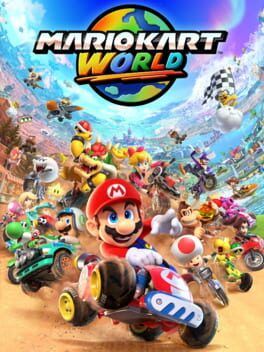

Mario Kart World has blown past 2.5 million physical copies sold in Japan in just 29 weeks, becoming the fastest‑selling entry in the series. Here is what its record pace, open‑world structure, and Switch 2 tech tell us about the future of Mario Kart.
Mario Kart World has not just crossed a milestone in Japan, it has hammered through it at breakneck speed. According to the latest Famitsu data, Nintendo’s debut kart racer for Switch 2 has now sold over 2.5 million physical copies in Japan alone, and it did it in just 29 weeks. That figure covers only boxed units, not digital sales or download codes from hardware bundles, which means the real player base is already significantly larger.
It is enough to make Mario Kart World the fastest selling entry in the franchise in Japan, beating the long standing record held by Mario Kart Wii, which needed 89 weeks to hit the same 2.5 million mark. It is also the fastest selling game on Nintendo Switch 2 so far and the best selling title in Japan for 2025 based on physical sales. For a series that has been a permanent fixture on Nintendo charts for decades, this new record is more than a statistical curiosity. It points to a structural shift for Mario Kart at the exact moment Nintendo is rolling out new hardware.
A new sales benchmark for Mario Kart
Context is what makes Mario Kart World’s 2.5 million figure so striking. Japan is already familiar territory for Mario Kart, and the brand has been a system seller since the Super Famicom era. Mario Kart 8 Deluxe on the original Switch became one of Nintendo’s biggest games ever worldwide, with tens of millions of copies sold and years of DLC support. Even against that backdrop, World has found a way to stand out.
The 29 week sprint to 2.5 million puts its sales curve on a much steeper trajectory than previous entries. Mario Kart Wii, itself attached to a gigantic hardware install base, took roughly three times as long to cross the same threshold. The Switch 2 install base is still young and growing, yet Mario Kart World has already managed to sit at the top of the 2025 Japanese charts, ahead of new installments from other major Nintendo series.
Because the reported number is physical only, several invisible multipliers are likely at work. Nintendo has leaned on digital distribution more heavily with each generation, and early adopters of Switch 2 are exactly the kind of audience likely to choose downloadable versions. The game is also a natural candidate for console bundles, especially around the holidays, and those copies are not reflected in the Famitsu data when they are delivered as digital codes. Taken together, it is reasonable to assume the real Japanese player base is comfortably beyond the 2.5 million mark already.
Switch 2’s launch anchor
The performance of Mario Kart World in Japan cannot be disentangled from the momentum of Nintendo Switch 2 itself. As a high profile launch window title, World functions as an unofficial showcase for the system. If you buy Nintendo’s new hardware, this is the game everyone expects to see in your library. That dynamic is reflected in attachment rates that early reports have described as approaching one copy sold for every Switch 2.
Where Mario Kart 8 Deluxe served as a definitive edition and long term anchor for the original Switch library, World feels positioned as a foundational pillar for Switch 2. It arrived early, it demonstrates the hardware leap immediately, and it offers a flexible structure that can absorb years of content updates. The sales data from Japan suggests that strategy is working. When a series that usually starts fast is now starting even faster, with a younger install base and a more complex game, it signals strong word of mouth and confidence from both dedicated fans and more casual players.
From a business perspective, this makes Mario Kart World an ideal platform title for Nintendo to build around. It can drive ongoing hardware sales, stabilize software revenue with DLC and seasonal events, and provide the social glue that keeps local multiplayer relevant in an era of online services.
How open world structure is reshaping the series
If the sales pace is one half of Mario Kart World’s story, the other half is what kind of game has actually earned that momentum. For the first time, the series leans into a connected world model, stitching the traditionally discrete cup structure into a large, explorable environment. Races still sit at the core, but they are now embedded in a continuous world that supports free roam, sightseeing, photo opportunities and a flow that feels closer to an adventure game between events.
The appeal of this approach is easy to see in Japan, where open world games have gained a broader audience over the last generation. Mario Kart World uses the concept in a targeted way. Courses often share geometry with the hub regions that connect them, letting players drive from one themed zone to another without cutting to menus every time. It creates a sense of road trip progression, a tour across the Mushroom Kingdom and beyond that lines up with the game’s new knockout and tour modes.
Crucially, this structure gives Nintendo a flexible canvas for updates. Instead of adding isolated cups that only appear in the menus, future content can expand the map itself, introduce new detours and shortcuts through existing regions, or repurpose open spaces for limited time events. The strong initial sales at retail give Nintendo every incentive to treat Mario Kart World not only as a boxed product, but as a living platform that can grow over multiple years.
What the milestone suggests about Kart’s future
The combination of record setting sales and an ambitious new structure hints at where Nintendo may steer the franchise next. Mario Kart World proves that audiences are ready to embrace a version of Kart that is not confined to static menus and four race cups at a time, provided the underlying racing feels as tight and readable as ever.
One likely direction is deeper progression woven into exploration. The current game already rewards players with collectibles and unlocks scattered across its landscapes. Strong engagement numbers will encourage Nintendo to iterate on that idea in future entries or expansions, tying kart customization, character cosmetics and even new rule variants to activities out in the world rather than just Grand Prix trophies.
Another implication is that open world design is now a core identity trait for the series rather than a one off experiment. Just as Mario Kart 7’s gliding and underwater sections went on to define Mario Kart 8 and its DLC, the way World treats travel between races is likely to become the template going forward. Future games might push further into cooperative exploration, asymmetrical objectives or hub regions that change in response to live events.
Finally, the Japanese success story reinforces that Mario Kart can support broader social play patterns. Free roam spaces encourage players to gather without immediately committing to head to head races, which makes the game more welcoming for families, newcomers and streaming communities. If Nintendo continues to refine this layer, future installments could lean more on social lobbies, meet up plazas and persistent clubs wrapped around the traditional racing core.
Switch 2 performance and technical headroom
From a technical perspective, Mario Kart World is also a quiet statement about what Nintendo intends to do with Switch 2. The game runs with higher visual fidelity than its predecessor, offering denser track details, more elaborate vistas and a stronger sense of speed across its open regions. Weather, lighting and particle effects are more pronounced, and the hardware is able to keep those elements present even as players share the world in split screen or online races.
Performance matters more than ever in a game that lets multiple players free roam through large environments. Stable frame rates and responsive controls are critical when the track edges are less rigid and players are encouraged to improvise routes. By all accounts, Switch 2 handles this load, which gives Nintendo the confidence to build future expansions or sequels that stretch even further, whether that means more verticality in courses, more reactive environmental hazards or more elaborate elimination modes.
This is another reason the Japanese sales milestone is significant. When millions of players are adopting Mario Kart World early in the Switch 2 lifecycle, they effectively commit to its technical foundation. Nintendo now has a clear baseline of what kind of scope and performance the audience expects from a modern Kart title on this hardware. That expectation will shape both the scale of new content and the ambition of the eventual follow up.
A long race ahead
Viewed in isolation, 2.5 million physical copies in one country is a major achievement. Viewed as the starting line for Mario Kart World, it looks even more important. The game has become the fastest selling entry in one of Nintendo’s most reliable series, it has anchored the early fortunes of the Switch 2 in Japan, and it has introduced structural changes that will influence how Mario Kart feels for years to come.
Nintendo has not yet outlined the full long term roadmap for World, but the sales curve suggests the company will treat it as a flagship for the Switch 2 era. More courses, expanded world regions, new modes built around its open environments and cross promotions with other Nintendo series all feel like plausible moves from here. Whatever shape those updates take, the 2.5 million milestone is a clear signal that players are eager to follow.
Mario Kart has spent three decades refining its racing formula. Mario Kart World shows that the series can still reinvent the spaces around that formula without losing its identity. If this is how fast the franchise can move at the start of a new hardware cycle, the road ahead on Switch 2 is likely to be very busy.