
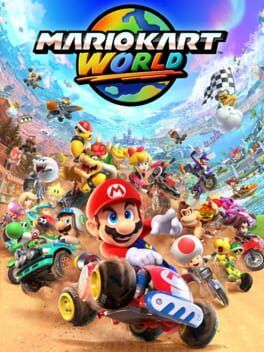
Mario Kart World races past 2.5 million physical copies in Japan, becoming the fastest‑selling entry in series history and a bellwether for Switch 2’s live‑service future.
Nintendo’s first truly next generation kart racer just hit a very current generation milestone. In Japan, Mario Kart World has now sold over 2.5 million physical copies according to Famitsu’s latest retail data, and it reached that mark in only 29 weeks. That pace makes it the fastest selling Mario Kart in the series’ 30 plus year history in its home market, the fastest selling Nintendo Switch 2 title to date, and the best selling game in Japan for 2025 so far.
Those are big numbers on their own, but they become a snapshot of something larger when you zoom out. In its first year on the market, Switch 2 has quickly built an audience hungry for software, and Mario Kart World sits at the center of that story. The game is optionally bundled with the hardware in Japan, which undeniably helps, yet even by historical bundled standards the performance is exceptional. Attach rate discussions aside, 2.5 million boxed copies in one territory in under seven months points to a game that is not just riding hardware momentum but actively defining the platform.
Part of the appeal is that Mario Kart World is not just another incremental circuit racer. Nintendo has taken the series’ long running track based formula and stretched it across a single, interconnected world. Races now weave through a continuous environment rather than dropping you into a menu of isolated cups. Iconic biomes that used to be separate courses are stitched together into a cohesive map, and routes can branch, rejoin and spill into off road detours that feel more like an open world action game than a traditional kart circuit.
This new structure changes how a typical Mario Kart session feels. Instead of hopping between cups, you spawn into a living overworld, pick a direction and naturally flow into events. One moment you are drifting around a coastal highway, the next you have crossed a checkpoint into a themed city hub where a knockout tour is about to begin. The sense of place is stronger because you are constantly re encountering landmarks from different angles and at different speeds. Exploration is no longer something you do between races in a menu, it is baked into the moment to moment play.
Free roam also gives the social side of Mario Kart more room to breathe. Friends can meet up in the overworld, cruise together without a countdown clock bearing down on them, mess around with shortcuts and photo spots, then drop into structured events whenever they like. It turns what used to be a strict sequence of three lap heats into something more like a shared playground, and that design shift pairs neatly with Nintendo’s obvious ambitions for Mario Kart World as an evolving, long tail platform.
Sales performance in Japan backs that strategy up. Mario Kart 8 Deluxe set an absurdly high bar with over 60 million units worldwide across its life, but it took years of evergreen sales and a long DLC campaign to get there. Mario Kart World is starting from a much higher launch plateau. Beyond the 2.5 million boxed copies tracked in Japan, various reports and leaks suggest global sell through approaching ten million on Switch 2 as of early autumn, with digital and bundle redemptions pushing the audience higher still. For Nintendo, that is the ideal foundation for multi year support.
The early numbers also explain why Nintendo has leaned into seasonal tours and rotating events from day one. Mario Kart World’s knockout tour mode, where players chain through multiple back to back courses with eliminations at each checkpoint, is inherently suited to live updates. New tour routes can remix existing regions in the world map or introduce all new ones without fragmenting the player base. The open structure means a themed tour is not just a menu tile but something that materializes physically on the map: new arches, signage, shortcuts and ambient details that reshape routes for a few weeks.
With such a large, engaged base right out of the gate, expect that approach to ramp up rather than slow down. Nintendo has already tested the waters with limited time events built around holidays and first party crossovers on Switch 2, and Mario Kart World is perfectly positioned to become the flagship for that strategy. Think multi week world tours that re decorate major regions, experimental weather or physics modifiers in select zones, and asynchronous challenges tied to exploration in free roam rather than pure race results. The infrastructure is there, and the sales justify investing in it.
DLC is the other obvious pillar. Mario Kart 8 Deluxe’s Booster Course Pass proved that players will happily pay for long term track drops when the base game is ubiqitous. Mario Kart World’s twist is that expansion content is less about adding discrete cups and more about expanding the world itself. New regions can bring in entirely fresh visual themes, traversal gimmicks and hub spaces that slot naturally into the existing map. A Donkey Kong jungle peninsula that branches off the current coastline or a floating Galaxy inspired island chain that orbits above existing tracks would feel like organic additions, not bolt on menus.
Japan’s retail performance suggests Nintendo has room to be bold with pricing and scope here. With millions of players already invested and a hardware install base that continues to grow, Nintendo can structure DLC more like actual expansions, complete with new free roam activities, world events and knockout variants that keep earlier zones relevant. The more the map grows horizontally, the easier it is to justify revisiting older regions with updated traffic patterns, hazards and shortcut routes during live events.
All of this loops back to why 2.5 million physical copies in one country matters beyond the headline. Strong early sales send a signal internally at Nintendo that Mario Kart World is not a one and done launch title but a pillar for the entire Switch 2 era. It gives the development team leverage to plan multi year content pipelines, and it establishes a baseline audience that third party partners will pay attention to when considering collaborations and tie in content.
For players, it means Mario Kart World is likely to feel less like a single boxed release and more like an evolving platform that grows alongside Switch 2. Japan’s charts are simply the first clear indicator of that future. If the game maintains anything close to its current trajectory worldwide, the question will not be whether Mario Kart World can catch Mario Kart 8 Deluxe, but how far Nintendo is willing to push this new open world model through updates, tours and expansions before it finally retires the checkered flag.