
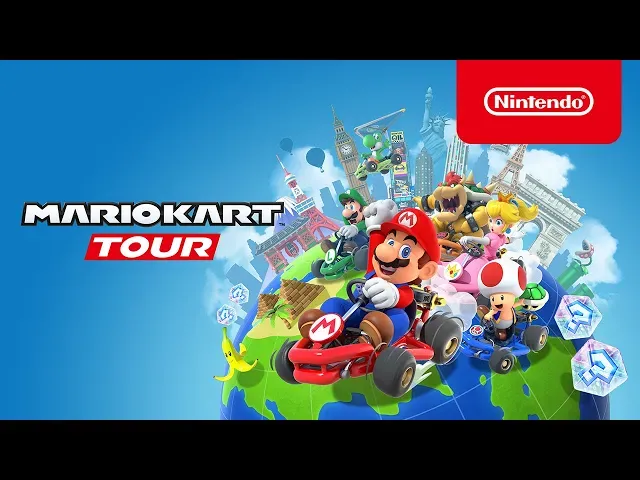

Nintendo has closed Mario Kart Tour after nearly seven years, leaving the mobile racer unplayable despite AppMagic estimates of $268.5 million in lifetime revenue.
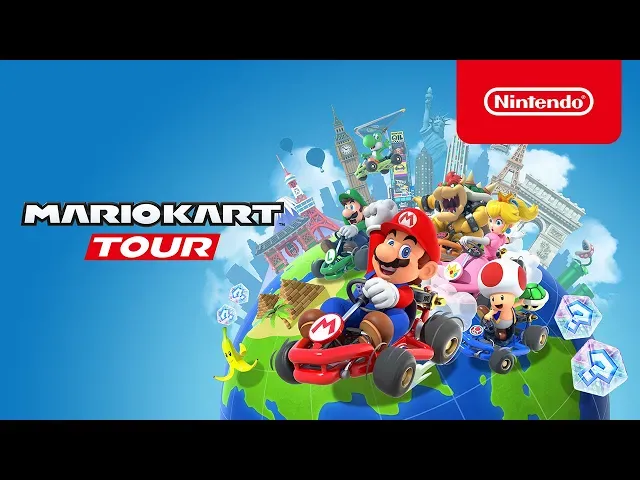
Image: vgtimes.com
Nintendo’s biggest mobile racer is now a closed track
Mario Kart Tour is no longer playable, turning one of Nintendo’s highest-profile mobile experiments into a server-locked app with no offline replacement. Nintendo’s official Mario Kart Tour account said service would end on September 29 at 11:00 p.m. PT, or September 30 at 8:00 a.m. CEST, and Video Games Chronicle reported that after the cutoff players could no longer log into the game’s servers.
That is the central tension of the Mario Kart Tour shutdown: a free-to-play mobile racer tied to one of Nintendo’s most valuable series reportedly earned close to $270 million, yet the live-service version of that game is now closed. Mobilegamer.biz, citing AppMagic estimates, reported lifetime in-app purchase revenue of $268.5 million and more than 276 million downloads since launch. Operation Sports likewise framed the closure around the contrast between that revenue figure and the app becoming completely unplayable for the audience that once downloaded it.
The exact shutdown timestamp is reported with a small discrepancy across sources. Mobilegamer.biz and Tech Insider cite Nintendo’s 11:00 p.m. PT cutoff, while Video Games Chronicle lists 22:59 PT and Operation Sports says 10:59 PT. The practical outcome is not in dispute across the reports: the deadline has passed, the servers are closed, and Mario Kart Tour is no longer a playable Mario Kart game on iOS and Android.
What is still visible, and what is gone
The closure does not mean every trace of the app has vanished. My Nintendo News reported that players can still view past Mario Kart Tour stats, while Mobilegamer.biz said the app remains listed on the App Store and Google Play. Mobilegamer.biz also reported that opening the app after closure returns a message saying service has ended and maintenance is in progress, with the notice running until 01/10/2026.
What players cannot do is the part that made Mario Kart Tour a game rather than an archive. Video Games Chronicle reported that players can no longer log into its servers. My Nintendo News said there is no racing on the courses created specifically for the mobile title. Tech Insider, citing Nintendo’s support messaging and its own confirmation from Nintendo, reported that an offline version is not scheduled for release.
That matters for the practical player question behind searches for “Mario Kart Tour unplayable.” Based on the available reports, there is no offline cup mode to preserve progression, no serverless version of the tour rotation, and no way to keep racing the mobile-only version after the shutdown. Players can look back at stats where available, but the playable loop of earning, upgrading, racing, and competing has ended.
A huge content library now depends on preservation elsewhere
By the end of service, Mario Kart Tour had become a very large Mario Kart catalog. Video Games Chronicle reported that the game closed with 267 playable characters including alternate outfits, 340 karts, 238 gliders, and 546 courses. Operation Sports similarly reported 267 playable characters, over 300 karts, and more than 500 courses.
Those numbers explain why the closure stings beyond normal mobile churn. Mario Kart Tour was not a small promotional app at the end of its life. It had accumulated years of drivers, costumes, kart variants, gliders, tour formats, and course variants. My Nintendo News noted that some of the new courses created for Mario Kart Tour later made their way to Mario Kart 8 Deluxe’s Booster Course Pass, which means parts of the mobile game’s track legacy survive on Switch.
But the sources do not support saying the whole game has been preserved that way. The mobile version’s full progression economy, its tour structure, its character and kart collection, and its remaining course set are no longer playable through Mario Kart Tour itself. From a strategy perspective, that is the risk of designing a racing game around a live-service calendar: the content can be vast, but its survival depends on whether the publisher ports, repackages, or archives it before the server switch is flipped.
The revenue curve tells a sharper story than the lifetime total
The headline Mario Kart Tour revenue number is large, but the reported trend line is the more revealing business signal. Mobilegamer.biz, citing AppMagic estimates, said the game generated $268.5 million for Nintendo across its life. It also reported that downloads peaked at 14.7 million in a single day on September 26, 2019, reached 54 million in the first week, and climbed to 81.8 million after the first month.
The revenue peak also came early. Mobilegamer.biz reported that Mario Kart Tour earned just under $22 million in October 2019. According to the same AppMagic estimates cited by Mobilegamer.biz and Video Games Chronicle, monthly revenue sat around $5 million to $6 million for much of 2020 and 2021, then declined through late 2021 and 2022 to roughly $3 million per month. By July 2026, when Nintendo announced the closure, Mobilegamer.biz and Video Games Chronicle reported that monthly revenue was around $650,000.
Mobilegamer.biz further reported that 39 percent of lifetime in-app purchase revenue came from the United States and 26 percent from Japan. For downloads, it listed the United States at 21 percent, Mexico at 12 percent, Brazil at 9 percent, and Japan at 7 percent. That split suggests Mario Kart Tour reached a broad global audience, but its highest-spending base was concentrated in Nintendo’s strongest mobile revenue markets. The shutdown looks less like a failure to attract players and more like the end of a service whose monetization curve no longer justified continued operation on Nintendo’s terms.
The gacha removal sits at the center of the business read
Mario Kart Tour launched in September 2019 as a free-to-play mobile spin-off with microtransactions, according to Video Games Chronicle and Operation Sports. One of its most controversial monetization systems was the gacha-style pipe used to unlock new characters, which Video Games Chronicle reported was removed in 2022.
Mobilegamer.biz connects that 2022 removal to the revenue story, reporting that Nintendo removed the gacha mechanics in late 2022 and that the in-app purchase decline accelerated afterward. That should be read carefully. The source’s phrasing presents a relationship between the monetization change and falling revenue, but the provided material does not include Nintendo stating that the removal caused the decline, nor does it give Nintendo’s internal reasoning for ending service.
As a live-service economy move, though, the pattern is familiar. A gacha system can drive high spending from a subset of players, but it also creates reputational and regulatory pressure. Removing it can make an economy cleaner for players while weakening the revenue machine that sustains new content and server operations. In Mario Kart Tour’s case, the public data points line up into a tough strategic tradeoff: a friendlier post-gacha economy did not, according to the AppMagic estimates reported by Mobilegamer.biz, return the game to its early revenue levels.
No refunds and no offline mode make this a player trust problem
Tech Insider reported that Nintendo ruled out an offline version and would not refund unused Rubies or lapsed Gold Pass subscriptions. The same report said sales of Rubies stopped on July 7, 2026, and automatic Gold Pass renewals were cancelled that day as part of the wind-down. Tech Insider attributes those details to Nintendo’s support messaging, Nintendo confirmation, and reporting from other outlets it cites.
That refund and offline-mode detail changes how the closure is likely to be remembered by players. A live-service game ending after nearly seven years is not unusual, and Tech Insider notes that server upkeep requires ongoing resources. But from the player side, the purchased currency, paid pass history, unlocked collection, and time investment now sit behind a closed service with only limited stat visibility remaining.
For anyone still checking whether Mario Kart Tour closed temporarily, the available source material points to a permanent end of service rather than a maintenance outage. Nintendo’s public messaging thanked players for their support, the official account posted final MKT Report graphics, and the reported support line says no offline version is scheduled. If you had Rubies left or expected a preserved solo version, the sources provided do not indicate a future path to use that value inside Mario Kart Tour.
Nintendo’s mobile strategy looks narrower after Tour
The Mario Kart Tour closed-service moment also fits a broader pattern in Nintendo mobile games. Operation Sports notes that Nintendo remains selective with its intellectual property on non-Nintendo platforms, with Animal Crossing: Pocket Camp, Pikmin Bloom, Fire Emblem Heroes, and Super Mario Run cited as examples of its remaining mobile presence. It adds that Pokémon GO only partly belongs in that conversation because it is a different arrangement around the Pokémon brand.
Mobilegamer.biz is more direct, writing that Nintendo’s mobile efforts appear to be fading after the company entered the business in 2016 with Super Mario Run. That is an outlet assessment rather than a formal Nintendo strategy statement, but the Mario Kart Tour shutdown gives the argument weight. Nintendo allowed a major Mario Kart mobile product to end without an offline version, despite the game’s reported 276 million downloads and $268.5 million in revenue.
The forward-looking read is that Nintendo may treat mobile less as a permanent home for full franchise experiences and more as a selective channel where only certain models keep earning their place. Mario Kart Tour proved that a Nintendo racing game could reach a giant phone audience. Its closure shows the limit of that reach when revenue declines, monetization changes, and server dependency meet Nintendo’s long-standing preference for controlled platforms. For players, the lesson is simple and uncomfortable: with Nintendo mobile games built around live service, access lasts only as long as the service does.