
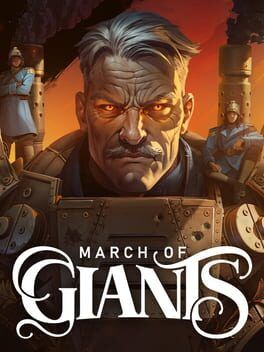

How March of Giants blends RTS-style command, lane-based combat, and a grim early‑1900s war aesthetic, and why Ubisoft bringing back Rainbow Six Siege veterans for the project could reshape its competitive PvP slate.
Ubisoft’s competitive lineup just gained a towering new pillar with March of Giants, a free-to-play 4v4 “war MOBA” it has acquired from Amazon Games along with the game’s entire Montreal development team. Led by Rainbow Six Siege veterans Xavier Marquis and Alex Parizeau, March of Giants looks less like a me-too entry in the lane-brawler space and more like Ubisoft’s attempt to fuse the strategic depth of an RTS with the readability of a traditional MOBA.
A MOBA Fought in the Shadow of the Early 1900s
Where most MOBAs lean on high fantasy or sci-fi, March of Giants plants its boots in a grim alternate version of the early 1900s. The battlefield is a ravaged urban front line: trenches cut through shattered streets, artillery hulks loom over sandbagged chokepoints, and clattering early tanks share space with eerie, magical contraptions.
The world borrows the silhouettes and machinery of World War I and early industrial warfare then twists them with speculative science and magic. That gives March of Giants an identity that reads instantly as “war game” while still freeing it from strict historical constraints. Visually, it also supports clarity. Stark city blocks and trench lines create clean lanes and flanking routes, while period armor, vehicles, and weapons give units and structures strong silhouettes that should remain readable in the chaos of a 4v4 brawl.
Giants as Commanders, Not Just Heroes
The core twist is right in the title. Each player doesn’t just pick a hero; they embody a towering Giant that stalks the battlefield while commanding an army of comparatively tiny soldiers.
Functionally, the Giant fills the role of a MOBA champion, but the design pushes them into a commander fantasy rather than a lone superstar. Your Giant is the focal point of your kit and survivability, but your true power flows through the troops and tactical tools you bring to bear.
Instead of being surrounded solely by allied players and AI creeps with fixed paths and behaviors, the Giant leads a tailored force. You maneuver with your battalion, reinforce critical points, and decide when to commit your bulk to the frontline or pull back to protect vulnerable positions. This framing shifts decision-making away from “How do I outplay this one opponent?” toward “How does my Giant’s presence reshape the entire lane and objective flow?”
RTS DNA: Battleworks and Army Command
What pushes March of Giants into hybrid territory is its RTS-inspired layer of battlefield control. On top of traditional MOBA laning, you place and manage Battleworks, tactical structures that shape the terrain and tempo of a match.
Battleworks behave like a toolbox of war infrastructure. Trenches and bunkers can turn open ground into defensible strongpoints, artillery positions can contest objectives from afar, and armored structures can create safe staging areas for pushes. Instead of dealing only with static towers and jungle camps, you are constantly redrawing the front line as teams trade territory.
Couple that with direct control over your forces and you get a dynamic where macro calls matter as much as micro outplays. Choosing which lane to fortify, where to establish a new strongpoint, when to risk a forward Battleworks placement, and how many resources to commit to defending it all echo RTS base-building and map control.
The most intriguing design space here is how March of Giants makes those macro choices accessible in a 4v4 PvP setting. UI clarity, controls for deploying structures, and how information about enemy Battleworks is communicated will determine whether the RTS layer feels empowering or overwhelming. Given the Siege background of the leads, expect a focus on clear information presentation and strong audiovisual feedback for every fortified position, destroyed emplacement, and contested zone.
Lane-Based Combat with a War-Game Pace
Underneath the RTS skin, March of Giants still runs on a lane-based backbone. Teams of four clash across multiple routes, push waves, and fight for neutral objectives. The lanes, however, seem built to emphasize maneuver warfare over static poking.
Because players can set up new fortifications and redirect troop flows, lanes are less rigid than in classic MOBAs. A “safe” route can quickly become a death corridor after the enemy drops a bunker and artillery nest, while an overextended forward fortification can turn into a liability if your Giant is forced elsewhere.
That lends itself to a pace where map state evolves visibly and permanently over the course of a match. Rather than simply waiting for minion waves to collide, the battlefield is constantly re-sculpted by player choices. In the best case, this could create the kind of round-by-round narrative Siege excels at, where each match feels like its own little war story about a blown push, a desperate last fortification, or a sneaky flanking maneuver supported by freshly built Battleworks.
Why 4v4 Could Matter More Than It Seems
Shifting from the genre-standard 5v5 to 4v4 may look like a small tweak, but it has big ramifications for design and competitive viability.
With smaller teams, individual impact per player naturally increases. Every Giant is a larger share of the team’s overall power budget, which dovetails nicely with the commander fantasy and RTS-layer responsibilities. Fewer players per side also reduce on-screen noise, critical for a game already juggling units, structures, and lane traffic.
From a competitive standpoint, 4v4 can lower the social friction and scheduling hurdles that come with maintaining a dedicated five-stack. It also creates easier paths for duos or trios to find meaningful roles within a squad. For esports broadcasting, four silhouettes per team plus their armies should be easier to track for spectators, potentially making the game more approachable than some of its busier MOBA cousins.
Siege Veterans at the Helm
The leadership behind March of Giants is where the project becomes particularly interesting for Ubisoft’s competitive PvP ambitions. Creative director Xavier Marquis was the original creative director of Rainbow Six Siege, while senior production leader Alex Parizeau previously ran Ubisoft Toronto.
Siege’s early years were defined by a strong core idea that needed long-term iteration to truly shine: asymmetric operators, destructible environments, and a commitment to competitive integrity that gradually transformed it into one of Ubisoft’s flagship live-service games. The same philosophy can underpin March of Giants.
Marquis’ track record suggests a willingness to design around tension, information, and teamwork rather than pure mechanical aim checks. Translating that into a MOBA-RTS hybrid could mean systems that reward scouting enemy Battleworks, denying vision, and orchestrating multi-lane feints rather than just chasing kills. Parizeau’s large-scale production experience should help in the less glamorous but critical areas of pipeline, content cadence, and keeping a live-service team aligned.
Fitting into Ubisoft’s PvP and Live-Service Slate
Ubisoft’s competitive portfolio has been anchored for years by Siege, with other PvP experiments struggling to find the same lasting foothold. March of Giants offers something genuinely distinct from Siege while carrying over some of the same design DNA.
First, it diversifies Ubisoft’s live-service ecosystem into the MOBA space without directly copying genre leaders. The Giants-as-commanders hook, early-1900s war setting, and Battleworks layer all help it sidestep a straight comparison to League of Legends or Dota 2. That uniqueness is crucial if Ubisoft wants to grow a dedicated audience instead of just chasing market share.
Second, it is structurally well-suited to the seasonal model that powers Siege and many of Ubisoft’s other services. New Giants function as the equivalent of operators. Seasonal updates can rework Battleworks options, add new map variants or entire fronts, and rotate neutral objectives that shift the meta. Cosmetic customization of Giants and their armies sits naturally on top of that framework.
Finally, March of Giants arrives backed by a full, integrated team that already shipped a closed alpha and has a roadmap of major updates, including new Giants and expanded competitive modes. That puts it ahead of many greenfield projects that have to find their identity post-launch.
Live-Service Potential: Seasons, Meta Shifts, and Competitive Play
From what Ubisoft and the team have described, March of Giants is being built from the ground up as a live-service title, not a boxed game that later bolted on seasons.
Giant design is inherently modular. New characters can introduce fresh archetypes: siege-focused Giants that specialize in long-range fortification breaking, vanguard Giants built around frontline tanking and area denial, or support-focused Giants that enhance ally Battleworks and buff troops. Each addition offers a clear marketing beat and a balance puzzle for the live team.
Battleworks themselves are another meta lever. Rotating which structures are available in a given season, or introducing new fortification types that reshape common chokepoints, gives designers powerful tools to refresh the game without overwhelming new players with endless hero bloat. Limited-time experimental modes could double down on this by drastically changing construction rules or resource pacing.
On the competitive side, 4v4 squad sizes map comfortably to both ranked ladder play and formal tournaments. Strong replay tools and spectator features will be essential to highlight the tactical dance of Battleworks placement, army movement, and Giant duels. If Ubisoft leans into Siege-style event support, we could see seasonal majors built around new fronts or faction themes, tying narrative beats directly into meta shifts.
The Road Ahead for March of Giants
March of Giants is still in development, but its foundations are clear. It is a hybrid RTS-MOBA set in a bleak, alternate early 1900s war, where each player pilots a towering Giant commander while directing armies and constructing tactical fortifications across evolving lanes.
By bringing the game and its Montreal team under the Ubisoft banner, and by reuniting with Siege veterans Xavier Marquis and Alex Parizeau, Ubisoft is signaling that this is not just a side project. It is a bet that there is room in the crowded PvP space for a slower-burning, more strategic war MOBA that lives and grows for years.
If Ubisoft can pair its live-service infrastructure and marketing muscle with the kind of clear, systemic design that made Siege a long-term success, March of Giants could become the company’s next flagship competitive PvP platform, not just another experiment marching onto the battlefield.