
Our March of Giants preview analysis explains why Ubisoft’s dieselpunk MOBA is catching attention from players wary of League and Dota, based on early hands-on reactions, scale, role clarity, and confirmed playtest details.

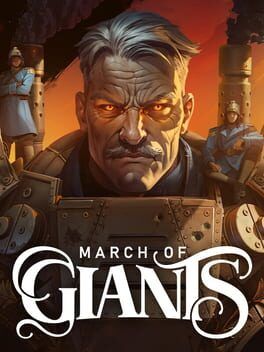
Image: IGDB
Store links: March of Giants on Steam
Ubisoft is testing a MOBA pitch aimed beyond the usual MOBA faithful
Ubisoft has confirmed that March of Giants will run a Pioneer Playtest on Steam from October 7 to October 18, with Early Access planned for summer 2027. That timing is the concrete news around a game that is already generating a specific kind of attention: previewers are not simply saying Ubisoft has another lane-pushing arena game. They are saying this 4v4 battlefield MOBA may reach players who bounced off League of Legends and Dota 2.
That is a risky lane to choose. The MOBA market is defined by entrenched habits, deep mechanical literacy, and players who often measure new entries against thousands of hours spent in two dominant games. IGN’s preview framed March of Giants as a rare attempt to challenge a rigid genre without sanding off its hardcore elements, noting that the build it played still includes separate skill leveling, complex itemization, and last hitting. PCGamesN similarly described Ubisoft Montreal’s game as a MOBA/RTS hybrid that goes back toward the genre’s real-time strategy roots rather than chasing a simplified arena brawler model.
The tension is clear. March of Giants is being positioned as approachable enough to tempt MOBA avoiders, but Ubisoft is not presenting it as a stripped-down alternative. Its hook is scale, battlefield manipulation, and clearer strategic purpose. The question for this March of Giants preview cycle is whether those changes make the genre easier to read, or simply add another layer of systems to a category already famous for overload.
The giant fantasy makes the map easier to understand at a glance
The strongest reported difference is visual and structural: March of Giants turns the champion fantasy into a literal command role. Ubisoft’s announcement describes players as Giants created from dreams and nightmares, fighting on a gritty World War 1-inspired battlefield. IGN reported that each player is a towering giant who acts as both champion and commander, shaping a three-lane warfront with fortifications and troop movements. CGMagazine likewise described the Giants as massive magical creatures with distinct abilities, split between ranged and melee roles.
For players who usually avoid MOBAs, that scale matters because it makes intent legible. In League or Dota, the difference between a roaming support, a scaling carry, and a lane bully can be obvious to veterans but opaque to newcomers until the damage numbers arrive. March of Giants appears to externalize more of that intent. A giant is physically dominant, troops are visible, and Battleworks create clear claims on space. Ubisoft says Battleworks can double down on defense, amplify an attack charge, or call in reinforcements. IGN reported examples including tanks, cavalry charges, and airship soldier drops.
This is where the dieselpunk MOBA label does useful work. The World War 1-style setting is not cosmetic window dressing in the previews. But Why Tho wrote that the setting reshapes how the genre plays because Giants can recruit soldiers rather than simply letting lane fodder collide forever. PCGamesN pointed to traditional three-lane structure, defensive outposts, bastions, and objectives such as Bulldozers and an Abomination blimp that functions as March of Giants’ Baron Nashor-style objective. The result, at least in preview builds, sounds like a MOBA whose map language is closer to a front line than a chessboard.
Role clarity comes from command decisions, not from removing depth
The most interesting design signal is that March of Giants seems to clarify player responsibility without erasing familiar MOBA pressure. Ubisoft says battalions can be commanded to attack enemies, gather materials, or claim temporary team buffs. IGN reported that requisition works as money for upgrading a Giant’s body, while supplies become Battleworks that can help push a lane or hold a failing one. But Why Tho noted that each Giant can command a maximum number of soldiers, and that capacity can increase over a 20 to 30 minute match.
That gives each player a visible job beyond winning trades in lane. If a team is losing ground, the answer is not only “play better mechanically.” It can be redirecting soldiers, committing supplies to defense, or timing a push around battlefield construction. For a strategy-minded player, that is the appealing part of the March of Giants gameplay pitch. The game appears to move some of the genre’s hidden macro burden into tangible decisions that teammates and opponents can read.
The previews also suggest Ubisoft is not relying on novelty alone. PCGamesN’s hands-on piece compared Trench Maw’s burrow-and-emerge damage to League of Legends’ Rek’Sai and its defensive shell to ideas familiar from Rammus and Sion, while stressing that March of Giants also has unique abilities tied to its own systems. That familiarity can be an asset. A skeptical MOBA player does not need every ability to be alien. A clearer ramp may be better: recognizable kit shapes, then new strategic expression through troops, materials, and Battleworks.
Creative director Xavier Marquis told CGMagazine that after Rainbow Six Siege he began looking for a “fourth challenge” and became focused on how a new MOBA could exist in a space many others had tried to enter. He said the World War 1 idea became a way to think beyond the classical point of view while preserving the balanced collision of units in the middle of the map. That design statement lines up with what previewers are reporting: March of Giants is not discarding the lane economy, it is trying to make that economy feel like a battlefield plan.
Shorter 4v4 matches could reduce friction, if the economy stays readable
IGN reported that March of Giants matches aim to take 30 minutes or less. But Why Tho described matches in the 20 to 30 minute range. Ubisoft identifies the game as a 4v4 MOBA, and multiple previews confirm that format. Those two numbers, four players per team and a roughly half-hour target, are important for the audience Ubisoft seems to be courting.
A smaller team size can make accountability sharper. In a 5v5 MOBA, one player can feel lost inside a role they do not understand, while a veteran can feel trapped by four strangers with conflicting ideas about tempo. A 4v4 format does not automatically solve that, but it can make each player’s strategic contribution easier to trace. If one Giant pulls soldiers away to stabilize a lane, commits supplies to a defensive Battlework, or joins a contest around a major objective, the strategic effect should be easier to see.
The risk is economy clutter. March of Giants has experience, requisition, supplies, soldiers, Giant upgrades, temporary buffs, lane structures, and major neutral objectives in the preview material. That is a lot of levers for a game hoping to attract people who may already find MOBAs intimidating. The encouraging sign from early coverage is that previewers are describing those systems as purposeful rather than messy. IGN said strategies are plentiful and that there are multiple options for achieving victory. CGMagazine called the added troops and RTS elements a welcome shake-up. PCGamesN wrote that its hands-on time eased concerns about the MOBA/RTS mashup.
From a long-term balance perspective, this is the system to watch. If soldiers and Battleworks create too many snowball tools, early lane losses could become harder to recover from than in established MOBAs. If they are too weak, the battlefield fantasy collapses back into standard hero trading. Ubisoft’s playtest messaging says player feedback will help shape the future of the game, so the October test should be valuable less as a launch verdict and more as a first public stress test of tempo, comeback mechanics, and role comprehension.
Early previews are positive, but they are reacting to controlled hands-on builds
The preview consensus is unusually aligned, though readers should keep the context in view. PCGamesN said its time at Ubisoft Montreal left it impressed and eased fears about the hybrid design. IGN called the in-development build surprisingly promising and said March of Giants shakes up the genre in a compelling way. CGMagazine wrote that after a full day at Ubisoft Montréal playing against journalists, creators, and developers, the game felt genuinely fun and potentially special if the team executes. But Why Tho argued that the developers are using MOBA history to build something unique. MMORPG’s preview headline went furthest, calling March of Giants a MOBA for players who do not like MOBAs.
Those are meaningful early reactions, but they are still preview reactions. None of the supplied sources support claims about launch balance, monetization specifics, ranked structure, esports plans, full roster size, system requirements, controller support, or console versions. Ubisoft’s announcement points players to Steam for the Pioneer Playtest, and the provided material only confirms that path. PCGamesN describes March of Giants as free-to-play, while Ubisoft’s article focuses on Steam access, Pioneer rewards, and Early Access timing.
The reward structure is confirmed in Ubisoft’s post. Players can earn Pioneer Status by reaching 1,000 points through completed PvP matches, with wins granting 100 points and losses granting 50. Ubisoft says Pioneer Status unlocks rewards including a profile badge, an exclusive permanent Giant unlock starting October 12, and a free Premium Early Access pack. Ubisoft also says players can receive a 20% point boost by watching one hour of a March of Giants Twitch stream, or get a one-time booster code through the game’s Discord, with account linking required for Twitch rewards.
That reward design tells us something about Ubisoft’s business and community strategy. The studio wants match volume, streams, Discord participation, and creator activity before Early Access. That is sensible for a competitive game, but it also means October impressions will be shaped by a highly engaged test audience rather than a normal launch population.
The real test is whether clarity survives the live player meta
March of Giants Ubisoft coverage is drawing attention because the game’s promise is specific. It is not simply another publisher entering a famous genre. It is a large studio using a World War 1-inspired battlefield, giant commanders, troop control, and buildable war assets to make MOBA decision-making feel more physical. For people who dislike League and Dota because they feel abstract, punishing, or dependent on invisible knowledge, that is a stronger pitch than “same genre, new heroes.”
Still, the live meta will decide whether the idea holds. In a competitive game with itemization, last hitting, skill leveling, lane pressure, troops, and battlefield construction, players will quickly discover optimal openings, safest Giant picks, most efficient supply use, and objective timings. If those answers become rigid, March of Giants could recreate the same entry barrier it is trying to soften. If Ubisoft can keep multiple strategies viable, the 4v4 format and command layer could give the game a distinct strategic identity.
For now, the practical guidance is straightforward. Players in North America and select European countries can request access through the March of Giants Steam page for the October 7 to October 18 Pioneer Playtest, according to Ubisoft. Closed Alpha participants from September 2025 are already invited, and Ubisoft says streaming and recording are allowed during the test. Early Access is scheduled for summer 2027, so anyone curious about the dieselpunk MOBA pitch should treat this playtest as an early systems read rather than a final product judgment.
The reason March of Giants is cutting through preview noise is that its best ideas are easy to explain: fewer players, bigger avatars, visible armies, clearer front lines, and strategic tools that change the map. That does not guarantee Ubisoft has solved the MOBA problem. It does explain why people who normally avoid the genre are watching.