
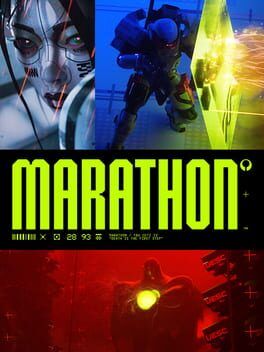

Bungie’s latest trailer and March 5 release date for Marathon nail down its extraction structure, PvP focus, deep-cut connections to the 1994 original, and a live-service plan telegraphed by its pricing, editions, and Sony’s accessory push.
Bungie has finally stopped teasing and picked a day for Tau Ceti IV to open its gates. Marathon, the studio’s long-gestating extraction shooter, will launch on March 5 on PS5, Xbox Series X|S, and PC via Steam, with preorders live now. Alongside that date, Bungie dropped the most revealing look yet at how Marathon actually plays, how hard it leans into PvP, and how this reboot quietly talks to the 1994 classic sitting in the background.
On top of the game itself, Sony and Bungie are wrapping the launch in hardware and cosmetic extras, with a Marathon-themed DualSense, a branded Pulse Elite headset, and a PS5 theme helping to frame the game as a long-term platform rather than a one-and-done shooter.
The March 5 date and what it says about Bungie’s confidence
Marathon’s date has been floating around for a while. An Xbox Store listing briefly jumped the gun with a March 5 slot, and multiple outlets flagged the leak before Bungie confirmed it through the new story and gameplay trailer. That launch comes after a rocky road that included an earlier target in September 2025, poor alpha feedback, and what was effectively an indefinite delay while the team reworked core systems.
Planting a specific day now, across all three platforms, is Bungie’s statement that it believes the reworked extraction loop is ready. It also arrives late in Sony’s fiscal year, fitting squarely into the company’s live-service ambitions without competing directly with its usual fall slate. Everything about the date and the new trailer reads like a reset: Destiny’s house is still in flux, but Marathon is no longer in show-and-tell mode. This is the game Bungie intends to ship.
What the new trailer finally confirms about extraction
Earlier teasers made Marathon feel conceptually cool but mechanically slippery. The latest trailer, backed up by Bungie’s press materials, finally puts most of the structure into focus.
Runs are built around Tau Ceti IV as a hostile, semi-persistent playspace. You drop as a bio‑cybernetic Runner into zones filled with AI security forces, environmental hazards, and other player squads who are chasing the same objectives you are. The footage shows Runners moving through neon-lit industrial corridors, ruined exteriors on the colony surface, and more abstract interiors that evoke Bungie’s older Marathon terminals, all threaded together by insertion and extraction points.
The core extraction rhythm looks familiar if you’ve spent time in Tarkov-style games. You load in with a kit, push toward marked high-value areas, hoover up materiel and data, then fight your way toward a safe exit before the window closes. The trailer is loaded with quick cuts of Runners scrambling toward evac platforms under fire, grappling across gaps to beat collapsing geometry, and setting up last-stand defenses with deployable cover while their teammates sprint for the exit.
Several mechanics stand out as pillars for that loop. The grappling hook appears almost omnipresent, letting Runners swing through open spaces, zip vertically, and even snap to seemingly arbitrary points in midair. Combined with the exaggerated slide and mantle animations, Marathon’s mobility looks tuned for fast repositioning rather than the slower, methodical creep of more hardcore extraction games.
Then there is the massive deployable shield, which the trailer shows snapped down in tight choke points and on outward‑facing ledges. It hints at a meta where extraction points become dynamic capture-and-hold scenarios. One teammate walls off an angle, another covers flanks, while a third interacts with the evac device. You can see Bungie’s Destiny-era encounter philosophy bleeding through here, translated into short, repeatable runs rather than raids.
Crucially, the trailer never really lingers on PvE enemies. Security drones and gun-toting guards are there, but always as background noise to a fight that is primarily about other Runners. It is extraction with PvE seasoning, not the other way around.
A PvP-first shooter wearing extraction clothes
Bungie has described Marathon as a PvP-focused extraction shooter from the start, and the new footage doubles down on that. Almost every shot is about Runners colliding. You see squads ambushing each other at vertical choke points, crossfires set up between two rooftops, and a Runner diving through a glass pane under suppressive fire from a rival team.
There are a few clear takeaways here about how Marathon wants to differentiate itself in a crowded genre.
First, the gunplay looks closer to Destiny than to Tarkov. Weapon feedback in the trailer is snappy and legible, with clean hit indicators and relatively low recoil. Time to kill appears short enough to punish bad positioning, but not so brutal that a single errant peek erases an entire kit in milliseconds. This is closer to an arena shooter with persistent stakes than a mil-sim experiment in suffering.
Second, combat arenas look designed for three‑way collisions. The framing of fights often shows a third squad entering late or creating a crossfire, rather than the binary push‑and‑pull you see in some extraction games that funnel everyone into one lane. Expect a lot of unstable stalemates, where taking a fight too loudly simply invites another team to clean up.
Third, your Runner is portrayed as a customizable identity rather than a disposable PMC shell. Bungie leans on faction iconography, bold color blocking on armor, and distinct silhouettes that can be read in a split second. That makes sense for a game where killcams and post‑match vignettes are marketing themselves as moments of personality. It also teases where cosmetic monetization is likely to live.
Marathon might be structurally extraction, but this trailer sells it first as a competitive PvP playground, with extraction serving as the stakes and framing device.
How this Marathon speaks to the 1994 original
Bungie is not making a one‑to‑one remake of its 1994 Mac shooter. This Marathon is a kind of soft reboot that shares a universe, concepts, and tone rather than level layouts and linear campaigns.
Fans of the original trilogy will recognize Tau Ceti IV as more than just a random sci‑fi name. The lost colony setting, corporate meddling, and the idea of Runners pulling secrets out of a broken world all echo Marathon’s old obsession with humanity’s messy expansion into space.
The new trailer quietly layers in those callbacks. Faction logos and typography feel like modernized riffs on the old UI. Some equipment shots and environmental details bear a strong resemblance to the MIDA motifs that already play on Marathon nostalgia inside Destiny. Even the way terminals and holographic displays are framed hints that in‑run storytelling will happen at discrete points where your squad takes a breather, rather than through cutscenes.
There is also a more philosophical connection. The original Marathon built a cult following on the strength of its fragmented, computer‑terminal storytelling and its sense that you were one small actor inside a much larger cosmic chess game. A pure extraction shooter could easily jettison that mood. Bungie’s new trailer pushes back by centering a named character, Gantry, as a faction agent who drip‑feeds you context and motivations. That structure mirrors the original’s AI monologues and logs, reimagined for a multiplayer space.
In short, the reboot is not trying to recreate Doom‑era corridor runs. It is chasing the feeling of being a cog in a wider, incomprehensible conflict, now expressed through run-based PvPvE sessions that slowly reveal what is really happening on Tau Ceti IV.
Pricing, editions, and what they reveal about Bungie’s live‑service plan
If the trailer spells out what kind of game Marathon wants to be, the pricing and edition structure explain how Bungie intends to support it.
The standard edition lands at a mid‑tier price point rather than full $70 blockbuster territory. That sits in the same neighborhood as other live‑service launches that want a large paid‑in player base without the sticker shock that can gut early adoption. It is effectively an entry fee for a service game that expects to make its money over time.
Above that sits a deluxe tier that bundles in early access to cosmetics, a battle‑pass‑style seasonal track, and additional premium currency. Bungie is not spelling out every detail yet, but the pattern is familiar from Destiny expansions and other modern multiplayer games. Pay a little more up front, and you walk in with enough currency and unlocks to look distinctive from day one.
The most telling piece is the oversized Collector’s Edition sold directly through the Bungie Store. It pairs the game with an elaborate Thief Runner shell statue that lights up, a WEAVEworm miniature, embroidered patches, art cards, and display packaging that turns the whole thing into a shelf piece. That is pure fan‑service for players Bungie expects to stick around for years. You do not ship expensive physical collectibles for a game you plan to sunset early.
Taken together, these tiers signal a long runway. A reasonably priced base game draws in competitive players. A deluxe track nudges those players toward ongoing investment in cosmetics and seasonal content. The collector’s tier plants a flag for a core community that Bungie hopes will become the new Destiny‑style backbone for its studio.
Sony and Bungie’s accessory play: building a platform, not a one‑off
Sony’s hardware tie‑ins underline that Marathon is a pillar of its broader live‑service strategy. A limited‑edition PS5 DualSense controller and a Marathon‑branded Pulse Elite headset are launching alongside the game, wrapped in the same vivid greens, purples, and hard geometric lines that dominate the game’s marketing.
Beyond the obvious fandom angle, these accessories serve two purposes. First, they lock Marathon’s visual identity into the PlayStation ecosystem. When a player’s controller and headset are literally wearing the game’s colors, Marathon stops being just another tile on a dashboard and starts to feel like part of the console’s personality.
Second, and more practically, they act as merchandising proof of life for partners and investors who want to see that Sony is serious about this IP. You do not spin up custom hardware, packaging, and retail displays for a throwaway experiment. The PS5 theme that ties this all together is more cosmetic, but it completes the picture of Marathon as a game you live in for a season or three, not something you uninstall after a weekend.
It also opens the door to deeper integration. If the DualSense’s haptics and adaptive triggers are tuned specifically for Marathon’s weapons and movement, the controller itself becomes a kind of subtle upsell for the game. Similarly, a themed Pulse Elite profile can be marketed as the way to “properly” hear Tau Ceti IV.
Extraction, but with Bungie’s long game in mind
After years of concept art, ARGs, leaks, and delays, the latest Marathon trailer finally answers the basic questions. It is a fast‑moving, PvP‑first extraction shooter set in a reimagined corner of Bungie’s oldest universe, aiming for a March 5 launch across PC and current‑gen consoles. The gunplay looks like Destiny’s snappier cousin, the mobility is aggressive, and extraction points are framed as explosive PvPvE flashpoints rather than slow, paranoid crawls.
Just as important is what surrounds the game. A mid‑tier price, a stacked deluxe edition, a lavish collector’s bundle, and a small fleet of Sony hardware tie‑ins all point to a studio that wants Marathon to be a platform that lives for years. Whether players embrace that vision will come down to how satisfying the runs feel a month in, not just how slick the trailer looks today, but Bungie is finally showing its hand on what kind of future it is building around Tau Ceti IV.