
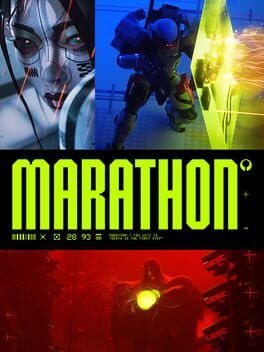
Bungie’s PvPvE extraction shooter Marathon finally has a March 5 release date. Here’s what the new trailer reveals, how Sony’s limited edition DualSense, Pulse Elite headset, PS5 theme, and Collector’s Edition position it as a live-service tentpole, and why the star-studded voice cast hints at a more narrative-driven take on the genre.
A firm date for Bungie’s return to Tau Ceti IV
After a turbulent development cycle and a lengthy delay, Bungie’s PvPvE extraction shooter Marathon is finally locked in for March 5, 2026 on PS5, Xbox Series X|S, and PC via Steam. Priced at a mid‑tier $39.99 and launching in Standard, Deluxe, and Collector’s Editions, the studio’s first major non‑Destiny release in more than a decade is clearly being framed as one of Sony’s key live‑service bets for this hardware generation.
The timing of the announcement tells its own story. Bungie rolled out a fresh trailer, a full breakdown of editions and pre‑order bonuses, and a coordinated wave of PlayStation‑branded hardware all at once. This is not a quiet reboot after a rocky reveal but a confident re‑debut intended to reset expectations around what Marathon actually is: a tightly focused, PvPvE extraction shooter with a heavy emphasis on squad play, persistent progression, and a distinct sci‑fi identity.
What the new trailer actually shows
The new trailer finally bridges the gap between Marathon’s stylized CG teasers and what players will be doing minute to minute on Tau Ceti IV. It leans into the core extraction loop. Squads of three Runners drop into sprawling zones riddled with AI‑controlled threats and rival teams, scramble for high‑value data artifacts, battle collapsing environmental hazards, then race toward extraction points as the window closes.
There is a clear focus on information and positioning rather than pure twitch gunplay. HUD callouts, scanning tools, and ping systems are foregrounded, underlining that Marathon is built around coordinated teams who can rapidly parse chaotic battlefield data. Loadouts showcased in the trailer highlight a mix of kinetic and energy weapons, plus gadgets that disrupt enemy vision, reveal hidden players, or manipulate traversal routes.
Visually, Bungie is positioning Marathon as a stark contrast to Destiny’s baroque space fantasy. The art direction is clean and high‑contrast, all sharp silhouettes and neon accents against brutalist industrial structures. The trailer lingers on the distinct runner “shells,” cybernetic exosuits that function as both gameplay archetypes and customizable identity anchors in the live‑service economy.
Most importantly, the trailer emphasizes high‑stakes extraction. Several sequences end not with triumphant victory poses but desperate escapes, last‑second revives at evac points, and squads wiped while trying to carry too much loot. The message is that Marathon’s drama comes from risk management and emergent encounters as much as from raw gun skill.
March 5 launch structure: editions and live‑service framing
Bungie and Sony are structuring Marathon’s launch to look like a long‑running platform from day one. The Standard Edition provides core access at $39.99. The Deluxe Edition layers on cosmetic bundles like the Midnight Decay weapon and Runner shell sets plus additional rewards that give early adopters a distinct look in the social space without directly selling power.
The Collector’s Edition, sold through PlayStation Direct and select retailers, doubles down on Marathon as a tentpole brand rather than a one‑off experiment. Built around a detailed 1/6 scale Thief Runner statue and a miniature Sekiguchi WEAVEworm, along with an embroidered patch, art postcards, and unique in‑game cosmetics, it positions Marathon’s world as something fans are expected to invest in beyond the match‑to‑match loop. For a competitive extraction shooter, that kind of physical merch focus implies confidence that its fiction and iconography can sustain a fandom over multiple seasons.
The coordinated roll‑out of pre‑order incentives, separate editions, and cross‑platform release also answers a lingering question from the game’s earlier, more muted reveal. Marathon is not being treated as a niche experiment or a quick live‑service fill‑in. It is being seated alongside Bungie’s prior flagship work as a parallel pillar, especially inside Sony’s portfolio of service‑heavy titles.
A Marathon hardware ecosystem on PS5
Where things really crystallize is around Sony’s hardware story. On PS5, Marathon is not just a piece of software on a dashboard, it is becoming an aesthetic that wraps around the entire console experience.
Sony’s Limited Edition Marathon DualSense controller is the centerpiece. Launching alongside the game on March 5 for $84.99 / €84.99 / £74.99, it swaps the usual PlayStation white for a sleek Marathon‑themed shell that mirrors the game’s neon‑inflected, high‑contrast visual identity. Clean geometric lines, iconography pulled from Runner branding, and splashes of vivid color are positioned to stand out in hand and on a desk without tipping into cluttered, logo‑saturated design.
Pre‑orders for the controller open January 29 through PlayStation Direct and participating retailers, with Sony explicitly calling out limited quantities worldwide. Scarcity plus day‑and‑date timing is a notable signal. Sony typically reserves this level of custom hardware treatment for proven behemoths like God of War or Spider‑Man. Granting the same treatment to a brand‑new, unproven extraction shooter telegraphs a belief that Marathon can function as a long‑term engagement engine for the PS5 hardware base.
Parallel to the controller is the Pulse Elite wireless headset Marathon Limited Edition. This is not a minor color swap, but a fully matched piece of audio hardware that carries the same design language. Sony is leaning on PlayStation Link’s low‑latency wireless tech and the headset’s spatial audio to argue that reading positional cues, distant gunfire, and enemy movement is as much a part of Marathon’s mastery curve as aim or map knowledge. Bundling the game’s identity into a headset implies that Sony views dedicated audio as one of the core “try hard” accessories for serious Runners.
Layered on top of this is the ability to theme the PS5 console itself around Marathon. Official PS5 console covers in the same palette and motifs as the controller let players create a matched tower of Marathon branding: console, pad, and headset all visually aligned with Bungie’s new IP. Even the system UI can be skinned with a Marathon theme, turning boot‑up into a soft entry into Tau Ceti’s world before a match even begins.
From a platform‑holder perspective, this is a bet on brand stickiness. Sony wants Marathon to be a game that lives at the center of a player’s entertainment setup, not something that gets rotated in and out with seasonal content. The investment in a full hardware ecosystem suggests an expectation of years of seasonal updates, battle passes, and expansions, with Marathon sitting alongside Destiny 2 as part of Sony’s live‑service backbone.
Collector’s Edition as a signal of narrative and world‑building
While extraction shooters are typically sold on tension and replayability, the Marathon Collector’s Edition underlines that Bungie still sees deep lore and world‑building as a crucial differentiator. The Thief Runner statue is not just generic sci‑fi armor; it is a specific shell with a distinct silhouette that matches what we see in the trailer. The included Sekiguchi WEAVEworm collectible references in‑universe tech that underpins the game’s data‑focused objectives.
Tying physical items to in‑world concepts hints that Bungie wants players to care about more than loadout efficiency. It suggests a multiseason narrative arc, with Runners, factions, and corporate entities on Tau Ceti IV evolving over time. The Collector’s Edition cosmetics and patches are likely to serve as early status symbols, the kind of visual shorthand Destiny players grew used to for indicating veteran status or allegiance.
What Sony’s strategy tells us about expectations
Taken together, the new trailer, the locked‑in release date, and the PS5 hardware push paint a clear picture of how Sony views Marathon. This is not a modest side project designed to quietly test extraction shooter waters. It is a would‑be tentpole live‑service, aimed at filling a genre slot Sony has not fully owned yet and broadening Bungie’s reach beyond Destiny’s entrenched audience.
The mid‑tier price point is particularly interesting. It positions Marathon as more substantial than a free‑to‑play experiment but cheaper than a premium boxed campaign shooter. That framing invites players to treat it as an ongoing hobby title, closer to a competitive platform like Rainbow Six Siege or Escape From Tarkov than to a one‑and‑done story release. The hardware tie‑ins then act as physical anchors, encouraging players to commit to Marathon as a long‑term part of their setup.
The level of coordination between Bungie press beats, PlayStation Blog features, and third‑party coverage also reflects a desire to rewrite the narrative after the game’s early missteps and negative alpha feedback. By showing more grounded gameplay in the new trailer and wrapping it in the prestige of limited‑edition Sony hardware, both companies are trying to recast Marathon as a confident, fully realized project ready for sustained support.
Sidebar: A star‑studded cast in a PvPvE world
Alongside the release date and hardware blitz, Bungie quietly dropped one of the most telling pieces of information about Marathon’s priorities: a stacked English voice cast of more than 30 actors at launch, many of them award‑winning veterans from recent narrative‑driven hits.
The roster pulls heavily from Baldur’s Gate 3 and Clair Obscur: Expedition 33, two games celebrated for character‑first storytelling. Jennifer English, Ben Starr, and Tracy Wiles bring their Clair Obscur pedigree, while Neil Newbon and Samantha Béart arrive fresh off fan‑favorite turns as Astarion and Karlach in BG3. They are joined by recognizable voices like Roger Clark, Dave Fennoy, Elias Toufexis, Erin Yvette, Scott Whyte, and Jason Spisak.
For a PvPvE extraction shooter, that level of casting is not standard. It suggests that Bungie is planning more than disposable radio barks to fill the space between firefights. Fully localized dialogue across supported languages and a cast of this caliber imply ongoing character arcs, faction leaders with distinct personalities, and seasonal story beats delivered through in‑game cinematics, social spaces, and evolving mission briefings.
In practical terms, that could mean persistent rival NPC crews who taunt or assist players across runs, corporate handlers whose relationships with your squad shift across seasons, and mysterious AI or alien presences that recontextualize the stakes of each drop. If Marathon can successfully graft that level of character work onto its high‑tension extraction loop, it could carve out a unique niche in a genre that often treats story as disposable dressing.
As March 5 approaches, the question is less whether Bungie can ship a mechanically solid shooter and more whether it can sustain the kind of world‑driven, character‑heavy live‑service that its casting choices and collector‑grade merch suggest. Sony’s hardware blitz indicates it is betting heavily that the answer is yes.