
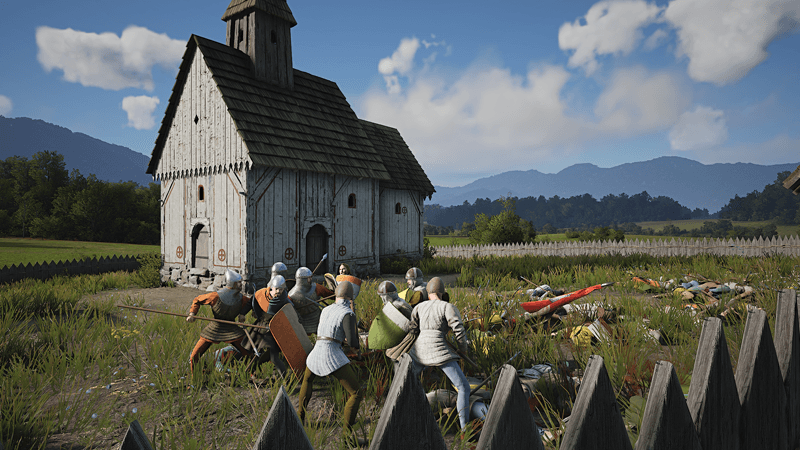

Manor Lords Update 7 moves months of beta work to the live build, focusing on pathfinding, squad control, performance, logistics, and economy balance rather than new content.
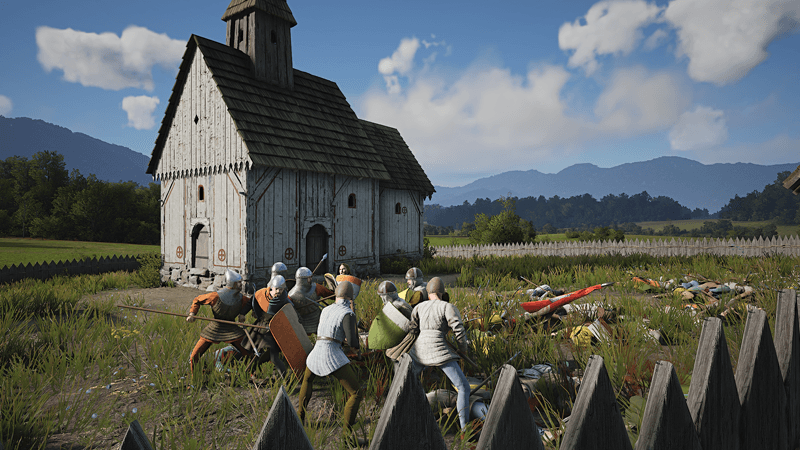
Image: patchbot.io
Update 7 brings the beta branch to the live game
Manor Lords Update 7 is now live on the main branch, moving versions 0.8.065 through 0.8.090 out of beta and into the stable build, according to the official Steam patch notes mirrored on Reddit and PatchBot. The headline change is technical rather than content driven: Slavic Magic has shipped a broad pathfinding, collision, squad movement, UI, control, balance, and bug-fix pass that has been tested across several beta updates.
That creates the central tension for returning players. If you left Manor Lords waiting for new regions, deeper trade, town-wall systems, or fresh strategic layers, this update is not framed by the developer as that content drop. PCGamesN reports that lead developer Greg Styczeń recently said some planned content drops and the trade rework were paused briefly so the team could examine systems that had “quietly degraded over time.” In the Update 7 post, as relayed by PatchBot, the developer tells players the beta is ready for the main branch and adds: “Next stop: More content.”
For a strategy city builder, however, a technical patch can be strategically important if it changes how reliably the simulation executes player plans. Manor Lords has always asked players to think in terms of distance, labor time, markets, military positioning, and seasonal bottlenecks. Update 7 is aimed at the machinery underneath those decisions. The question is whether smoother machinery gives returning players a better campaign loop now, or simply clears the runway for later additions.
Pathfinding is the real strategic change
The official Manor Lords patch notes list “major updates to the pathfinding system to reduce time spent waiting for a path” as the first major change. That is the most important confirmed item in Update 7 because almost every economic and military outcome in Manor Lords depends on a villager, ox, cart, worker, or soldier getting from one place to another without wasting time.
The new “island” system is designed to reject impossible routes between enclosed zones quickly. The patch notes give examples such as Manor Castles and riversides without a bridge connection. In practical strategy terms, that should reduce cases where the simulation spends time evaluating routes that cannot actually work. PCGamesN describes this as a response to pathfinding inefficiencies that had gradually stacked up, while Simulation Daily characterizes Update 7 as one of the game’s largest technical overhauls to date.
There is also a confirmed refactor to character locomotion and collision using substeps, with the stated goal of reducing differences between game speeds. That matters for planning because a city builder becomes harder to read when behavior changes too much between normal speed and fast-forward. Simulation Daily notes that the maximum game speed is now capped at 8x because of increased simulation precision. That is a tradeoff: players lose some raw fast-forward ceiling, but the patch is clearly trying to make the simulation more consistent.
The cautious read is that Update 7 should improve the reliability of existing towns rather than transform town design. Better path rejection, collision handling, and group pathfinding should make dense settlements, awkward river layouts, and castle-adjacent zones less prone to invisible labor loss. It does not mean every logistics issue is solved, and the sources do not provide benchmark numbers, but the patch targets the exact layer where many city-building inefficiencies hide.
Military control now reacts to terrain
Update 7 also changes how squads respond to movement commands. The official notes say short right-click move orders now choose formations based on the destination: a wide line in open fields, three columns on roads, and a scattered formation when ordered over a building area. Players who prefer the previous behavior can hold Alt while issuing orders to keep relative squad offsets.
This is a meaningful strategy change because Manor Lords’ combat sits on top of the same spatial logic as its economy. Roads, town footprints, and chokepoints are no longer merely visual or logistical concerns when the command system itself interprets terrain. The patch notes also say squads try to align their combat formation to road shape when fighting on roads, and straight army paths are now saved and restored when loading. Multi-waypoint paths using Ctrl plus right-click drag are not currently supported for that save restoration, according to the notes.
For returning players, the immediate adjustment is muscle memory. If you used squad offsets to preserve a custom formation, the default behavior has changed. The Alt modifier is now the bridge back to the older style. The upside is that the game should produce more sensible formations from quick orders in common situations, especially when moving from open ground into roads or through built-up areas.
This does not read like a combat rebalance in the sense of new units or altered army composition. It is a control and pathing rebalance. The strategic effect will likely be felt most during raids, defensive scrambles, and road fights where mispositioning can turn a manageable encounter into a village fire drill.
Economy tweaks hit ale, labor, raiding, and household behavior
The Manor Lords changes in Update 7 also reach into the settlement economy. PCGamesN highlights that level-one families no longer consume ale, a small-sounding change with real implications for early settlement pressure. Simulation Daily also reports a related balance change: ale production has been reduced from two units to one. Taken together, the patch appears to soften early ale demand while tightening production output, shifting the stress point rather than simply making tavern supply easier.
That is a classic economy-patch move. Removing ale consumption from level-one families gives new or recovering towns more breathing room before the tavern chain becomes a full obligation. Reducing ale output, however, can make higher-tier demand harder to satisfy later if the player expands too aggressively. Returning players should pay attention to whether their old upgrade timing still works, especially in towns that were built around surplus ale throughput.
Simulation Daily reports several labor and logistics changes from the update: unemployed family members now help with chores, workers make better use of handcarts, and task queuing has been improved to reduce congestion at workplaces and storage buildings. Those are confirmed only through that outlet’s account of the patch notes in the provided material, but they fit the broader theme of Update 7: fewer idle or blocked moments in the labor chain.
Raider behavior has also been adjusted, according to Simulation Daily. Raiders now fill their inventories before retreating, typically after stealing about half of a settlement’s available loot or burning about 40 percent of it. That suggests raids may feel less arbitrary in their endpoint, although the provided sources do not establish whether raids are easier or harder overall. The strategic lesson is to treat storage placement, defense timing, and loot exposure as part of the same risk model.
Quality-of-life work supports the loop without replacing new content
The official patch notes list an overhauled Game Setup screen aesthetic and added gamepad controls among the major changes. Simulation Daily adds that loading screens, interface animations, and tooltips have also been refreshed. These changes are not the reason lapsed players come back to a strategy city builder, but they reduce friction around starting, reading, and controlling a run.
There are also smaller fixes with outsized effects. PCGamesN notes that families will no longer become homeless when their house catches fire, only when it burns down. That distinction matters in a simulation where one event can cascade into labor disruption, approval problems, and recovery costs. The official notes also say buildings that have ended up inside the Manor area can now be selected, while stressing this is a temporary change until town walls are ready and that normal town buildings are still not intended to be placed inside the castle area.
That caveat is important. Update 7 contains a workaround for a current problem, not a final castle-building vision. The patch notes explicitly frame castles as intended to receive more of their own modules later in development. In other words, players should not read the Manor-area selection fix as permission to redesign long-term castle-town integration around an unintended placement style.
PCGamesN also reports Styczeń’s explanation for the patch’s technical focus: the game’s large audience means obscure bugs can ruin playthroughs daily, and he argued that the team would not prioritize such issues if they were unimportant. That statement helps explain why Update 7 favors stability and systems repair over flashier additions. For a live strategy game with long saves, obscure bugs are not obscure to the player whose campaign they break.
Should returning players start over or wait?
Based on the confirmed Manor Lords patch notes, Update 7 is a strong return point for players who enjoy optimizing settlements and were frustrated by pathfinding, stuck workers, unreliable movement, UI rough edges, or military command friction. The patch directly targets the hidden time costs that can make a good layout perform worse than it should. If your interest in Manor Lords is the city-building and strategy loop of labor allocation, transport distance, production timing, and defensive response, this update is likely worth trying on the live branch.
Players waiting mainly for new content should set expectations differently. The developer’s own messaging, as mirrored by PatchBot and reported by PCGamesN, says the beta work has moved to the main branch and that content is next. It does not announce a release date for that content in the provided sources, and the previously discussed trade rework was described by PCGamesN as paused briefly while the team focused on degraded systems.
For practical play, the safest recommendation is to treat old saves as useful tests rather than perfect showcases. The provided PatchBot history for recent beta versions repeatedly advised backing up saves and removing mods before beta testing because mods would most likely crash the game. Update 7 is now on the main branch, so that beta warning does not automatically apply in the same way, but major technical overhauls can still expose assumptions in old layouts, modded setups, or edge-case saves.
The strategic verdict is measured but positive. Manor Lords Update 7 does not add the kind of new content that changes the game’s pitch. It improves the odds that the existing pitch works as intended: villagers should spend less time failing to route, squads should respond more intelligently to terrain, households and workers should waste fewer actions, and the interface should be easier to live with. For a strategy city builder, that can be enough to make a returning campaign feel sharper, even if the bigger content question remains open.