
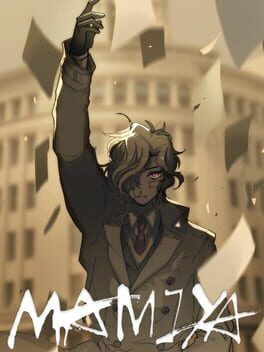

The cult psychological visual novel Mamiya is finally heading to Nintendo Switch as a complete duology, giving console fans a darker, apocalyptic alternative to typical story-driven Japanese games.
Mamiya: A Shared Illusion of the World’s End has been quietly haunting PC readers for a few years, but in 2026 it will finally reach a wider audience on Nintendo Switch. Publisher Dramatic Create and solo developer Kenkou Land are preparing a new console version that collects the entire story in one package, bringing the full duology to a platform built for long reading sessions.
According to the announcement, the Switch release will bundle both main entries in the series: Mamiya: A Shared Illusion of the World’s End – FallDown and Mamiya: A Shared Illusion of the World’s End – Downfall. On PC these came out separately and gradually expanded the scope of the narrative. On Switch they arrive as a unified whole, presenting one continuous psychological horror saga instead of a fragmented release. For anyone who has been waiting to see what all the praise around "Mamiya" is about, this will be the most convenient way to experience it.
The setup is simple on the surface but heavy in execution. Set in Tokyo during a year that has been prophesied as the end of the world, Mamiya follows a small group of young men whose lives are shattered by the death of a close friend. At the funeral they meet a strange child who calls themself Mamiya. This figure slowly inserts themself into the group’s lives, becoming a source of understanding and comfort while also nudging them toward increasingly fatalistic thoughts. The more the cast leans on Mamiya, the more it feels like they are being pulled toward a shared, inevitable collapse.
Tonally, this is a far cry from the lighthearted slice-of-life stories many players associate with visual novels. Mamiya dives headfirst into subjects like depression, self-destructive behavior, and the fear that an individual’s life or death barely matters to the world at large. Rather than romantic drama, it focuses on male friendships buckling under grief, apathy, obsession, and the search for meaning when everything seems doomed. The writing lingers on intrusive thoughts and nihilistic worldviews, then slowly probes what it might take to move beyond them.
That darker focus is reflected in the structure of the duology. Across FallDown and Downfall, players follow several protagonists through branching routes and timelines that twist around one recurring question: if the world is ending and nothing matters, how do you choose to live? The answers span a wide spectrum. Some paths spiral into violence or total self-erasure, while others carve out fragile but hard-won growth. With more than twenty endings and over 180 illustrations supporting the story, the Switch version should give players a substantial amount to chew on.
The mood is just as important as the plot. Mamiya leans heavily on atmosphere, pairing its stark, sometimes surreal imagery with a tense, often melancholic soundtrack. Long, quiet scenes sit next to bursts of abstract horror, keeping the reader unsure whether what they are seeing is supernatural, psychological, or both. That blend of ambiguity and dread has earned the game a cult reputation among PC visual novel fans who enjoy titles that unsettle as much as they move.
Bringing this complete collection to Switch in 2026 has a few clear implications for story-focused players. First, it opens Mamiya up to the large audience that prefers to read visual novels on a portable screen. Nintendo’s hybrid has become a go-to system for Japanese narrative games, from otome and mystery series to darker psychological works like AI: The Somnium Files or Death Mark. Slotting Mamiya into that library makes sense, especially since its chapter-based structure and text-heavy pacing are well suited to handheld play.
Second, this release provides a rare console home for a doujin-origin project that is deeply personal in tone. Mamiya was essentially built by one creator handling writing, art and programming, and that singular vision gives it a raw, uncompromising edge. Console players often have to dig through storefronts to find more offbeat or experimental visual novels; having this duology arrive as a single, clearly labeled package should make it far easier for curious readers to discover.
Finally, for fans of story-heavy Japanese games searching for something more emotionally intense than the usual anime power fantasy, Mamiya’s Switch version is worth watching. It promises a complete, self-contained narrative about young adults confronting the end of their world, both literal and metaphorical, with all the messy feelings that entails. If you liked picking apart layered mysteries, debating what is real or imagined, and sitting with uncomfortable questions long after the credits roll, this 2026 console release is shaping up to be one of the more intriguing visual novel launches on Nintendo’s platform.