
Reality Fracture previews put Jace tokens at the center of Magic’s next set. Here is how Empower Jace works, why Elder Sphinxes shape Hexhaven, and what to track before prerelease.
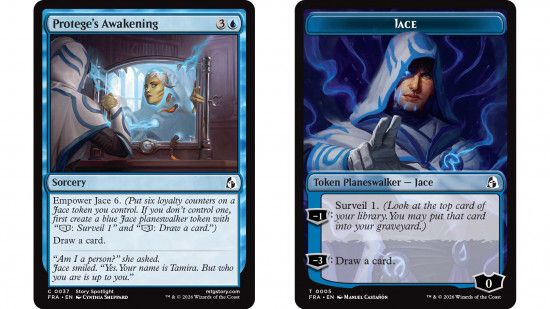
Image: wargamer.com
Jace tokens put a planeswalker into the average game
The strongest concrete reveal from the Magic The Gathering Reality Fracture preview cycle is mechanical, not cosmetic: Wizards of the Coast is putting planeswalker tokens into Magic through a new Empower Jace mechanic. According to GameSpot’s report on the Reality Fracture reveal stream, cards in the set can instruct a player to “Empower Jace” by a listed number, creating or building up a Jace planeswalker token. Polygon, citing a press preview attended by the outlet, adds the design consequence that common cards can create a planeswalker, something it says Magic has never attempted before.
That single choice frames the set’s biggest design tension. Reality Fracture is the climax of a three-year story arc, according to Polygon and the Magic: The Gathering Wiki, and Jace Beleren is no longer being treated as background lore. GameSpot describes the expansion as the final in-universe Magic expansion of the year and says the current arc, where Jace has become the overarching villain, concludes here. But Magic sets need their villain to matter during games, especially in Limited, where most players will not open the mythic face card often enough for a story beat to land mechanically.
Empower Jace is Wizards’ answer. Polygon reports that principal designer Yoni Skolnik described the appeal of drawing cards during the presentation, while also explaining that the mechanic lets Jace appear in “almost every single Limited game” because some version of Jace or an Empower Jace card should show up in most packs. That is the hook players should evaluate first. Reality Fracture is not merely asking whether a new Jace planeswalker is strong. It is asking whether the game can support a persistent planeswalker resource that shows up from ordinary spells.
How Empower Jace actually works
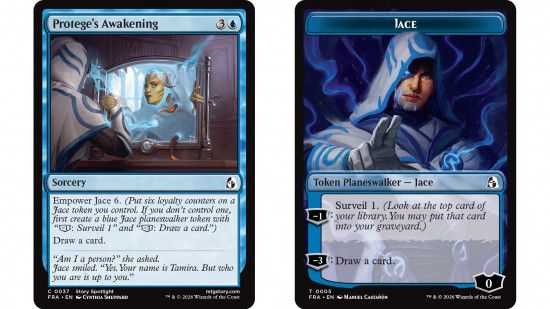
The rules previewed so far are straightforward, but the play patterns are likely to be anything but. GameSpot explains that Reality Fracture cards can carry “Empower Jace” followed by a number. Protege’s Awakening, shown in the preview material, is a four-mana sorcery that says “Empower Jace 6.” When a player casts a card or activates an ability with Empower Jace, that player adds loyalty counters to a Jace token equal to the number after the keyword. If they do not already control a Jace token, they create one first, then put the counters on it.
The Jace token itself is a planeswalker with two activated abilities, according to GameSpot and Polygon. Removing one loyalty counter lets its controller surveil 1, meaning they look at the top card of their library and either leave it there or put it into the graveyard. Removing three loyalty counters draws a card. CGMagazine’s preview describes the token as a planeswalker token in the visage of Jace, created when “Empower Jace X” happens and the player does not already control one.
The closest comparison from the sources is Amass. Polygon reports that Empower Jace was inspired by Amass, the mechanic that creates and grows an Army token, and that designer Jeremy Geist originally called his version “Amass Jace” before the team settled on the final name. CGMagazine makes a similar comparison to Amass Orcs from The Lord of the Rings and The Hobbit. Strategically, that comparison is useful because both mechanics consolidate repeated small game actions into a single board object. The difference is that an Army threatens life totals through combat, while Jace converts loyalty into selection or cards. That shifts the pressure point from creature sizing to resource timing.
The important technical wrinkle is copied Jace planeswalkers
GameSpot highlights one rules interaction that competitive players and Commander brewers will immediately file away. Empower Jace cares about a “Jace token,” and GameSpot reports that if a player can make a token copy of another Jace planeswalker card, they can choose to put Empower Jace counters on that copied Jace rather than on the default Jace token.
The example given by GameSpot uses Tamiyo, Compleated Sage. If Tamiyo’s second ability exiles Jace, the Mind Sculptor from a graveyard and creates a token copy of it, that token is still a Jace token. Under the previewed interaction, later Empower Jace effects can add loyalty counters to that copied Jace, letting the counters fuel the copied planeswalker’s own abilities instead of the standard surveil or draw abilities printed on the Reality Fracture token.
GameSpot cautions that there are not many efficient ways to set up that interaction. That caveat matters. This is confirmed as possible by the previewed rules coverage, but it should not be treated as a solved competitive shell. The interaction is a signal to watch for cards that copy planeswalkers, recur planeswalkers as tokens, or care about loyalty counters. If Reality Fracture adds cheap Empower effects at common and uncommon, the ceiling of any copied-Jace setup rises. If Empower costs are mostly attached to slower sorceries, the interaction may remain a flashy Commander story rather than a tournament concern.
The Limited question is tempo, not novelty
The headline novelty is that common cards can make a planeswalker, as Polygon reports. The harder question is whether that creates good games. A planeswalker token that starts small and has no plus ability behaves differently from a traditional planeswalker card. It does not protect itself directly through the abilities revealed so far. It spends loyalty to generate value, and Empower cards refill that loyalty later.
That means the core Limited tension is tempo. A player who uses one loyalty to surveil 1 is improving future draws, smoothing land drops, and potentially setting up graveyard synergies if the set supports them. A player who saves loyalty toward the three-counter draw ability is banking resources. The opposing player can answer that by pressuring Jace through combat, but doing so may redirect attacks away from the controller’s life total. None of the previewed sources provide the full removal suite, creature sizing, or archetype breakdown, so the exact balance cannot be judged yet.
Still, the revealed structure points to a format where incidental board presence and evasive threats may matter more than usual. If Jace appears frequently in Limited, the ability to chip down loyalty without losing combat parity becomes valuable. Conversely, decks with repeated Empower access may be able to trade early tempo for late-game card flow. That is interpretation based on the confirmed abilities, not a published Wizards balance statement. The preview season should reveal whether Empower Jace is a set-wide glue mechanic or whether it is concentrated in specific color pairs and themes.
Elder Sphinxes define Hexhaven’s schools and Commander chase
Reality Fracture is also returning to a school setting, but Polygon reports that Hexhaven is a far cry from the magical college visited in Secrets of Strixhaven. The outlet describes Hexhaven as a 10,000-foot mage tower with shifting gravity, unsettling students, and five new schools of magic founded by elder sphinxes rather than dragons. CGMagazine similarly says the set features mythic Sphinxes and describes Hexhaven as a multiversal version of Strixhaven with flipped magical college colors.
That matters because Strixhaven’s school structure was not simply flavor. It organized draft lanes, color identities, faction expectations, and Commander demand. The sources provided here do not include the full list of Elder Sphinx cards or their text, so any ranking of the five would be premature. Polygon’s headline characterizes them as five overpowered Sphinx commanders, while CGMagazine frames them as mythic Sphinxes revealed during the preview. What is confirmed from the provided material is the structural role: Elder Sphinxes founded the five schools, and those schools appear to be central to Hexhaven’s identity.
For players, the watch point is whether the Elder Sphinxes are primarily Limited signposts, Commander headliners, or both. If they sit at mythic and carry faction-defining abilities, they can become the economic chase cards of the set even if Empower Jace is the mechanic that shapes Limited most often. If they are Commander-facing legends, the relevant questions become color identity, mana value, and whether their abilities support existing Sphinx decks or demand new shells. The current previews establish their importance to the world and product identity, but not yet their market or metagame position.
Echoverse variants make the set’s nostalgia risky by design
Polygon reports that Reality Fracture includes “Echoverse” variations of classic Magic characters such as Karn and Ghalta. The story premise behind those cards is severe. According to Polygon, Jace has concluded that the multiverse is fundamentally broken after years of threats such as the Phyrexians, Eldrazi, and Nicol Bolas. His proposed solution is the Echoverse, an alternate reality where those threats never existed, but completing it requires overwriting the existing multiverse and replacing everyone in it with Jace’s improved versions.
CGMagazine describes Jace in Reality Fracture as The Theorist, an amalgamation of multiple Jace traits magnified without the empathy that once made him a leader. But Why Tho’s preview similarly frames the threat as Jace trying to end suffering by replacing the entire multiverse, with the cost falling on everyone currently living in it. Across the sources, the throughline is consistent: the set is built around alternate versions, but those versions are tied to a villain’s attempt to erase the original reality.
The Magic: The Gathering Wiki adds production context, listing Reality Fracture as an event set and the 114th Standard expansion, with the set symbol described as Jace Beleren’s face and hood split into light and dark halves. The Wiki also states that the set builds on a long-requested “what if” alternate reality theme and features an innovative design involving two paired cards in each booster. Because the Wiki labels the page as an upcoming release where information may change rapidly, those details should be treated as public listing context rather than final rules text. Still, they help explain why the previewed cards are doing two jobs at once: selling recognizable alternate versions and making players feel the cost of Jace’s rewrite.
What to watch before prerelease
GameSpot and Polygon both list Reality Fracture prerelease events as beginning Sept. 25, with the full launch on Oct. 2. GameSpot says the set is scheduled to launch through local game stores and big box retailers, while the Magic: The Gathering Wiki lists the release date as Oct. 2, 2026. None of the provided sources include pricing, Arena timing, product allocations, or a full card file, so players should avoid making purchase decisions as if the entire environment is known.
The first thing to track is Empower Jace density. A mechanic that appears on a handful of splashy rares is one thing. A mechanic that lets common cards create and recharge a planeswalker across most Limited games is another. Polygon’s report that common cards can create a planeswalker is the key confirmed signal, but the number of cheap Empower cards will decide how often Jace becomes a constant resource rather than an occasional bonus.
The second watch point is interaction. Since the default Jace token spends loyalty to surveil or draw, efficient attackers and planeswalker pressure could become premium. If removal and combat tricks line up poorly against Jace, the format may reward snowballing card advantage. If aggressive decks can keep loyalty low without sacrificing too much damage, Empower becomes a managed resource instead of a runaway engine.
The third watch point is the Elder Sphinx cycle. The sources establish five schools founded by elder sphinxes and preview coverage frames the Sphinxes as major mythic or Commander-facing cards. Until their exact text is public, the safest approach is to treat them as high-interest cards rather than automatic staples. Commander players should wait for color identities and abilities. Limited players should watch whether each Sphinx maps to a school mechanic, because that will reveal how much the set’s faction structure overlaps with Jace’s token economy.
Reality Fracture’s previews currently show a set with unusually tight alignment between story and gameplay. Jace is the villain in the fiction, the token engine in Limited, and potentially a rules puzzle for constructed brewers. The expansion’s success will depend on whether those roles reinforce each other without turning every game into the same loyalty-counter race.