
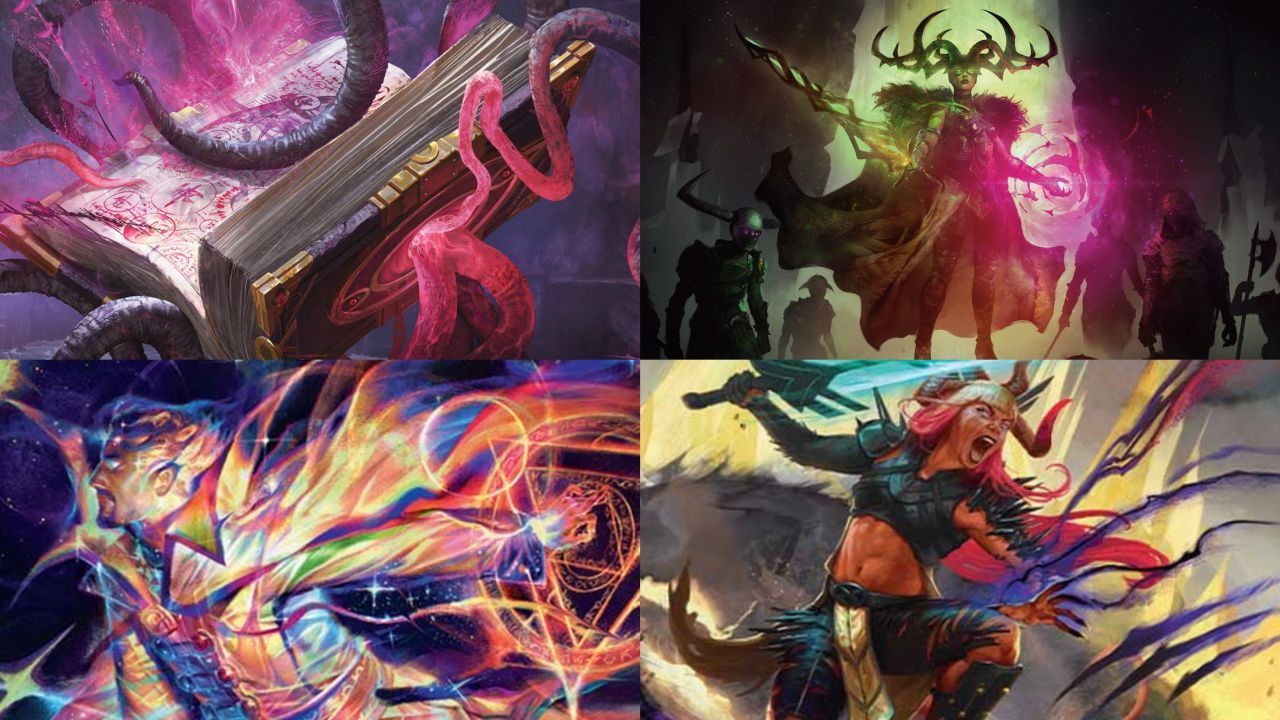

Wizards of the Coast revealed Magic: The Gathering | Marvel: Darkhold Destiny at NYCC, setting up MTG’s first 2027 Universes Beyond release with an original Marvel story, new mechanics, Commander decks, and an unusually important test for crossover sets.
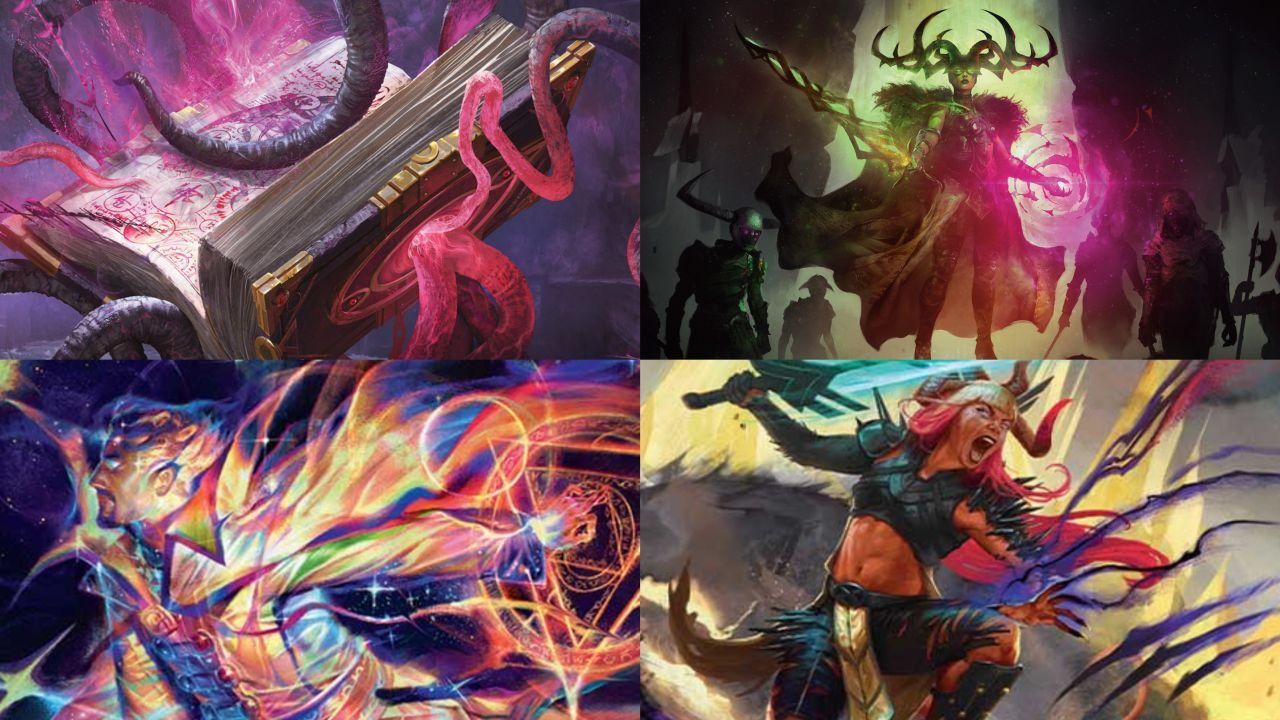
Image: de.ign.com
Wizards’ first 2027 Universes Beyond set is Marvel again, but the pitch has changed
Wizards of the Coast used New York Comic Con to reveal Magic: The Gathering | Marvel: Darkhold Destiny, the first Universes Beyond expansion set currently on the 2027 calendar. The concrete hook is clear: Magic is returning to Marvel in April 2027 with a set built around Doctor Strange, Thor, Ghost Rider, Hela, Dormammu, the Darkhold, and a darker supernatural corner of the Marvel Universe.
The tension is that Darkhold Destiny is being positioned differently from Magic’s earlier Marvel crossovers. IGN describes it as the third Marvel collaboration for the card game after Spider-Man and Marvel Super Heroes, while Star City Games notes that Wizards and Marvel have already worked together on two full sets and multiple Secret Lair drops. Those earlier projects established that Marvel can sit on Magic cards. Darkhold Destiny is being framed by Wizards as a bigger creative swing: an original story made with Marvel, told through Magic’s card set structure, with a new Marvel character debuting alongside it.
Wizards’ own announcement calls Magic: The Gathering | Marvel: Darkhold Destiny a Universes Beyond set “unlike anything we’ve done,” because the company says it collaborated with Marvel on an all-new original story set in the Marvel Universe. That is the key difference players should track as the Darkhold Destiny release window approaches. This is not simply a checklist of famous heroes appearing on mechanically familiar cards. At least based on the reveal, Wizards wants Darkhold Destiny to behave closer to a narrative Magic set while still using licensed Marvel characters and locations.
The story centers on the Darkhold, Dormammu, Hela, and a new Marvel character
The central premise, as reported by GameSpot and IGN from the NYCC reveal, has Hela and Dormammu using the Darkhold to invade or threaten the multiverse, with heroes such as Doctor Strange, Thor, Ghost Rider, Scarlet Witch, and others fighting back. Wizards’ announcement leans into the same supernatural framing, describing Hel as empty and promising devils, sorcerers, vampires, werewolves, witches, gods, and unworldly Marvel characters.
That mix matters because it gives Magic a cleaner thematic bridge into Marvel than a street-level superhero set would. IGN reported that Darkhold Destiny is organized around three broad magical identities: Arcane magic connected to Doctor Strange and his allies, Divine magic associated with Asgardians and similar figures, and Dark magic tied primarily to villains, while also including characters such as Ghost Rider. For a Magic set, that gives designers a way to translate Marvel flavor into recognizable deck incentives, card types, and color identities rather than leaning entirely on brand recognition.
Wizards also confirmed that the set’s story includes the origin of a brand-new character through a Marvel Comics release written by Jackson Lanzing and Collin Kelly. According to Wizards, the digital release is set for February 2027, with a physical release set for April 2027. GameSpot reported that the new character will be introduced in a Marvel Infinity comic series beginning in February. The exact role of that character in the card set has not been fully detailed in the provided material, so the safe read is that the comic and the set are linked narrative products, with the card set arriving after the digital comic starts.
Darkhold Destiny is a test of whether Universes Beyond can carry Magic-style storytelling
Universes Beyond has been commercially and culturally significant for Magic, but it has also created a strategic design problem. A crossover set can attract fans of Final Fantasy, Spider-Man, Lord of the Rings, or Marvel, yet the more it behaves like a gallery of familiar moments, the harder it is to give it the same long-tail identity as a Magic plane. Polygon’s preview frames Darkhold Destiny as an attempt to bridge that gap by combining a licensed property with the kind of original character work, storytelling, and mechanical identity usually associated with Magic’s in-universe releases.
That framing is important after the earlier MTG Marvel Universes Beyond plans. Star City Games reported that Marvel gave Magic designers “tremendous creative freedom” for Darkhold Destiny after previous collaborations, and IGN similarly reported that Wizards was able to write its own storyline with Marvel’s characters and settings. IGN also noted that artists were given more license to reinterpret Marvel characters so they look and feel closer to Magic’s fantasy aesthetic while retaining identifiable Marvel elements, using Scarlet Witch as an example.
For players, this is the part to watch beyond the headline names. If Darkhold Destiny succeeds, it gives Wizards a template for future Universes Beyond sets that are less dependent on reproducing existing scenes and more able to create draft environments, Commander archetypes, and story beats around a new premise. If it misses, the risk is that the set lands in an awkward middle ground: too self-directed for Marvel fans looking for iconic canon moments, but still too licensed for players who prefer Magic’s homegrown multiverse. The NYCC reveal suggests Wizards is aware of that tension and is designing directly into it.
The mechanics point toward spells, graveyards, and old Magic vocabulary
The mechanical reveals so far line up with the gothic spellcasting premise. GameSpot reported that Darkhold Destiny includes Vengeance, described as an Adventure-like gameplay feature that lets players cast spells from the graveyard and return the attached permanent to the battlefield. IGN’s live coverage also compared Vengeance to Adventure from Throne of Eldraine, while characterizing it as a darker twist on that structure.
That is a meaningful signal, although the full power level cannot be judged from the reveal alone. Adventure-style mechanics tend to reward sequencing and card economy because one physical card can function across multiple game actions. Moving that pattern into the graveyard potentially increases the importance of discard outlets, self-mill, removal timing, and exile-based interaction. Until Wizards publishes full rules text across a broader card sample, players should treat Vengeance as a mechanic with high strategic upside and likely high balance scrutiny.
Wizards is also bringing back the Arcane subtype for instants and sorceries, according to GameSpot and IGN. IGN specifically reported that Arcane has not been used since Saviors of Kamigawa in 2005, and that Wizards is not bringing back Splice onto Arcane, the old mechanic associated with combining Arcane spells. That distinction matters. The Arcane label can support set synergy and flavor without importing every piece of old Kamigawa rules baggage. It also gives Darkhold Destiny a way to make Doctor Strange-style spellcasting mechanically visible, rather than leaving it as art direction alone.
Several cards were shown during the reveal. GameSpot names Magik, who transforms into Darkchild, Gargantos, and the titular Darkhold among the previewed cards. Draftsim also highlighted The Darkhold as a previewed card and noted its Book artifact type, while treating possible Infinity Stone appearances as speculation based on earlier Marvel cards. For competitive-minded players, the confirmed takeaway is narrower: Wizards has already shown transformation, graveyard-linked spell play, Arcane typing, and a named artifact centerpiece. The exact metagame impact remains unknown.
Products are already mapped out, but pricing and some details remain open
Wizards has confirmed that Darkhold Destiny extends beyond the main set into Commander decks, Scene Boxes, and additional collector-focused treatments. GameSpot reported that the set will include normal booster packs, Collector boosters, and four preconstructed Commander decks themed around Marvel heroes and villains, including the Midnight Sons. IGN’s NYCC coverage gave names and color identities for four Commander decks: Strange Academy in white-blue-black, Gods of Asgard in white-red-green, Midnight Sons in white-black, and Lords of Hel in black-red.
IGN also reported that each Commander deck will have a collector’s edition in foils, and that there will be two Scene Boxes with six mechanically unique cards each. Its live blog additionally mentioned a regular Bundle and an Arcanum Bundle, each with a mechanically unique promo card. Wizards’ own announcement is less granular in the excerpted material, but it does confirm Commander decks, Scene Boxes, new Booster Fun treatments, and refined versions of recent treatments.
The practical caution is price and availability. The provided sources do not list MSRP, allocation, print-run expectations, preorder timing, or whether specific mechanically unique cards will be available outside premium products. IGN’s live blog expresses concern that mechanically unique bundle promos could become expensive, but that is commentary rather than a confirmed market outcome. Players who want to avoid paying early hype pricing should wait for Wizards’ full product breakdown, card image gallery updates, and local game store preorder information before committing to collector editions or sealed bundles.
The release date has a small but notable source conflict
The broad Darkhold Destiny release window is confirmed as April 2027. Wizards’ announcement says the set launches in April of 2027, while the page title states that Marvel: Darkhold Destiny emerges April 2027. Multiple outlets give a specific date of April 9, 2027, including GameSpot, Star City Games, and Draftsim. TheGamer also reports April 9, 2027 as the full launch date and expects prerelease on April 2, 2027.
There is one conflict in the supplied material. IGN’s live blog says the set does not come out until April 8 “next year,” while IGN’s separate article excerpt focuses on the product lineup and does not resolve that date discrepancy in the provided text. Because Wizards’ own excerpt does not include the exact day and several other outlets report April 9, the safest formulation is that the confirmed window is April 2027, with April 9, 2027 widely reported and April 8 appearing in one live-blog entry.
That may sound minor, but timing matters for organized play, prerelease weekends, preorder windows, and Commander deck demand. Readers planning around the Magic Marvel set 2027 should treat April 2027 as locked, April 9 as the leading reported date, and wait for Wizards’ final product page or retailer listings before making travel or event plans.
What players should watch before April 2027
Darkhold Destiny is already clearer than a teaser but still far from a solved set. The most important unanswered questions are mechanical density, card legality by format, premium product distribution, and whether the original Marvel character becomes a major gameplay piece or mainly a narrative bridge between the comic and the cards. The sources confirm the existence of Vengeance, Arcane’s return, the broad supernatural cast, Commander decks, Scene Boxes, and the new comic tie-in. They do not yet provide a full card list, pricing, format impact, or a complete release calendar.
From a strategy perspective, the early signs point toward a set that could reward graveyard planning, instant-and-sorcery density, enchantment or artifact build-arounds, and Commander decks with sharply defined faction identities. Strange Academy, Gods of Asgard, Midnight Sons, and Lords of Hel all suggest deck shells that can be understood at a glance, but color identity alone does not tell us whether those precons will be tuned for upgrades, casual flavor, or mechanically unique chase cards.
The larger story is that Magic: The Gathering Darkhold Destiny is Wizards’ first real opportunity in 2027 to show where Universes Beyond is going next. After earlier Marvel collaborations proved the crossover pipeline could work, this set asks whether a licensed expansion can carry an original story, introduce a Marvel character, revive old Magic vocabulary, and still function as a healthy release for players rather than only collectors. That is the metric to keep in mind when previews resume: not how many famous faces appear, but whether the cards make this version of Marvel feel like a coherent Magic environment.