
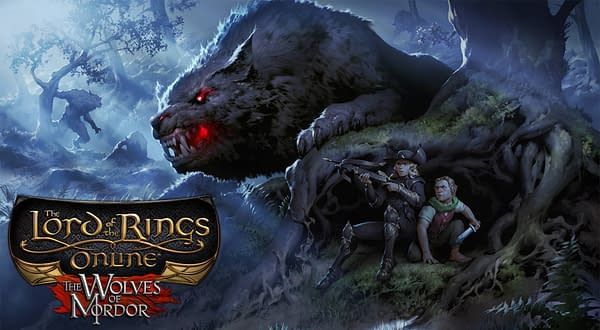
The Wolves of Mordor is live for The Lord of the Rings Online, adding three regions, a level 160 storyline, Survival Instincts, Neighbours, and a post-Sauron Mordor threat.
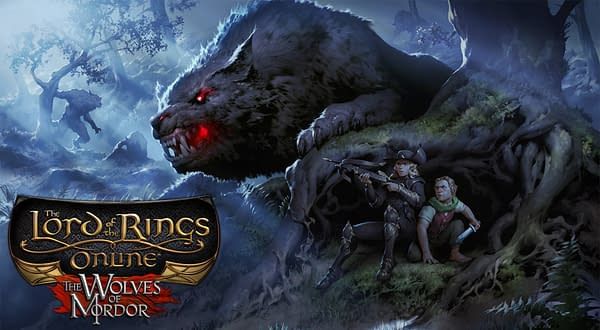
Image: bleedingcool.com
Update 50 is live after a one-week launch-date shift
Standing Stone Games launched Update 50: The Wolves of Mordor for The Lord of the Rings Online on Wednesday, October 28, 2026, according to MMOHuts, turning what had been a late-October target into a live expansion for one of the longest-running licensed MMOs still receiving major content. The immediate tension is that this LOTRO new expansion arrives after earlier coverage pointed players toward October 21. Massively Overpowered reported on September 30 that Wolves of Mordor was targeting an October 21 launch, and GameRant also covered that date as official in early October. LOTRO Hub later corrected its release-date listing from October 21 to October 28, matching MMOHuts’ launch report and MassivelyOP’s October 28 framing of the expansion as arriving “today.”
That correction matters for returning players trying to plan around an MMO launch week. The confirmed date now is October 28, 2026, and the expansion is live as Update 50. The Lord of the Rings Online’s newest paid release is available through the LOTRO Market, where LOTRO Hub says it is sold in three editions, though the provided source material does not list current prices. Bleeding Cool’s reveal coverage also pointed to pre-orders and higher-tier bundles with cosmetics, a pet, and a level-up item, but players checking in now should treat the live LOTRO Market listing as the authority for current edition contents and cost.
The larger headline is simpler than the date correction: The Wolves of Mordor is another full expansion for a game that GameSpot notes originally launched in 2007, roughly 19 and a half years before this release. For a nearly 20-year-old MMO, the question is less whether there is new content and more whether it gives lapsed players a coherent place to re-enter. On paper, this launch does give high-level players a defined path: a new level 160 storyline, three regions, more than 200 quests, 90 deeds, 30 Missions, and two new systems that affect progression and housing.
A level 160 story begins beyond the Mordor players already know
The Wolves of Mordor starts a new level 160 storyline titled “…and the Verses of Victory,” according to MMOHuts. Players can pick it up from Orthonn of the Grey Company outside the city stables in Minas Tirith (Midsummer). MMOHuts adds that finishing The Song of Waves and Wind is recommended, but not required, which is one of the more practical details for returning players: the expansion appears to have a suggested narrative lead-in, yet it does not lock the new story behind that completion requirement.
Standing Stone’s setup, as quoted in Bleeding Cool’s reveal coverage, places the story after the War of the Ring, when the Free Peoples believe victory over Sauron’s forces is complete. The hook is that an ancient bloodline in a distant corner of Mordor has stirred again, with Sauron’s old servants threatening those involved in his fall. GameSpot similarly describes the expansion as focused on the werewolves of Mordor pursuing the people who brought down their master.
That makes the expansion’s title unusually literal for LOTRO. This is post-Sauron Mordor, but not a safe or cleansed Mordor. The source material consistently frames The Wolves of Mordor around remnants, old allegiances, and hidden corners beyond the familiar battlefield of Gorgoroth. LOTRO Hub describes the expansion as maintaining the level 160 cap while adding three zones east of the Mordor players already know, and MMOHuts names those regions as Heledhris, Parth Rhavas, and Nan Ogol.
For a lore-aware MMO audience, the draw is that Standing Stone is working in the aftermath space that The Lord of the Rings Online has occupied for years: the War of the Ring is over, but the world still has consequences to process. That is fertile ground for LOTRO because the game’s strongest questing has often come from localizing epic events into villages, ruins, rival groups, old grudges, and reluctant alliances. The expansion’s premise gives it a clean reason to revisit Mordor without simply replaying the march toward Sauron.
The launch package is built around breadth, deeds, and daily structure
The confirmed content count is substantial. MMOHuts reports that The Wolves of Mordor includes more than 200 quests, 90 deeds, and 30 Missions. For LOTRO, those numbers are important because they speak to the game’s traditional progression rhythm: quest arcs for narrative movement, deeds for completion goals and long-term character improvement, and Missions for repeatable or bite-sized play.
The expansion is not raising the character level cap, according to LOTRO Hub, which says Wolves of Mordor maintains level 160. That gives the launch a different shape than a classic vertical reset. Instead of asking players to chase a new level ceiling, it adds a new level 160 storyline and region-specific progression. MMOHuts also reports that Update 50 raises the Virtue cap to 104 for characters level 158 and up. For players who track builds carefully, that is a real progression lever even without a new maximum level.
There are smaller class and systems changes attached to the update as well. MMOHuts cites adjustments to Lore-master’s Ancient Master charges, expanded Burglar use of Burgle on trolls and giants, and a Warden mounted combat fix. The provided material does not include full patch-note details for balance impact, so it would be premature to call any class a winner or loser from Update 50. What can be said is that Standing Stone is pairing the expansion’s new regions with account and character progression touchpoints rather than treating the launch as story-only content.
That is the right pressure point for a mature MMO. A new region can bring players back for a weekend, but a deed suite, Missions, a Virtue cap increase, and a progression system create reasons to log in repeatedly. The risk is also familiar: if Survival Instincts and Neighbours become chores instead of choices, returning players may feel as though they came back to a checklist. The launch details suggest Standing Stone is trying to serve both quest-first players and long-term optimizers, but the feel of that loop depends on tuning and reward pacing that the source material does not yet establish.
Survival Instincts is the expansion’s main build question
The biggest new progression feature is Survival Instincts. MMOHuts describes it as a system available to every class, allowing players to learn and mix Tactics, Lessons, Skills, and Enhancements across characters on the same server. LOTRO Hub similarly calls Survival Instincts a progression mechanic meant to boost character power in the Wolves of Mordor regions and content. ScreenRant describes it as an account-wide progression path tied to the new regions, with players gaining abilities, skills, and passives as they progress rather than advancing through a traditional MMO leveling format.
That framing is especially relevant because the level cap is staying at 160. When an MMO does not raise the cap, it needs another form of advancement that feels legible. Survival Instincts appears to be that answer. Its server-wide or account-style sharing, as described by the sources, may also reduce friction for players with multiple characters, though MMOHuts specifies “across characters on the same server,” which is the safer way to phrase it based on the provided material.
For build-minded LOTRO players, the key unknown is how much freedom Survival Instincts actually offers. The language around mixing Tactics, Lessons, Skills, and Enhancements points toward a flexible loadout layer, but the sources do not give exact trees, caps, unlock rates, or balance constraints. That means the confirmed fact is the system’s existence and broad purpose, while the practical verdict on class identity, alt-friendliness, and endgame pressure has to wait for live testing and official documentation.
Still, its placement is significant. A universal progression layer can help an old MMO add power without rewriting every class at once. It can also become another required grid if rewards are too strong to ignore. For returning players, the promising part is that Wolves of Mordor offers a new system to learn at cap instead of asking them only to resume old rotations in new scenery. The caution is that anyone hoping for a simple story vacation may want to see how demanding Survival Instincts becomes in daily play.
Neighbours turns housing into a progression-adjacent feature
The other headline system is Neighbours, and it pulls the expansion in a very different direction. MMOHuts describes Neighbours as companion-style NPCs who can move into a homestead and offer stories, gifts, and daily missions. Bleeding Cool’s reveal coverage says these companions can grow into friendships through stories, gifts, and daily missions, with bonds shaped by twenty personality traits and a dynamic mood system.
That is a striking addition for LOTRO because housing has long been one of the game’s social and cosmetic anchors. The Neighbours system, at least as described by Standing Stone through preview coverage, appears to make homesteads more active. Instead of a house existing only as a decorated destination, it gains characters with routines, preferences, and rewards. ScreenRant called it a “Hobbit’s dream,” emphasizing daily interactions, quests, and gifting.
The important distinction is that Neighbours is not being described as raid progression or class power in the provided sources. It is a housing and relationship system with daily missions and gifts. That makes it potentially valuable to a different slice of the LOTRO audience: decorators, role-players, collectors, and players who want low-pressure daily structure. It also broadens the expansion’s appeal beyond players who are primarily coming for Mordor combat.
The unanswered question is how gracefully Neighbours fits into existing housing habits. If the system respects casual pacing, it could give lapsed homeowners a charming reason to visit their neighborhoods again. If its daily cadence is too reward-heavy, it could feel like another obligation layered onto a game already dense with deeds, traits, virtues, reputations, and seasonal routines. The launch sources establish the feature set, but not the reward economy that will decide how optional it feels.
The enemy roster leans into old servants and local horror
Standing Stone has also previewed several enemy types for Draugardh, according to MMOHuts. The roster includes the Gaurhoth, intelligent were-wolves tied to Morgoth and Sauron, along with lesser Draugrim, berserk Khûrz-hai, deformed Hinderlings, winged Orming, vulture-like Feasters, and venomous Mire-maggots. MassivelyOP’s launch-day coverage also centered on the enemies players will fight in the expansion.
That bestiary matters because it clarifies the expansion’s tone. Wolves of Mordor is not presenting Mordor as empty ruins with a few scattered orcs. It is building a creature ecology around corruption, survival, scavenging, and old service to dark powers. The Gaurhoth connection to Morgoth and Sauron gives the central threat a deeper lineage than ordinary postwar banditry, while the inclusion of carrion birds, maggots, and malformed creatures suggests a region still biologically and spiritually poisoned.
For LOTRO’s quest design, that sort of enemy mix can support several different play patterns. Intelligent were-wolves can carry named villains and faction politics. Lesser beasts and scavengers can populate landscape threats, deeds, and Missions. Berserk humanoid enemies can serve combat pacing, especially if the zones need aggressive patrols or clustered camps. The sources do not provide mechanical details, so we cannot say how these enemies fight, whether they introduce new debuffs, or how they affect group content. The confirmed point is that Standing Stone is using Draugardh to deepen Mordor’s postwar threat profile rather than treating the expansion as a cosmetic werewolf theme.
Returning players have a reason to log in, with one clear caveat
For current level-cap players, the reason to log back in is clear. The Wolves of Mordor launch adds a new level 160 storyline, three regions, a large quest and deed count, Missions, Survival Instincts, Neighbours, a Virtue cap increase, and update-level class adjustments. That is a meaningful package for anyone already positioned near endgame or willing to return to a high-level character.
For lapsed players far below cap, the answer is less clean from the available sources. Bleeding Cool’s summary of the reveal mentions a level-up item tied to higher-tier bundles, and LOTRO Hub says the expansion is sold in three editions through the LOTRO Market, but the provided material does not give enough detail to explain the current upgrade path, pricing, or whether a returning player can easily jump from older content directly into Wolves of Mordor. MMOHuts does provide one useful narrative note: The Song of Waves and Wind is recommended before the new storyline, but not required. That lowers the story-gate concern, at least for eligible characters.
The expansion’s importance for The Lord of the Rings Online 2026 is that it shows Standing Stone still building systems around the MMO’s mature strengths: long-form questing, completion goals, alternate advancement, housing, and postwar Middle-earth storytelling. It is not being framed by the sources as a relaunch or a platform overhaul. It is a substantial capstone-style expansion for players who still value LOTRO’s patient, character-driven MMO structure.
If you are a capped or nearly capped player who enjoys deeds, landscape questing, and incremental build development, Wolves of Mordor has enough confirmed structure to justify logging in now. If you mainly want group-instance details, raid timing, price comparisons between editions, or hard numbers on Survival Instincts, the provided launch coverage leaves those questions open. The safest practical guidance is to check your character’s level, review the LOTRO Market edition contents before buying, and start in Minas Tirith (Midsummer) with Orthonn if you are ready to follow the were-wolves beyond Gorgoroth.