
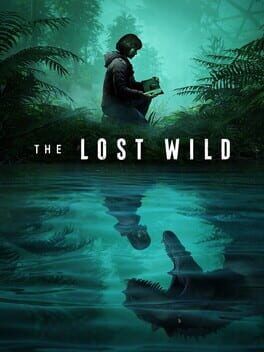
Great Ape’s new The Lost Wild dev diary puts dinosaur behavior at the center of its survival horror pitch, showing a game built around evasion, research, and predators that feel alive before the player arrives.
Image: IGDB
Store links: The Lost Wild on Steam
Great Ape puts predator behavior at the center of The Lost Wild
Great Ape Games has released a new developer diary for The Lost Wild, and the most important reveal is not a single monster, weapon, or set piece. It is the studio’s clearest statement yet that its dinosaur horror game is being built around animals that behave like predators in a living space, rather than enemies waiting for the player to trigger a fight.
The video, listed by IGN as a 2:23 official dev diary and described by multiple outlets as a nearly two-and-a-half-minute behind-the-scenes look, includes new gameplay footage and commentary from members of Great Ape’s Brighton-based team. GamingBolt reports that the diary features game director Gary Napper, lead narrative designer Tom Hughes, art director and studio co-founder Tim Mehmet, and AI and gameplay programmer Lou Thorpe-Monaghan discussing the world, the dinosaurs, and the kind of fear the team is trying to create.
That fear is specific. According to GamingBolt, Napper frames the design challenge around “the type of fear of being around those sorts of creatures and what that entails.” Thorpe-Monaghan’s comment sharpens the point: Great Ape treats the dinosaurs “as if they are characters rather than enemies,” and as creatures that “exist without the player being there.” For a survival horror game, that is a major priority statement. The Lost Wild’s tension is being sold less as a power fantasy and more as the pressure of sharing space with animals that can kill you, whether or not they are currently looking at you.
The Lost Wild dinosaurs are designed to be watched, read, and survived
The new The Lost Wild dev diary suggests that dinosaur behavior is the spine of the game’s horror. Noisy Pixel reports that the team discusses how the creatures move, react, and hunt, with the goal of making encounters feel like confrontations with living predators rather than scripted threats. MonsterVine similarly describes the game as centering on evasion, distraction, and resourcefulness while players explore overgrown research facilities and the surrounding wilderness.
That design direction matters because dinosaur games often drift toward spectacle: large creatures, loud attacks, and combat arenas. The Lost Wild, as described by Great Ape and reported across the supplied sources, appears to be taking the opposite route. The player is meant to study the threat, stay out of reach, use the environment, and survive long enough to keep investigating. Console Creatures summarizes the premise as a forest full of scientifically accurate dinosaurs that are not framed as your enemy, but are still capable of tearing you apart if given the chance.
For horror players, the useful detail is the focus on behavior before confrontation. A creature that patrols because it lives there creates a different kind of dread than a creature that appears because the level needs a chase. If Great Ape can make its dinosaurs legible without making them predictable, The Lost Wild survival horror could live in that thin, nasty space between confidence and panic: you think you understand the animal, then the forest proves you wrong.
Scientific accuracy is being used as a horror tool, not a museum label
Great Ape has repeatedly tied The Lost Wild dinosaurs to scientific accuracy, and the dev diary appears to use that research as a way to ground fear. GamingBolt reports that art director and studio co-founder Tim Mehmet discusses the research behind the dinosaur designs, including trips to places such as California’s Redwood Forest. Console Creatures also describes the new footage as showing an old-growth forest inspired by California’s redwoods.
That environmental reference is doing practical horror work. Dense forest changes how a predator is perceived. Sightlines are broken. Sound can mislead. Scale becomes harder to judge until something steps into view. The supplied reports do not provide technical audio details, stealth meters, difficulty systems, or exact AI routines, so those remain unconfirmed. What is confirmed is that Great Ape is building its world around wilderness, overgrown research facilities, and dinosaur behavior that is meant to feel natural.
The more grounded the animals feel, the less the game has to rely on artificial shock. A scientifically informed dinosaur does not need to snarl like a movie monster every few seconds if its posture, movement, and reaction sell the idea that you are trespassing in its territory. That is the promise sitting underneath this The Lost Wild gameplay footage: horror through presence, proximity, and the awful knowledge that the creature may not care about you until you make yourself matter.
Saskia’s ordinariness is part of the survival pressure
The dev diary also emphasizes the protagonist’s vulnerability. Noisy Pixel and MonsterVine identify her as Saskia, an ordinary person trapped on a mysterious island inhabited by dangerous dinosaurs. GamingBolt’s report renders a quoted reference as “Sastia,” while the other supplied coverage uses “Saskia,” so the spelling in public write-ups is not fully consistent across outlets. The underlying point is consistent: Great Ape is presenting her as a grounded person thrown into an extraordinary situation.
GamingBolt quotes lead narrative designer Tom Hughes describing the protagonist as “a grounded, real person” and “an ordinary person who is plunged into the extraordinary.” MonsterVine reports that this vulnerability informs the dinosaur design, placing the player in a position where survival means facing threats far outside everyday experience.
That framing has consequences for how The Lost Wild can play. If Saskia is intentionally ordinary, the game has less room to solve danger with heavy firepower or heroic durability. The sources describe survival through evasion, distraction, and resourcefulness, not domination. That pushes the player toward restraint: hold position, make noise somewhere else, slip through cover, decide whether the information inside a facility is worth the path back out. Horror works best when every step feels like a cost. The Lost Wild is signaling that the cost will come from being fragile in a place that does not bend around you.
The Alien: Isolation connection is tempting, but The Lost Wild has its own test
Several reports note Gary Napper’s background, with MonsterVine and Noisy Pixel identifying him as a game director whose previous work includes Alien: Isolation. Console Creatures says the premise gives off Alien: Isolation vibes. The comparison is understandable because both games are associated with being hunted by a powerful creature and surviving through awareness rather than brute force.
Still, The Lost Wild has a different burden. A single iconic pursuer can be terrifying because the player learns to fear one intelligence. Dinosaur horror has to manage multiple animals, environmental believability, and the player’s expectations of prehistoric creatures without reducing them to roaming jump scares. Great Ape’s stated approach, as reported by GamingBolt, is to treat dinosaurs as characters and as beings that exist independent of the player. That is an ambitious AI pitch because it asks the game to keep tension alive even when no scripted chase is happening.
The real test will be consistency. If dinosaurs can be distracted, avoided, and read, players will eventually look for patterns. Survival horror thrives when those patterns are reliable enough to support skill but unstable enough to preserve fear. The dev diary confirms Great Ape’s intent, but it does not confirm how broad the behavior system is, how many dinosaur types will appear, how resources are balanced, or how often encounters are authored versus systemic. Those are the questions that will decide whether The Lost Wild dinosaurs feel alive across a full game, not only across a short trailer cut.
Release timing, platforms, and what remains unannounced
The Lost Wild does not have a specific release date. GamingBolt reports that Great Ape and publisher Annapurna Interactive have confirmed a general 2027 launch window. IGN, Console Creatures, MonsterVine, and Noisy Pixel all list the game for PlayStation 5 and PC, with PC availability through Steam and the Epic Games Store. Console Creatures and Noisy Pixel both point to the Steam and Epic Games Store listings, while IGN names PS5, Steam, and Epic Games Store in its video page.
There is useful history behind that timing. GamingBolt notes that The Lost Wild was unveiled in 2022, was originally slated for a 2024 release, and was initially being developed for PC before PS5 was later announced. Earlier in 2026, according to GamingBolt, a State of Play trailer showed how The Lost Wild gameplay was taking shape, including sneaking around dinosaurs and glimpses of creatures behaving when the player was not around to distract them.
For players deciding whether to wishlist or wait, the practical answer is simple: the concept is clearer than the product details. Platforms and the 2027 window are confirmed through current reporting and listings, but the sources provided do not include price, PC requirements, performance targets, physical edition details, or an exact date. If your interest is specifically in stealth-heavy survival horror, the new The Lost Wild dev diary is a strong signal of direction. If you need to know how demanding the AI systems are, how combat-limited the game truly is, or whether the final release can sustain its predator behavior beyond curated footage, those answers are still ahead in the dark.