
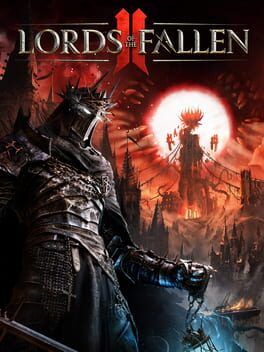
Breaking down Lords of the Fallen II’s brutal dismemberment system, new protagonist Omeuras, and how the sequel is quietly fixing the biggest complaints about the reboot while tracking modern Soulslike trends.
Lords of the Fallen’s 2023 reboot was a strange success story. It launched rough, was patched more than 70 times, and slowly morphed into a far better game than the one that originally hit digital shelves. That long road clearly left a mark on developer HEXWORKS and publisher CI Games, because Lords of the Fallen II’s Game Awards 2025 reveal feels like a statement: they’ve heard the feedback, and they’re not afraid to get messy to prove it.
At the center of that message is Omeuras, the ominous new figure showcased in the trailer, and a combat hook that is anything but subtle. In this sequel, every limb can be removed. Arms, legs, heads, and more can all be severed in real time, with a level of crunchy detail that pushes Lords of the Fallen II even further into hard‑R territory.
Omeuras: A Clearer Protagonist for a Clearer Story
The first Lords of the Fallen leaned heavily into ambient lore, cryptic NPCs, and item descriptions. Fans of Soulslike mystery were at home, but plenty of players bounced off a story that felt buried under layers of abstraction. The sequel’s focus on Omeuras is the clearest sign that HEXWORKS wants to bridge that gap.
Omeuras is being positioned as a central, character‑driven anchor rather than just another faceless vessel. Per CI Games, the narrative this time is meant to be more accessible and readable without abandoning the environmental storytelling that defines the genre. In practical terms, that suggests a protagonist whose motivations and arc are more legible, who can be framed in cutscenes and key art, and who gives the sequel a recognizable identity beyond “another cursed wanderer.”
Casting Hannah Melbourne in the role backs that up. Bringing in a dedicated performer hints at more cinematic framing and a story that leans on performance and presence, not only cryptic worldbuilding. That sits comfortably alongside recent Soulslike trends, where even games that chase FromSoftware’s design language are moving toward clearer emotional hooks, voiced leads, and more approachable narrative framing.
If the first reboot often felt like a world you were dropped into, Lords of the Fallen II looks like a journey you are guided through, with Omeuras as a fixed point the rest of the story orbits around.
Every Limb Can Go: Dismemberment as Design, Not Just Shock
The Game Awards trailer did not shy away from gore, but the follow‑up commentary from CI Games makes it clear this is not a half‑measure. The studio consulted the community on how far to push the violence, and the answer that came back was simple: go all in. The result is a combat system where every limb can be removed, and where the physicality of tearing enemies apart is core to the game’s identity.
That approach serves a few key purposes. First, it aims to make kills feel more decisive and weighty. In a genre where players repeat fights dozens of times, the final blow can start to feel routine. Letting a boss lose an arm mid‑combo or finishing a mob by literally disassembling it layer by layer creates a more tangible sense of domination. Your success is written not only in health bars, but in what is left of your enemies on the floor.
Second, it opens the door to mechanical expression. While CI Games has not fully outlined how systemic this dismemberment is, showcasing complete limb removal hints at the possibility of targeted attacks that change enemy behavior. Taking a sword arm off a knight, clipping the legs of a charging brute, or decapitating certain horrors mid‑cast all suggest a combat model that rewards precision and aggression in new ways.
It also fits the studio’s stated intent to make Lords of the Fallen II a game made by adults for adults. Rather than stepping back from the first game’s brutality, the sequel leans into it as a defining feature. In the wider Soulslike space, where visual identity can make or break a newcomer, a strong, unapologetically grisly hook gives Lords of the Fallen II something distinctive that screenshots and trailers can communicate instantly.
Learning from the Reboot: Iteration in World, Bosses, and Umbral
The original reboot has quietly become a case study in long‑tail improvement. Over nearly two years and a final “2.5” update, HEXWORKS chipped away at performance complaints, balance issues, and rough edges. Perhaps more importantly, they watched how people actually played and where frustrations turned to fatigue.
That experience is written all over Lords of the Fallen II’s early messaging.
One major community request was for a more varied game world. The 2023 release had striking art, but pacing and biome variety were frequent critiques. The sequel’s debut reel leans into this feedback with a stronger sense of distinct regions, sharper silhouettes, and a clearer mood shift from zone to zone. That aligns with broader Soulslike trends that favor memorable, contrast‑heavy journeys over muted, homogenous sprawl.
Another focus is on bosses. Players celebrated many of the reboot’s encounters, but just as many complained about repetition and difficulty spikes that felt unfair rather than exciting. CI Games is already promising more distinctive, memorable boss fights, a phrase that only matters if it translates to unique mechanics, bespoke arenas, and patterns that feel challenging rather than cheap. Given how much of the first game’s patch history revolved around tuning, it is reasonable to expect a sharper approach to encounter design from the start this time.
Then there is the Umbral realm. As a dual‑world mechanic, it was one of the reboot’s standout ideas, but some players felt it never fully reached its potential beyond gated secrets and elevated tension. For the sequel, the team is calling out a deeper, more meaningful Umbral experience in advance. That suggests the second world may be more tightly woven into progression, exploration, and combat identity instead of sitting off to the side as an occasionally necessary layer.
These adjustments mirror the broader Soulslike landscape, where interconnected worlds, bespoke bosses, and strong mechanical hooks are no longer optional. They are the entry fee.
Keeping Pace with Modern Soulslikes
Soulslikes in 2026 will not be entering an empty field. FromSoftware’s own work continues to define the high bar, while competitors chase the same audience with sharper movement, expressive builds, and bold twists on stamina‑based combat. Lords of the Fallen II appears to understand that if it wants another shot at the spotlight, it can’t simply refine. It has to differentiate.
Omeuras as a central character is part of that differentiation. Rather than leaning on a purely silent cipher, the sequel seems ready to give players a figure they recognize and potentially even role‑play onto, without discarding the genre’s taste for ambiguity. That is closer to the direction of games like Nioh or Lies of P, which blend clear protagonists with dense, optional lore.
The dismemberment system, on the other hand, is a clear identity marker. If implemented thoughtfully, it can sit alongside the Umbral duality as a second pillar of what makes Lords of the Fallen feel like Lords of the Fallen, rather than a familiar Soulslike with a different coat of paint. It is easy for gore to become noise, but when matched with deliberate animation, tight hit detection, and reactive enemy AI, it can transform fights into small, self‑contained narratives of attrition and mutilation.
Finally, the open commitment to listening to players from day one is itself a trend‑aware move. Many of the most beloved modern action RPGs are live projects in spirit, even when they are not explicitly service games. HEXWORKS’ experience shipping dozens of patches for the reboot gives them an advantage here. Ideally, more of that responsiveness will move from the patch notes into the initial design, with systems built to be observed, adjusted, and expanded on, rather than hastily corrected after launch.
A Sequel with Something to Prove
Lords of the Fallen II is targeting a 2026 release on PC, PlayStation 5, and Xbox Series X|S, which gives HEXWORKS time to sharpen what already looks like a more focused and confident sequel. The Game Awards dismemberment showcase did exactly what it needed to. It got people talking again, and it framed the sequel not as a simple follow‑up but as the culmination of hard lessons learned in public.
If Omeuras can deliver a more grounded narrative core, if the limb‑removal system feeds into satisfying, expressive combat, and if the world, bosses, and Umbral realm really do evolve in response to years of feedback, Lords of the Fallen II could be more than a redemption arc. It could finally stand shoulder to shoulder with the Soulslikes it has always wanted to join, not just as an imitator, but as one of the genre’s loudest, bloodiest voices.